
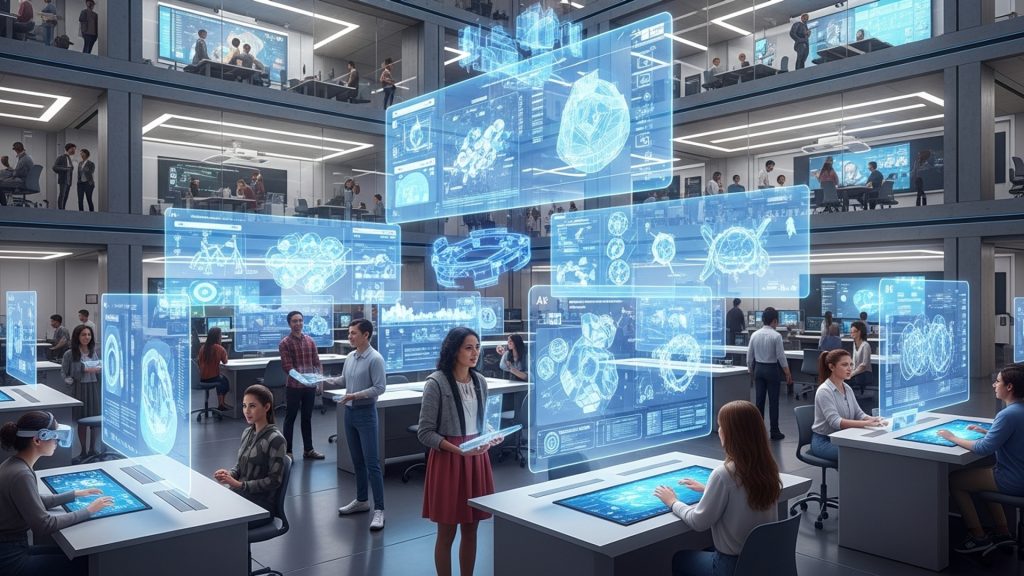
The relentless march of artificial intelligence is redefining every facet of our world, moving beyond theoretical concepts into tangible industrial applications that promise unprecedented efficiencies and innovations. At the forefront of this revolution, the Massachusetts Institute of Technology consistently pioneers breakthroughs, from developing sophisticated algorithms that enhance drug discovery and personalized medicine to advancing robotic systems for precision manufacturing and sustainable energy grids. Recent strides in fields like explainable AI and reinforcement learning, spearheaded by the Massachusetts Institute of Technology’s visionary researchers, are not merely academic feats; they are actively reshaping global industries, empowering businesses to navigate complex challenges and unlock new frontiers of productivity and growth.
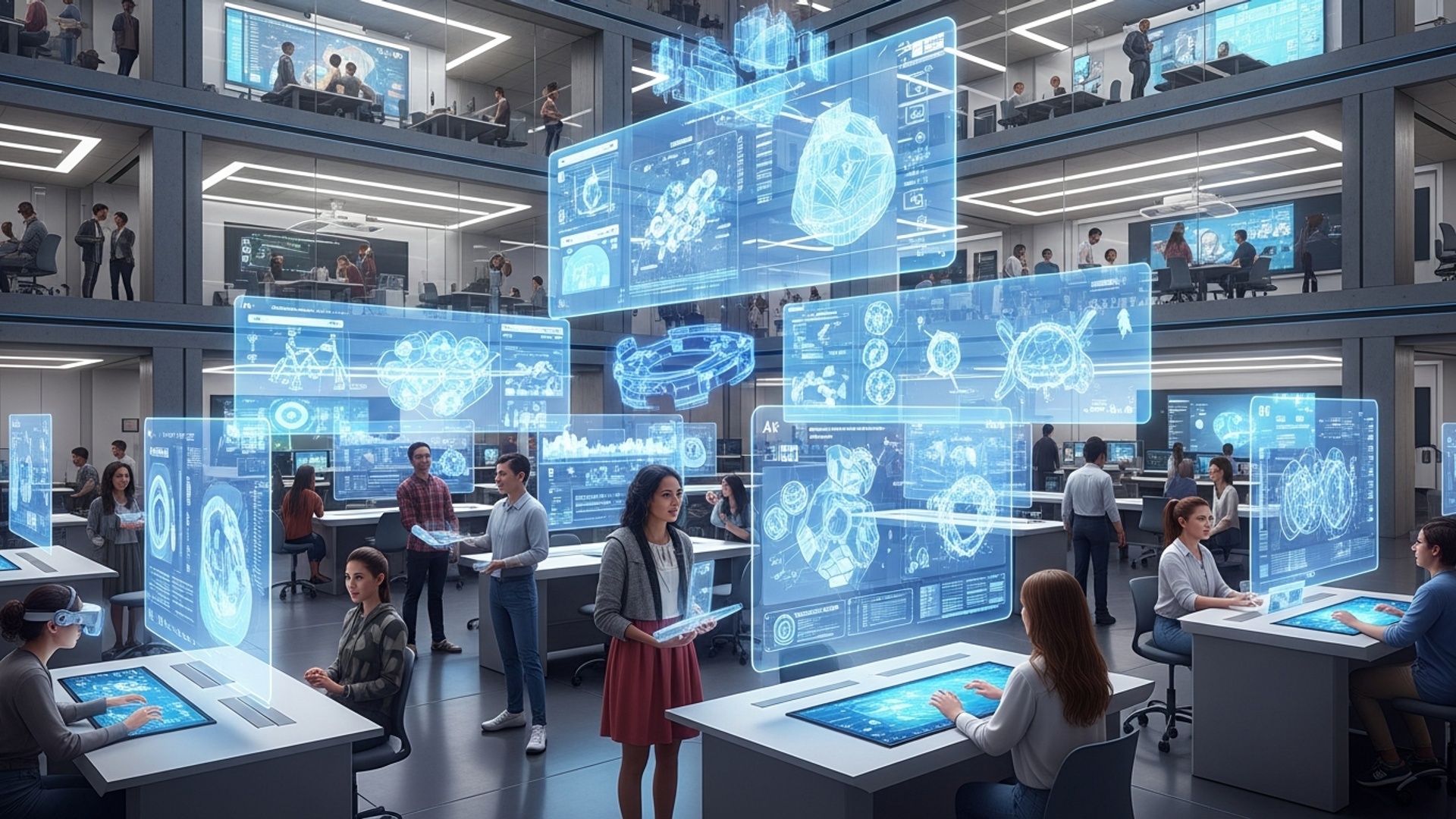
Understanding AI’s Foundation: What the Massachusetts Institute of Technology is Building On
Artificial Intelligence (AI) might sound like something from a sci-fi movie. it’s very real and deeply integrated into our world thanks to pioneering institutions like the Massachusetts Institute of Technology. At its core, AI refers to computer systems designed to perform tasks that typically require human intelligence. Think problem-solving, learning, decision-making. even understanding language.
- Machine Learning (ML)
- Deep Learning (DL)
This is a powerful subset of AI where computers learn from data without being explicitly programmed. Imagine teaching a computer to recognize cats by showing it thousands of pictures of cats and dogs. Eventually, it learns the patterns that define a cat.
A more advanced form of Machine Learning, Deep Learning uses artificial neural networks – structures inspired by the human brain – to process complex data like images, sound. text. This is what powers facial recognition on your phone or recommends what to watch next on streaming services.
The Massachusetts Institute of Technology has been a crucible for AI research since the very beginning. Researchers at MIT played a pivotal role in the early days of AI, contributing to fundamental theories and practical applications that laid the groundwork for today’s AI revolution. Their work has always pushed the boundaries, seeking not just to replicate human intelligence. to augment it and apply it to solve real-world problems on a global scale.
Transforming Healthcare: AI that Saves Lives
One of the most profound impacts of AI research from institutions like the Massachusetts Institute of Technology is in healthcare. Imagine a future where diseases are detected earlier, treatments are personalized for each patient. new cures are discovered at lightning speed. MIT’s AI innovations are making this future a reality.
- AI in Diagnostics
- Drug Discovery and Development
- Personalized Medicine
AI algorithms can examine vast amounts of medical images (like X-rays, MRIs. CT scans) with incredible speed and accuracy, often spotting subtle signs of disease that might be missed by the human eye. Researchers at MIT have developed AI systems that can detect early signs of breast cancer or predict the risk of certain neurological disorders. This means faster diagnoses and earlier intervention, which can be life-saving.
Finding new medicines is a long, expensive. often unpredictable process. MIT’s AI is accelerating this by sifting through massive chemical libraries, predicting how different compounds will interact with the human body. even designing new molecules from scratch. This drastically cuts down the time and cost associated with bringing new drugs to market.
We’re all unique. so are our responses to treatments. AI allows doctors to review a patient’s genetic insights, lifestyle. medical history to recommend the most effective and personalized treatment plan. This ‘precision medicine’ approach, heavily influenced by research at the Massachusetts Institute of Technology, ensures patients receive care tailored specifically to them, leading to better outcomes. For instance, an MIT project might involve AI predicting which cancer therapy will work best for an individual patient based on their tumor’s genetic makeup.
Revolutionizing Manufacturing and Robotics: Smarter Factories, Better Products
From the assembly line to product design, AI and robotics are reshaping how goods are made. the Massachusetts Institute of Technology is at the forefront of this transformation. This isn’t just about replacing human jobs; it’s about creating safer, more efficient. more innovative manufacturing processes.
- Automation and Efficiency
- Quality Control
- Predictive Maintenance
- Innovative Product Design
AI-powered robots can perform repetitive or dangerous tasks with precision and speed, often working 24/7 without fatigue. MIT research in areas like collaborative robotics (cobots) focuses on robots that can work safely alongside humans, taking on the heavy lifting or monotonous tasks while humans focus on more complex, creative problem-solving.
Imagine an AI system inspecting every single product on an assembly line, identifying even tiny defects that a human might overlook. MIT has developed computer vision systems that use AI to perform rigorous quality checks, ensuring products meet the highest standards before reaching consumers. This significantly reduces waste and improves product reliability.
Instead of waiting for a machine to break down, AI can examine data from sensors on factory equipment to predict when maintenance will be needed. This ‘just-in-time’ repair prevents costly downtime and extends the lifespan of machinery. The Massachusetts Institute of Technology’s work in industrial AI helps companies save millions by optimizing their operational efficiency.
AI can even help design new products. By simulating various designs and materials, AI can suggest optimal structures that are stronger, lighter, or more cost-effective to produce. This accelerates the innovation cycle, bringing cutting-edge products to market faster.
Pioneering Sustainable Solutions: AI for a Greener Planet
The climate crisis is one of humanity’s greatest challenges. AI, driven by research at the Massachusetts Institute of Technology, is emerging as a powerful tool in the fight for a sustainable future.
- Climate Modeling and Prediction
- Renewable Energy Optimization
- Resource Management
- Waste Reduction and Recycling
AI can process vast datasets from satellites, weather stations. environmental sensors to create more accurate climate models. This helps scientists grasp climate change better, predict extreme weather events. develop strategies for mitigation and adaptation. MIT’s AI models are crucial for understanding complex environmental systems.
Solar panels and wind turbines are great. their energy output can fluctuate. AI helps predict energy demand and supply more accurately, optimizing how renewable energy sources are integrated into the power grid. This ensures a stable and efficient energy supply, reducing reliance on fossil fuels. For instance, an MIT project might involve AI predicting wind patterns to maximize turbine efficiency.
AI can help optimize the use of natural resources like water and agricultural land. In smart agriculture, AI-powered drones and sensors can monitor crop health, soil conditions. water needs, leading to more efficient irrigation and fertilization. This reduces waste and improves food security, an area where the Massachusetts Institute of Technology is actively exploring AI applications.
AI-powered robots can sort waste more efficiently, improving recycling rates. AI can also help design products that are easier to recycle or have a longer lifespan, contributing to a circular economy.
Enhancing Communication and Creativity: Beyond the Basics
AI isn’t just for science and industry; it’s also making huge strides in how we communicate, learn. express ourselves creatively. The Massachusetts Institute of Technology has been a leader in pushing these boundaries, exploring how AI can augment human intellect and artistry.
- Natural Language Processing (NLP)
- Computer Vision
- Content Generation and Creativity
- Personalized Learning
This is the field where AI learns to grasp, interpret. generate human language. Think about the chatbots that help you online, the translation apps that break down language barriers, or even the predictive text on your phone. MIT researchers have made significant contributions to NLP, enabling computers to engage with us in more natural and helpful ways. This means better accessibility, global communication. personalized insights retrieval.
This branch of AI teaches computers to “see” and interpret visual data from images and videos. Beyond its use in manufacturing and healthcare, computer vision powers self-driving cars, facial recognition. even helps us organize our digital photo albums. The Massachusetts Institute of Technology continues to advance this field, making our digital world more perceptive and interactive.
AI can now generate text, compose music. even create art. While it won’t replace human creativity, it can act as a powerful co-pilot, helping artists explore new ideas, generate drafts, or automate tedious parts of the creative process. Imagine an AI helping a budding musician brainstorm melodies or a writer overcome writer’s block. MIT explores the ethical and practical applications of these emerging creative AIs.
AI can adapt educational content to an individual student’s pace and learning style, identifying areas where they struggle and providing tailored exercises. This personalized approach can make learning more engaging and effective, helping students master complex subjects.
The Future Workforce: Skills You’ll Need in an AI-Driven World
As AI, heavily influenced by the groundbreaking work at the Massachusetts Institute of Technology, continues to evolve and transform industries, the job market will also change. Some tasks will be automated. many new opportunities will emerge. For young adults and teens, understanding this shift is key to preparing for a successful future.
- Beyond Automation
- AI Literacy
- Interdisciplinary Thinking
- Continuous Learning
- Ethical Considerations
While AI can handle repetitive, data-heavy tasks, it still struggles with uniquely human capabilities like complex problem-solving, emotional intelligence, creativity. critical thinking. These ‘soft skills’ will become even more valuable.
You don’t need to become an AI programmer. understanding how AI works, its capabilities. its limitations will be crucial. Being able to effectively use AI tools, interpret AI outputs. even communicate with AI systems will be a sought-after skill in almost every field.
The most exciting innovations often happen at the intersection of different fields. Combining knowledge of AI with expertise in healthcare, environmental science, design, or business will unlock new opportunities. The Massachusetts Institute of Technology’s collaborative environment often fosters this kind of cross-disciplinary innovation.
The pace of technological change is rapid. Embracing a mindset of lifelong learning – constantly acquiring new skills and adapting to new tools – will be essential. This includes staying updated on the latest AI developments and how they impact your chosen field.
As AI becomes more powerful, understanding its ethical implications – issues of privacy, bias. responsible use – will be vital. Professionals who can navigate these complex questions will be highly valued.
The future isn’t about humans competing against AI. about humans collaborating with AI to achieve incredible things. By focusing on uniquely human skills and developing a strong understanding of technology, you can position yourself to thrive in this exciting, AI-powered world.
Conclusion
MIT’s pioneering AI research, driven by initiatives like the MIT Quest for Intelligence, consistently transcends theoretical boundaries to deliver tangible industrial transformations. From revolutionizing drug discovery with AI-powered molecular design, accelerating new material science, to optimizing global supply chains through predictive analytics, the impact is profound and widespread. This isn’t merely about incremental improvements; it’s about fundamentally reshaping how industries operate and innovate, making technologies like explainable AI and robust machine learning central to future progress. My personal tip for navigating this evolving landscape is to embrace continuous learning; don’t just observe the changes. actively seek to comprehend them. Explore introductory courses on AI ethics or practical applications, perhaps through platforms like MIT OpenCourseware. consider how these advancements directly affect your field or career path. The true power lies not just in the technology itself. in our collective ability to adapt, innovate. apply it thoughtfully. As we look ahead, the future of industry will be defined by those who actively engage with AI, harnessing its potential to solve complex global challenges and amplify human capabilities.
More Articles
Beyond the Classroom: Harvard University’s Impact on Global Leadership and Societal Advancement
Unlocking Tomorrow’s Innovations: How Stanford University Prepares Students for Leading Tech Careers
Essential Digital Leadership Skills for Navigating the Future of Work in 2025
Launch Your Thriving Business Analytics Career in 2025: Essential Skills You Need

FAQs
So, what’s ‘Unlock Tomorrow’s Tech’ all about with MIT’s AI?
It’s essentially about how MIT’s cutting-edge AI research isn’t just theoretical; it’s actively shaping the future by creating revolutionary technologies that are then applied across various industries worldwide, driving significant transformation.
Which industries are actually seeing big changes from MIT’s AI work?
You’d be surprised! MIT’s AI advancements are making waves in healthcare (think drug discovery, personalized medicine), manufacturing (smart automation, predictive maintenance), finance (fraud detection, algorithmic trading), environmental science. even autonomous systems for transport and logistics.
How does this advanced AI research practically get used outside the lab?
It translates into things like AI-powered tools for faster disease diagnosis, intelligent robots optimizing factory floors, sophisticated algorithms predicting market trends. even systems that help manage energy grids more efficiently. It’s all about solving real-world problems.
What makes MIT’s approach to AI research particularly special or different?
A key differentiator is MIT’s interdisciplinary approach. They don’t just focus on AI as a standalone field but integrate it with other disciplines like neuroscience, materials science. engineering. Plus, there’s a strong emphasis on fundamental breakthroughs that lay the groundwork for truly transformative applications, not just incremental improvements.
What’s on the horizon for MIT’s AI innovations? What can we expect next?
Expect continued breakthroughs in areas like explainable AI (making AI decisions understandable), robust AI (systems that are reliable and secure). AI for scientific discovery, especially in complex fields like climate modeling and new materials synthesis. The focus is on creating more intelligent, ethical. impactful AI.
Can businesses or other researchers tap into this pioneering work?
Absolutely. MIT has a strong tradition of fostering collaboration through initiatives like the MIT Quest for Intelligence, industry partnerships. open-source contributions. Many researchers and companies actively engage with MIT labs to explore new applications and bring innovations to market.
How does all this high-tech AI research actually benefit everyday people globally?
Ultimately, it leads to a better quality of life. We’re talking about more effective medical treatments, safer transportation, more sustainable energy solutions, personalized education tools. even new ways to address global challenges like food security and disaster relief. The goal is to build a smarter, more resilient future for everyone.