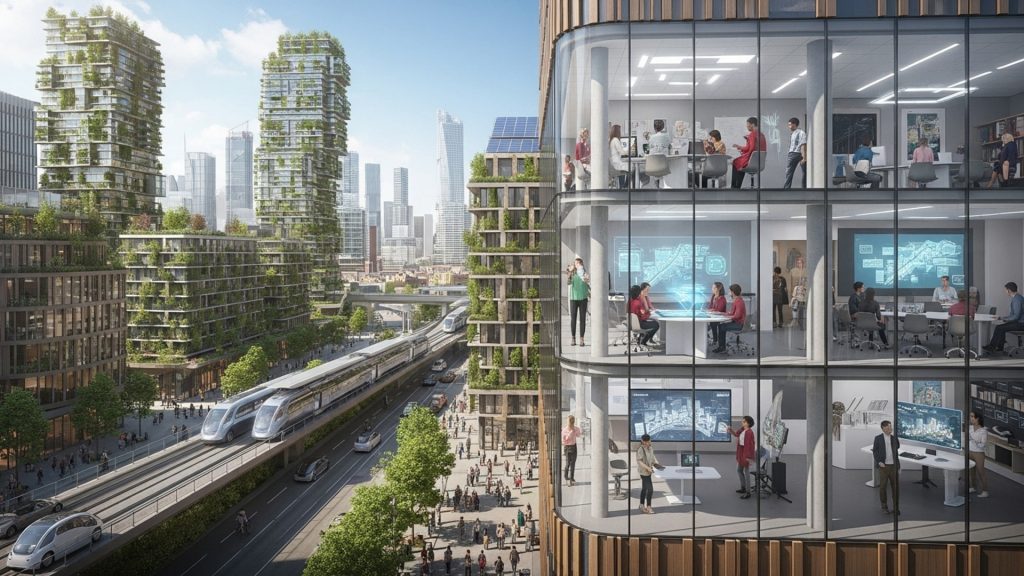
As urbanisation accelerates globally, cities face critical challenges, from mitigating climate change impacts and ensuring resource efficiency to fostering equitable public health and vibrant communities. University College London (UCL), a world-renowned hub for urban innovation, actively shapes sustainable urban futures through its pioneering interdisciplinary research. For instance, UCL’s Bartlett School of Architecture drives advancements in low-carbon building design and circular economy principles, while its Centre for Advanced Spatial Analysis (CASA) leverages real-time urban data for smarter infrastructure and adaptive public spaces. This cutting-edge research, addressing current trends like urban heat island effects and post-pandemic city regeneration, offers essential strategies to build more resilient, inclusive. environmentally sound metropolitan areas, transforming theoretical insights into tangible solutions worldwide.
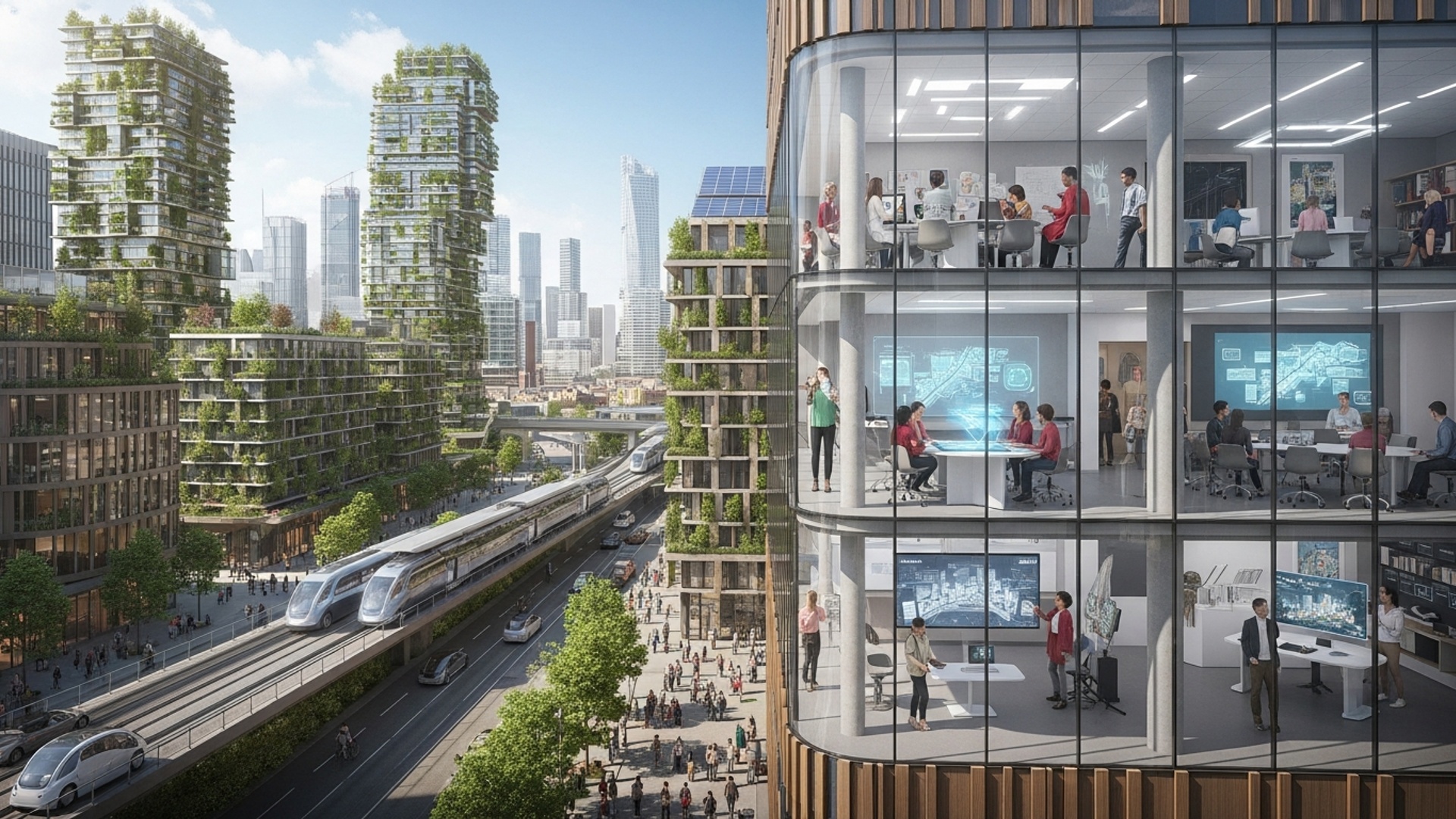
What is Sustainable Urban Living, Anyway?
Ever wondered what it means to live in a “sustainable city”? It’s more than just recycling your bottles! Sustainable urban living is all about designing and managing cities in a way that meets the needs of people today without compromising the ability of future generations to meet their own needs. Think of it as a balancing act: we want cool, vibrant places to live, work. play. we also need to protect our planet’s resources and ensure everyone has a fair shot at a good life.
This big idea covers everything from how we get around, what our buildings are made of, where our energy comes from. even how we connect with our neighbors. It’s about creating cities that are not only environmentally friendly but also socially fair and economically strong. For example, a truly sustainable city would have clean air, efficient public transport, affordable housing, green spaces for everyone. jobs that support the community. It’s a complex puzzle. institutions like University College London (UCL) are at the forefront of researching how we can solve it.
The Urban Challenge: Why We Need Smarter Cities Now
Right now, more than half of the world’s population lives in cities. that number is only growing. By 2050, nearly 70% of us will be city dwellers! While cities are hubs of innovation and culture, this rapid growth brings huge challenges:
- Resource Depletion: Cities consume massive amounts of energy, water. food.
- Pollution: Traffic, industries. waste disposal lead to air and water pollution, harming human health and ecosystems.
- Climate Change: Urban areas are major contributors to greenhouse gas emissions. they’re also highly vulnerable to climate impacts like heatwaves, floods. sea-level rise.
- Inequality: Rapid urbanization can worsen social disparities, leading to issues like lack of affordable housing, access to services. green spaces for all residents.
- Waste Management: Generating huge amounts of waste is a constant struggle for city authorities.
These challenges aren’t just abstract problems; they affect your daily life, from the air you breathe to the parks you can visit. That’s why research institutions like University College London are dedicated to finding practical, evidence-based solutions to make our cities more resilient and livable for everyone.
Greening Our Concrete Jungles: Nature-Based Solutions
Imagine a city where buildings are covered in plants, parks act like natural air filters. streets are lined with trees that cool everything down. This isn’t science fiction; it’s the power of nature-based solutions (NBS). NBS are strategies that use natural processes and ecosystems to address urban challenges.
Definitions:
- Nature-Based Solutions (NBS): Actions to protect, sustainably manage. restore natural or modified ecosystems, which address societal challenges effectively and adaptively, simultaneously providing human well-being and biodiversity benefits.
- Green Infrastructure: A network of natural and semi-natural areas, features. systems designed and managed to provide a wide range of environmental, social. economic benefits. Examples include green roofs, urban parks, rain gardens. tree-lined streets.
Researchers at University College London‘s Bartlett School of Architecture and the Institute for Environmental Design and Engineering are exploring how integrating green infrastructure can dramatically improve urban environments. For instance, a study might look at how a network of urban parks can reduce the urban heat island effect, making cities cooler during scorching summers, or how strategically placed rain gardens can help manage stormwater runoff, preventing flooding.
Real-world Application:
Think about a typical city street. Instead of just concrete, imagine a “sponge city” approach where permeable pavements absorb rainwater, trees provide shade. small green spaces filter pollutants. This not only makes the city more beautiful but also functional, much like what cities like Singapore are implementing with initiatives such as their “City in a Garden” vision.
Smart Tech for Smart Cities: Data and Digital Innovation
In our increasingly connected world, technology offers powerful tools to make cities smarter and more efficient. “Smart cities” use data and digital technologies to improve urban services and the quality of life for residents.
Definitions:
- Smart City: An urban area that uses different types of electronic methods and sensors to collect data. Insights gained from that data are used to manage assets, resources. services efficiently.
- Internet of Things (IoT): A network of physical objects (“things”) embedded with sensors, software. other technologies for the purpose of connecting and exchanging data with other devices and systems over the internet.
- Urban Analytics: The process of collecting, processing. analyzing urban data to gain insights into city operations, patterns. challenges.
University College London has various research groups, including those within the Department of Computer Science and the Centre for Advanced Spatial Analysis (CASA), that are pioneering urban analytics. They develop tools and models that can review vast amounts of data – from traffic flow and air quality sensors to energy consumption in buildings – to help city planners make better decisions. For example, IoT sensors placed on streetlights can monitor air pollution levels in real-time, allowing authorities to identify hotspots and implement targeted interventions, like rerouting traffic or encouraging public transport use.
Real-world Application:
Imagine an app that tells you the cleanest route to walk to school based on real-time air quality data from sensors across the city. Or smart bins that alert waste collection services when they are full, optimizing collection routes and reducing fuel consumption. These are not distant dreams but current applications being researched and developed, often with input from institutions like University College London.
Making Travel Sustainable: Rethinking Urban Mobility
How we move around our cities has a huge impact on their sustainability. From daily commutes to weekend adventures, our transport choices affect air quality, traffic congestion. even our physical health. Sustainable urban mobility aims to reduce reliance on private cars and promote cleaner, more efficient ways of getting around.
Definitions:
- Urban Mobility: The movement of people and goods within urban areas.
- Active Travel: Non-motorized forms of transport, primarily walking and cycling.
- Public Transport: Shared passenger transport services, such as buses, trains, trams. subways, available for use by the general public.
Researchers at University College London‘s Centre for Transport Studies are exploring innovative ways to transform urban transport systems. Their work often focuses on understanding human behavior around transport choices, designing better public transport networks. creating safer, more inviting environments for walking and cycling.
Comparison of Urban Transport Modes:
| Mode of Transport | Environmental Impact | Health Benefits | Cost (Individual) | Space Efficiency |
|---|---|---|---|---|
| Private Car | High (Emissions, congestion) | Low (Sedentary) | High (Fuel, maintenance, parking) | Low (Requires significant road/parking space) |
| Public Transport (Bus/Train) | Medium (Shared emissions) | Medium (Walking to stops) | Medium (Tickets/passes) | High (Moves many people in less space) |
| Cycling | Very Low (Zero emissions) | High (Cardiovascular exercise) | Low (Bike purchase/maintenance) | High (Requires minimal road/parking space) |
| Walking | Zero | Very High (Daily exercise) | Very Low (Shoes!) | Very High (Requires sidewalks/paths) |
Real-world Application:
Many cities are creating dedicated bike lanes, pedestrian zones. expanding their public transport networks. London, for example, has its extensive Underground system and a growing network of cycle superhighways. Even small changes, like taking the bus instead of driving or walking to a local shop, contribute to a more sustainable city. Research from University College London often informs these policy decisions, providing data on how such changes impact urban life.
Building for Tomorrow: Eco-Friendly Architecture and Design
The buildings we live and work in have a massive environmental footprint, from the materials used to construct them to the energy they consume daily. Sustainable architecture focuses on minimizing this impact throughout a building’s entire lifecycle.
Definitions:
- Sustainable Architecture: An approach to designing and constructing buildings that minimizes negative environmental impact, uses resources efficiently. promotes the well-being of occupants.
- Green Building Materials: Materials that are renewable, recycled, recyclable, and/or non-toxic, with a low environmental impact.
- Net-Zero Energy Building: A building that produces as much energy as it consumes over the course of a year, often through renewable energy sources like solar panels.
The Bartlett School of Architecture at University College London is world-renowned for its research into sustainable building practices. Their experts investigate everything from passive design strategies (like orienting a building to maximize natural light and ventilation) to advanced materials that can capture carbon or generate energy. For example, they might study how incorporating specific types of insulation or window glazing can drastically reduce a building’s heating and cooling needs, making it more energy-efficient.
Real-world Application:
Look around your city – are there buildings with solar panels on their roofs, or even “living walls” covered in plants? These are examples of sustainable design in action. New buildings are increasingly required to meet strict energy efficiency standards. older ones are being retrofitted with better insulation and renewable energy systems. The knowledge gained from institutions like University College London is crucial in guiding these architectural innovations.
Powering Our Cities: Renewable Energy and Resilient Grids
A city cannot function without energy. how that energy is generated and distributed is central to sustainability. Moving away from fossil fuels towards renewable sources and building a resilient energy grid are critical steps.
Definitions:
- Renewable Energy: Energy derived from natural processes that are replenished constantly, such as sunlight (solar), wind, water (hydro). geothermal heat.
- Smart Grid: An electrical grid that uses details and communications technology to gather and act on details, such as details about the behaviors of suppliers and consumers, in an automated fashion to improve the efficiency, reliability, economics. sustainability of the production and distribution of electricity.
- Microgrid: A localized group of electricity sources and loads that typically operates connected to a traditional centralized grid (macrogrid) but can disconnect and operate autonomously as an “island” during disruptions.
Researchers at University College London‘s Energy Institute are at the forefront of understanding and shaping future energy systems. Their work includes modeling how cities can integrate more renewable energy, designing smart grids that can handle fluctuating energy supplies. exploring the potential of microgrids for local energy independence and resilience. For instance, a UCL project might review the economic viability of installing community solar panels across a neighborhood or how a district heating system could efficiently use waste heat from an industrial plant to warm homes.
Real-world Application:
Many cities are setting ambitious targets for renewable energy. Copenhagen aims to be carbon-neutral by 2025, heavily relying on wind power and biomass. Barcelona has implemented a “solar ordinance” requiring new buildings to generate a portion of their hot water from solar energy. Even smaller towns are exploring community-owned wind farms or solar gardens. The expertise from institutions like University College London helps guide these transitions, ensuring they are both effective and equitable.
Citizen Power: Engaging Communities in Urban Planning
Sustainable cities aren’t just built by experts; they’re shaped by the people who live in them. Engaging citizens in urban planning ensures that new developments truly meet the needs and aspirations of the community, fostering a sense of ownership and belonging.
Definitions:
- Community Engagement: The process of working collaboratively with and through groups of people affiliated by geographic proximity, special interest, or similar situations to address issues affecting the well-being of those people.
- Participatory Design: An approach to design that actively involves all stakeholders (e. g. , employees, partners, customers, citizens) in the design process to ensure the result meets their needs and is usable.
- Social Sustainability: The ability of a social system, such as a city, to function indefinitely at a certain level of social well-being. This includes factors like equity, diversity, human rights. quality of life.
The research at University College London often emphasizes the social dimension of sustainability. Departments like The Bartlett Development Planning Unit focus on how citizens, especially marginalized groups, can be empowered to participate in decisions that affect their neighborhoods. This might involve setting up workshops where residents can co-design public spaces, using digital platforms to gather feedback on new policies, or creating citizen science projects where people help monitor environmental conditions.
Real-world Application:
Consider a local park that needs a redesign. Instead of city officials just deciding what goes where, a truly sustainable approach would involve holding community meetings, polling residents on their preferences for playgrounds, benches, or planting schemes. even involving local schools in the design process. This ensures the park becomes a cherished community asset. The insights from University College London‘s research show that when people are involved, projects are more successful and sustainable in the long run.
Your Role in Building a Better City: Actionable Steps
Feeling inspired? You don’t have to be an urban planner or a scientist at University College London to contribute to building a better city. Every decision you make, big or small, can make a difference. Here are some actionable steps you can take:
- Choose Sustainable Transport: Walk, cycle, or use public transport whenever possible. For longer distances, consider carpooling or electric vehicles.
- Reduce, Reuse, Recycle: Be mindful of your consumption. Choose products with minimal packaging, repair items instead of replacing them. always recycle properly.
- Conserve Energy and Water: Turn off lights when you leave a room, unplug chargers, take shorter showers. report leaky faucets. Every little bit helps!
- Support Local and Sustainable Businesses: Buy food from local farmers’ markets, choose businesses that prioritize ethical and environmentally friendly practices.
- Get Involved Locally: Join a community garden, participate in local clean-up drives, or attend town hall meetings to voice your opinions on urban development.
- Educate Yourself and Others: Stay informed about urban sustainability issues and share what you learn with friends and family. Encourage discussions about how your community can improve.
- Advocate for Change: Write to your local representatives, sign petitions, or join advocacy groups pushing for greener policies and smarter urban planning.
By understanding the challenges and embracing these strategies, inspired by the groundbreaking work at institutions like University College London, you can be an active participant in shaping the sustainable cities of tomorrow.
Conclusion
UCL’s pioneering research illuminates a clear path: building better cities isn’t just an aspiration. an achievable reality through sustainable strategies. It’s about seamlessly integrating green infrastructure, smart technologies. profound community engagement, moving beyond mere efficiency to foster genuine well-being. For instance, the evolving “15-minute city” concept, championed by urban planners, directly reflects research on creating hyper-local, walkable neighbourhoods, a trend I’ve personally observed transforming forgotten urban spaces into vibrant community hubs. My actionable tip is to become an active participant in your local urban fabric. Advocate for nature-based solutions in public spaces, support businesses committed to circular economy principles. engage in local planning discussions. We must remember that every small effort, from choosing public transport to championing urban farming initiatives inspired by recent developments, contributes to a larger, resilient ecosystem. Let us collectively champion a future where every city is a beacon of sustainable, equitable living, truly designed for its people and the planet. For further insights into sustainable urban development, explore UCL’s research on sustainable cities.
More Articles
UCL’s Global Impact: Addressing World Challenges Through Interdisciplinary Research
Innovate Your Career: Applying MIT’s Problem-Solving Mindset to Thrive in Future Tech Industries
Unlock Your Future: Practical Steps to Leverage Stanford’s Innovation Ecosystem for Career Success
Design Your Future: Essential NATA Preparation Tips for Aspiring Architects
Beyond the Books: How Harvard’s Leadership Principles Prepare You for Global Impact in 2025

FAQs
What’s ‘Build Better Cities’ all about?
It’s an initiative focused on creating more sustainable, livable urban environments. We explore practical strategies for cities to thrive without harming the planet, drawing heavily on cutting-edge research from University College London (UCL).
Why is UCL research so central to these strategies?
UCL is a global leader in urban planning, environmental science. sustainable development. Their extensive research provides a robust, evidence-based foundation for understanding complex urban challenges and developing innovative, effective solutions for a greener future.
Can you give examples of specific sustainable urban living strategies?
Absolutely! We look at everything from designing greener buildings and improving public transport networks to fostering local food systems, managing waste more effectively. creating more accessible, nature-rich public spaces for everyone to enjoy.
How can these ideas help ordinary people in their daily lives?
By implementing these strategies, cities become healthier, more efficient. more enjoyable places to live. This means cleaner air, better access to parks, shorter commutes, lower energy bills through efficient housing. stronger, more resilient local communities.
What are the biggest hurdles in making cities truly sustainable?
There are several big ones, including securing adequate funding, dealing with rapid population growth, overcoming political inertia. changing established habits and infrastructure. It’s a complex puzzle. with smart strategies, it’s definitely solvable.
Is this only relevant for huge metropolitan areas, or can smaller towns benefit too?
Not at all! While the research often looks at large cities due to their scale, the principles and many of the strategies are highly adaptable. Smaller towns and even rural communities can absolutely apply these insights to improve their own sustainability and quality of life.
What’s the ultimate vision or goal behind all this effort?
The big picture is to create cities that are not just environmentally friendly. also socially equitable, economically vibrant. resilient to future challenges. We want cities where everyone can thrive, now and for generations to come.