To Apply UK university as an international student today means navigating a competitive, data-driven admissions landscape shaped by UCAS reforms, visa policy updates. skills-focused course design. UK universities now emphasise employability metrics, with institutions like Manchester and Warwick aligning programmes to industry accreditation while admissions teams scrutinise academic transcripts, English test scores. contextual data more closely. Recent changes, including tighter dependant visa rules for taught master’s courses and announced updates to the UCAS personal statement format, make early planning essential. From selecting Russell Group or modern universities based on research intensity, to aligning subject choices with the Graduate Route and labour market shortages, successful applicants treat the process as a strategic project rather than a formality, balancing compliance, academic fit. long-term career outcomes within the UK higher education system.
Understanding the UK University System Before You Apply UK University
Before you apply UK university, it is vital to interpret how higher education works in the University in UK system. UK universities offer undergraduate (Bachelor’s), postgraduate (Master’s). doctoral (PhD) degrees. Most undergraduate courses last three years, while Master’s programs usually take one year. This shorter duration is one reason many international students choose the UK.
Well-known institutions include the University of Oxford, University of Cambridge, Imperial College London. many public universities such as the University of Manchester and University of Birmingham. According to UCAS (Universities and Colleges Admissions Service), the UK’s central application platform, international applications have grown steadily, showing global trust in UK education standards.
Real-world example: As an education counselor, I once guided a 17-year-old student from India who was surprised that UK Bachelor’s degrees are shorter than those in her home country. Understanding this early helped her plan finances and career goals more clearly.
Choosing the Right Course and University in UK
Selecting the right course is more crucial than choosing a famous name. UK universities specialize in different subjects. rankings often vary by subject area.
- Check course content on official university websites
- Look at entry requirements for international students
- Review teaching style (lecture-based vs practical learning)
- Consider location, living costs. campus support
Authoritative sources like The Complete University Guide and QS World University Rankings provide subject-specific comparisons. For younger readers, think of it like choosing the right level in a game—if it’s too hard or not interesting, progress becomes difficult.
Meeting Entry Requirements and English Language Criteria
When you apply UK university, entry requirements depend on your country and academic background. Universities usually ask for:
- Academic transcripts (school or college results)
- English language test scores
- Personal statement
- Letters of recommendation
Common English tests include IELTS Academic, TOEFL iBT. PTE Academic. For example, most UK universities require an IELTS score between 6. 0 and 6. 5 for undergraduate courses. According to the British Council, these tests measure reading, writing, listening. speaking skills.
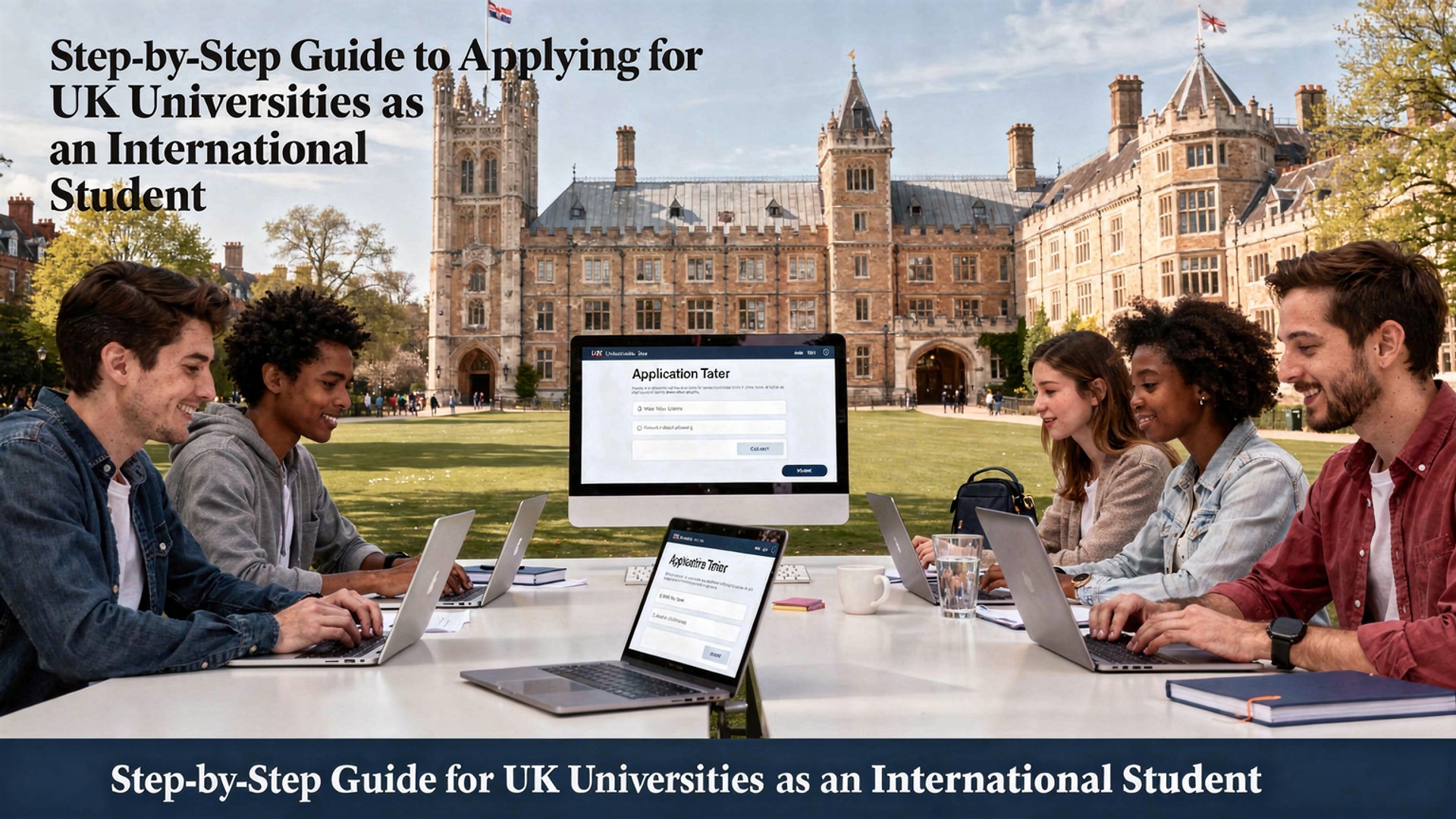
How to Apply UK University Through UCAS
The UCAS system is the main platform for undergraduate applications in the University in UK category. You can apply to up to five courses using one application.
- Create a UCAS account online
- Fill in personal and educational details
- Write a personal statement explaining your goals
- Submit reference letters from teachers
- Pay the UCAS application fee
UCAS deadlines are strict. For most courses, applications close in January. Oxbridge and medicine courses close earlier, usually in October.
Applying Directly for Postgraduate Programs
Unlike undergraduate courses, postgraduate applications are usually made directly through university websites. When you apply UK university for a Master’s degree, each institution has its own form and deadlines.
Case study: A former student from Nigeria applied to three UK universities for Data Science. By applying early, she received an offer within four weeks and had enough time to prepare for her visa.
Understanding Tuition Fees, Scholarships. Funding
Tuition fees for international students in the University in UK vary by course and institution. Undergraduate fees usually range from £10,000 to £25,000 per year.
| Funding Option | Who Can Apply | Provider |
|---|---|---|
| Chevening Scholarship | Postgraduate students | UK Government |
| University Scholarships | UG & PG students | Individual Universities |
| Commonwealth Scholarships | Selected countries | Commonwealth Commission |
Always check official university pages or GOV. UK for accurate funding insights.
Accepting an Offer and Preparing Documents
After you apply UK university, you may receive conditional or unconditional offers. A conditional offer means you must still meet certain requirements, such as final exam results.
- Confirm your offer within the given deadline
- Pay any required deposit
- Receive your CAS (Confirmation of Acceptance for Studies)
The CAS is a crucial document issued by the university and is required for your student visa.
Applying for a UK Student Visa
International students need a Student Route visa to study at a University in UK. Applications are made online through the official UK Visas and Immigration (UKVI) website.
- Valid passport
- CAS number
- Proof of funds
- English language proof
According to UKVI guidelines, students should apply for a visa up to six months before their course start date.
Preparing for Arrival and Life at a University in UK
Once your visa is approved, preparation for life in the UK begins. Universities often provide pre-arrival guides and airport pickup services.
- Arrange accommodation (on-campus or private)
- Register with a local doctor (GP)
- Attend orientation and welcome events
Real-world insight: Many first-year international students say joining student societies helped them adjust faster and feel less homesick.
Common Mistakes to Avoid When You Apply UK University
Even strong students can make simple mistakes during the application process.
- Missing UCAS or university deadlines
- Submitting generic personal statements
- Ignoring visa financial requirements
- Not checking course accreditation
Experts from UCAS and the British Council consistently advise students to start early and rely on official sources rather than social media rumors.
Conclusion
Applying to UK universities as an international student becomes manageable when you treat it as a series of small, deliberate actions rather than one overwhelming task. From choosing courses that align with your long-term goals to preparing documents early for UCAS and visa timelines, each step builds momentum. I have seen students gain confidence simply by setting weekly deadlines and reviewing their personal statements aloud, a habit that often reveals clarity gaps tutors notice quickly. Recent trends like contextual offers and faster digital document checks mean preparation now pays off more than ever. As you move forward, revisit trusted guidance such as UK application deadlines and refine your choices with purpose. Stay organised, ask questions early. remember that thousands of international students succeed every year by staying consistent. Take the next step today with confidence, because the right UK university journey rewards those who act with focus and belief.
More Articles
UCAS Personal Statement Tips That Help Applicants Stand Out to Admissions Tutors
Understanding Student Finance UK Options for Tuition Fees and Living Costs
How to Choose a UK Degree Course That Fits Your Career Goals
Step-by-Step UCAS Application Tips to Avoid Common Student Mistakes Early Deadlines
How to Choose University Accommodation That Fits Your Budget and Lifestyle

FAQs
When should I start applying to UK universities as an international student?
Most students start researching courses and universities about 12–18 months before their intended start date. UCAS applications usually open in September. many courses have deadlines in January, though some programs accept applications later.
Do I need to apply through UCAS for every UK university?
For most undergraduate courses, yes, applications go through UCAS. But, many postgraduate programs require you to apply directly through the university’s own application system.
What documents are usually required for the application?
Common documents include academic transcripts, a personal statement, reference letters, proof of English language proficiency. a valid passport. Some courses may also ask for a portfolio or work experience details.
How crucial is the personal statement?
The personal statement is very crucial because it shows your motivation, academic interests. suitability for the course. It helps universities comprehend who you are beyond your grades, especially when many applicants have similar academic results.
Do I need to take an English language test?
Most international students need to prove their English proficiency through tests like IELTS or equivalent. Requirements vary by university and course, so it’s crucial to check the specific score needed.
What happens after I receive an offer from a university?
Once you receive offers, you can accept one as your firm choice and, if applicable, another as your insurance choice. After meeting the conditions of your offer, the university will issue a Confirmation of Acceptance for Studies (CAS) needed for your visa.
Is applying for a UK student visa part of the university application process?
The visa application comes after you accept an offer and receive your CAS from the university. While it’s a separate process, it’s an essential final step before you can study in the UK.