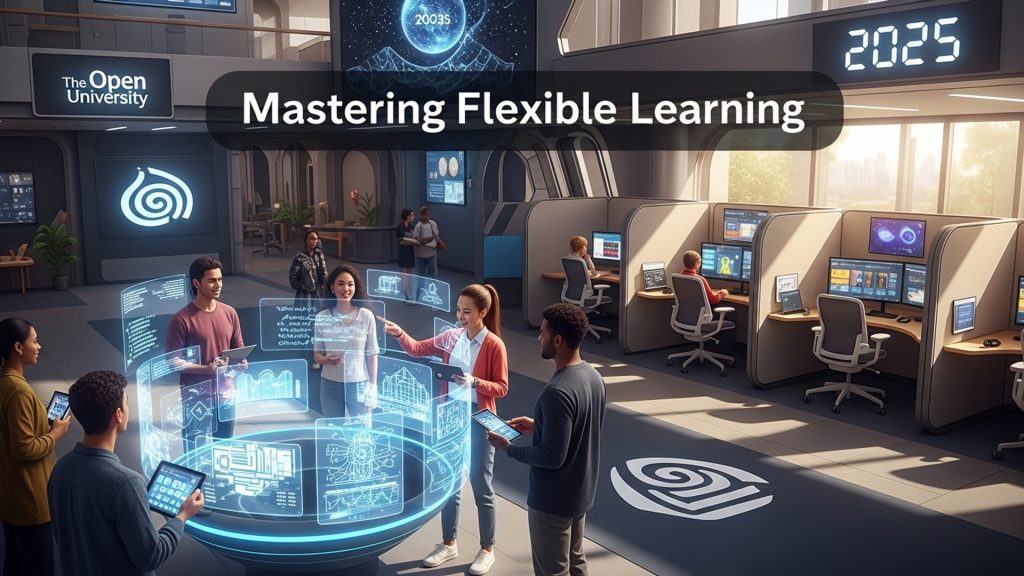
By 2025, the accelerating pace of technological disruption, particularly in AI and automation, mandates continuous upskilling for career longevity. Traditional learning models often fail to accommodate professional commitments, creating a critical demand for agile educational pathways. The Open University, a pioneer in flexible, distance learning, directly addresses this imperative, empowering professionals to acquire in-demand competencies—from data science to sustainable engineering—through its robust asynchronous and blended learning frameworks. This established model ensures individuals can strategically navigate evolving industry landscapes, transforming challenges into opportunities without career interruption.
Navigating the New Learning Landscape: What is Flexible Learning?
Hey future-shapers! Ever feel like the traditional path to education doesn’t quite fit your life? Maybe you’re juggling a part-time job, exploring new hobbies, or just want to learn at your own pace without the strict schedules of a campus. That’s where flexible learning swoops in. It’s an educational approach designed to adapt to your individual needs, allowing you to choose when, where. how you study.
Unlike conventional classroom settings, flexible learning puts you in the driver’s seat. It’s not about ditching structure entirely. about gaining control over your learning journey. This method is becoming increasingly vital in a rapidly evolving world where continuous upskilling isn’t just an advantage – it’s a necessity. For young adults and teens looking to get a head start or pivot into new fields, mastering this approach is key to staying relevant and competitive in 2025 and beyond.
- Self-Paced Study: You decide how quickly or slowly you move through course material.
- Location Independence: Learn from your bedroom, a coffee shop, or even during your commute.
- Modular Structure: Courses are often broken into smaller, manageable units, allowing for greater flexibility in your study load.
- Diverse Learning Resources: Access to online lectures, interactive exercises, digital libraries. virtual collaboration tools.
Why The Open University is Your Go-To for Upskilling in 2025
When we talk about flexible learning, especially in the context of a globally recognized institution, The Open University immediately comes to mind. Often referred to simply as the open universaty, it has been a pioneer in distance learning for over 50 years, making higher education accessible to millions. But why is it particularly relevant for you in 2025?
The Open University isn’t just about offering online courses; it’s built from the ground up to support independent, flexible study. This means they’ve perfected the art of creating engaging, high-quality educational experiences that don’t require you to be physically present on a campus. For young people aiming to upskill for the future job market, this model offers unparalleled advantages:
- Global Recognition: Degrees from this open universaty are recognized and respected by employers worldwide.
- No Prior Qualifications Needed for Many Courses: While some degrees have specific entry requirements, many introductory courses are open to everyone, making it perfect for those without traditional academic backgrounds.
- Cost-Effective: While not free, the open universaty often offers more affordable tuition fees compared to campus-based universities, especially when you factor in the lack of relocation costs.
- Developed for Digital Natives: Their learning platforms are robust and intuitive, designed for individuals comfortable with online interaction and digital tools.
Imagine being able to start your degree or a new qualification right after high school, while also gaining work experience or exploring other interests. This open universaty makes that a reality.
Decoding Open University Study: Key Concepts Explained
To truly master flexible learning with The Open University, it’s helpful to grasp the core concepts that define their approach. These aren’t just buzzwords; they’re the pillars of a successful distance learning experience.
Distance Learning: Breaking Down Barriers
At its heart, the open universaty is a distance learning institution. This means that the majority of your study takes place remotely, without needing to attend physical classes. Historically, this involved printed materials sent through the mail. Today, it’s almost entirely digital, leveraging the power of the internet.
This model is particularly empowering for our target audience because it removes geographical and time constraints. Whether you’re in a rural area, traveling, or have commitments that make daily campus attendance impossible, distance learning ensures you still have access to world-class education.
Modular Learning: Building Your Future, Piece by Piece
Most Open University qualifications are structured around modular learning. This means a degree or qualification is broken down into smaller, self-contained units called “modules.” You typically study one or two modules at a time, accumulating credits as you pass each one. Once you’ve earned enough credits, you receive your qualification.
This approach offers incredible flexibility:
- You can vary your study intensity: take more modules when you have time, fewer when life gets busy.
- It allows you to test the waters with an introductory module before committing to a full degree.
- You can exit with an intermediate qualification (like a Certificate or Diploma) if your goals change, without losing the credits you’ve earned.
Online Resources & Support: Your Virtual Learning Ecosystem
The open universaty’s learning experience is rich with digital resources. Your primary hub will be the Virtual Learning Environment (VLE), often called a “Student Home” or similar. Here’s what you can expect:
- Course Materials: Digital textbooks, video lectures, interactive quizzes. assignments.
- Tutor Support: Dedicated tutors provide guidance, mark assignments. offer feedback. You’ll communicate with them via email, forums, or virtual tutorials.
- Student Forums: Online communities where you can connect with fellow students, discuss course topics. form study groups.
- Online Library: Access to vast academic databases, journals. e-books, all from your device.
- Virtual Tutorials: Live online sessions with your tutor and other students, often recorded for later viewing.
Here’s a simplified look at how you might navigate your VLE:
// Example of accessing module content
user@studenthome:~ $ cd /modules/TM129
user@studenthome:/modules/TM129 $ ls
Unit_1_Introduction. pdf
Video_Lecture_Week_1. mp4
Forum_Discussions/
Assignment_1_Submission_Portal/
Tutor_Contact_Info. txt
Accreditation & Recognition: Your Qualification’s Value
It’s crucial that any qualification you earn is recognized and valued. The Open University is a fully accredited public research university in the United Kingdom, meaning its degrees hold the same academic standing as those from traditional universities. This accreditation is vital for your future career prospects, ensuring employers and other educational institutions recognize the quality and rigor of your studies from this open universaty.
Mapping Your Path: Choosing Courses and Qualifications for 2025
With an open universaty, you have a vast array of choices, from short courses to full degrees. How do you pick the right one for upskilling in 2025?
Understanding Qualification Types
The Open University offers various levels of qualifications:
- OpenLearn Free Courses: A great starting point for exploring subjects and getting a feel for flexible learning, without commitment.
- Access Modules: Designed to prepare you for university-level study if you don’t have traditional entry qualifications.
- Certificates of Higher Education (CertHE): Typically 120 credits (equivalent to the first year of a degree). Great for gaining foundational knowledge or a specific skill.
- Diplomas of Higher Education (DipHE): Typically 240 credits (equivalent to the first two years of a degree). Offers more in-depth knowledge in a subject.
- Bachelor’s Degrees (BA, BSc): Full undergraduate degrees (360 credits). The gold standard for comprehensive subject mastery.
- Postgraduate Qualifications: Master’s degrees and PhDs for advanced study.
Selecting a Course for the Future Job Market
In 2025, the job market continues to be shaped by rapid technological advancements and global challenges. When choosing a course with the open universaty, consider areas that are projected to have high demand:
- Digital Skills: Coding, web development, digital marketing, cybersecurity.
- Data Science & AI: Data analysis, machine learning, artificial intelligence applications.
- Green Skills: Environmental science, sustainability, renewable energy management.
- Health & Social Care: Nursing, public health, social work (often blended learning).
- Business & Management: Digital business, project management, leadership.
For example, if you’re passionate about technology, you might explore a BSc in Computing and IT. If environmental issues concern you, a BSc in Environmental Science could be your calling. The key is to align your interests with future industry needs.
Navigating Your Study Journey: Strategies for Success
Flexible learning offers freedom. it also requires discipline. Here are actionable tips to make your Open University journey a success:
Mastering Time Management: Your Most Valuable Skill
This is where the ‘flexible’ part truly shines. also where many students stumble. Without fixed class times, you need to create your own schedule. Here’s how:
- Create a Study Timetable: Allocate specific blocks of time each week for study, just like you would for a job or school. Be realistic about how much time you can commit.
- Break Down Tasks: Instead of thinking “study Unit 3,” break it into “read pages 50-70,” “watch video lecture,” “complete quiz.”
- Use Productivity Tools: Apps like Trello, Todoist, or even a simple calendar can help you track deadlines and progress.
- Schedule Regular Breaks: Avoid burnout. Short, frequent breaks are more effective than marathon study sessions.
A hypothetical study plan for a module requiring 16 hours a week:
| Day | Morning (e. g. , 9 AM – 12 PM) | Afternoon (e. g. , 2 PM – 5 PM) | Evening (e. g. , 7 PM – 9 PM) |
|---|---|---|---|
| Monday | Read Unit 1 materials (2 hrs) | Review notes, complete practice questions (1 hr) | |
| Tuesday | Watch video lectures (1. 5 hrs) | ||
| Wednesday | Work on Assignment 1 (2 hrs) | ||
| Thursday | Participate in online forum discussions (1 hr) | ||
| Friday | Review week’s content, prepare for next unit (2 hrs) | ||
| Saturday | Deep dive into challenging concepts (3 hrs) | ||
| Sunday | Rest & Recharge! | ||
Leveraging Online Tools: Your Digital Classroom
The open universaty provides a wealth of digital tools. Don’t just skim them – actively engage:
- Virtual Learning Environment (VLE): This is your central hub. Get to know every section, especially the calendar and assignment submission portals.
- Discussion Forums: These aren’t just for asking questions. Engage in debates, share your insights. learn from others’ perspectives.
- Virtual Tutorials: Attend these live if possible, as they offer direct interaction with your tutor and peers. If you can’t make it, watch the recordings.
- Digital Library: Learn how to search effectively for academic sources. This skill is invaluable for assignments and research.
Building a Support Network: You’re Not Alone
While studying with an open universaty is independent, it’s not solitary. Proactively build your support system:
- Connect with Your Tutor: They are your primary point of contact for academic support. Don’t hesitate to ask questions or seek clarification.
- Join Student Forums: These are fantastic for peer support. You’ll find others facing similar challenges and celebrating similar successes.
- Form Study Groups: Whether virtual or in-person (if geographically feasible), studying with others can boost motivation and understanding.
- Utilize Student Support Services: The open universaty offers a range of services, including disability support, career advice. counselling.
Upskilling for the 2025 Job Market: Real-World Impact
The ultimate goal of flexible learning with the open universaty for many young people is to enhance their career prospects. In 2025, employers are looking for adaptable individuals with relevant, future-proof skills. An Open University qualification directly addresses this need.
The Evolving Job Landscape
The world of work is dynamic. Automation, AI. global connectivity mean that jobs are constantly changing. Skills that were niche a few years ago are now mainstream. For example, understanding basic coding principles or data analysis is becoming as fundamental as literacy and numeracy in many fields.
By choosing a relevant qualification from the open universaty, you’re not just getting a piece of paper; you’re acquiring concrete, in-demand skills. Imagine a scenario:
Case Study: Maya’s Tech Transition
Maya, 19, had a passion for gaming but wasn’t sure how to turn it into a career beyond playing. After finishing school, she didn’t want to commit to a traditional university campus. She discovered the open universaty’s Certificate of Higher Education in Computing & IT. Working part-time at a local cafe, she dedicated 15-20 hours a week to her studies. She learned Python programming, database fundamentals. web development basics. By the time she completed her CertHE in 18 months, she had built a small portfolio of projects. This allowed her to secure an entry-level position as a Junior Web Developer at a local startup, where her practical skills, learned through flexible study, were highly valued. She plans to continue her degree part-time with the open universaty while gaining professional experience.
This illustrates how the flexibility of an open universaty allows you to gain valuable skills without pausing your life or incurring significant debt, directly leading to tangible career opportunities.
Is The Open University Right for You? A Self-Assessment
Before diving in, ask yourself these questions to determine if flexible learning with an open universaty aligns with your learning style and goals:
- Are you self-motivated and disciplined enough to manage your own study schedule?
- Are you comfortable with online learning platforms and digital communication?
- Do you have other commitments (work, family, hobbies) that make traditional university difficult?
- Are you keen to develop skills relevant to future job markets?
- Do you value the flexibility to learn at your own pace and from anywhere?
Here’s a quick comparison to help you weigh your options:
| Feature | Traditional Campus University | The Open University (Open Universaty) |
|---|---|---|
| Learning Environment | Physical campus, lectures, seminars, labs. | Online Virtual Learning Environment, self-study, virtual tutorials. |
| Flexibility | Fixed schedules, mandatory attendance. | Highly flexible; study anytime, anywhere, at your own pace. |
| Social Interaction | Frequent in-person interaction with peers and lecturers. | Online forums, virtual groups, occasional in-person meetups (optional). |
| Entry Requirements | Often strict academic prerequisites (e. g. , A-Levels, IB). | More accessible entry; many courses have no formal requirements. |
| Cost | Tuition fees + living expenses (accommodation, travel). | Tuition fees only; no relocation costs. Potentially lower overall cost. |
| Ideal For | Full-time students, those seeking a traditional university experience. | Working professionals, those with commitments, self-starters, upskillers. |
Conclusion
The dynamic landscape of 2025 underscores a fundamental truth: continuous learning isn’t just an advantage, it’s a necessity. The Open University stands as your unparalleled partner in this journey, offering the agility to upskill and reskill without pausing your life. Consider the transformative power, much like how a colleague of mine seamlessly integrated a digital marketing course around her demanding job, ultimately securing a promotion in a rapidly evolving sector. This flexibility is critical in an era where AI integration and green skills are reshaping industries at an unprecedented pace. My personal advice? Cultivate a “micro-learning” mindset. Dedicate small, consistent blocks of time – perhaps 30 minutes daily – rather than waiting for large, uninterrupted stretches. This sustainable approach makes mastery achievable. The OU provides the structure; you provide the commitment. Embrace this opportunity not just to adapt. to actively sculpt your future. Your professional evolution in 2025 and beyond begins with this empowered choice.
More Articles
Unlocking Your Potential: Selecting the Right MBA Specialization for Future Success in 2025
Beyond Your Bachelor’s: Essential Steps for Pursuing Postgraduate Study in the UK
Unlock Your University Dreams: A Practical Guide to Securing Student Finance in the UK
Beyond the Numbers: Decoding Business School Rankings for Your 2025 Decisions

FAQs
What’s this ‘Mastering Flexible Learning’ guide all about?
This guide is your complete resource for understanding how to effectively use flexible learning, specifically with The Open University, to boost your skills and career readiness by 2025. It’s packed with strategies, tips. insights to help you make the most of your study journey.
Why should I consider The Open University for upskilling?
The Open University is a leader in flexible, distance learning, making it ideal for fitting studies around your existing work and life commitments. They offer a vast range of courses and qualifications designed for real-world application, helping you gain relevant, in-demand skills for today’s job market.
Is ‘flexible learning’ just another name for online courses?
While online access is a core component, flexible learning with the OU goes much deeper. It means you have significant control over when, where. often how you study, with comprehensive support materials, dedicated tutors. vibrant student communities, all built to adapt to your personal schedule and learning style.
When should I start planning my upskilling for 2025?
Now is an excellent time to start! Planning ahead allows you to thoroughly explore course options, comprehend the time commitment involved. prepare for enrollment deadlines. Getting an early start means you can hit the ground running and achieve your goals as 2025 unfolds.
I’m worried about balancing study with my job and family. How does the OU help?
That’s exactly what flexible learning is designed for! The OU provides study materials you can access anytime, anywhere. offers various part-time study options. You’ll also receive dedicated tutor support and access to student communities, so you’re never alone in your learning journey, making it manageable to balance with other commitments.
What kind of skills can I expect to gain through this approach?
You can gain a wide array of skills. This includes specific professional competencies in fields like technology, business, or healthcare, as well as crucial transferable skills such as critical thinking, problem-solving, effective time management. independent learning – all highly valued by employers.
Do I need to be a tech wizard to study with The Open University?
Not at all! You’ll need basic computer literacy and reliable internet access, as much of the learning is delivered online. But, The Open University provides plenty of resources and support to help you get comfortable with their learning platforms, so you don’t need advanced tech skills.