
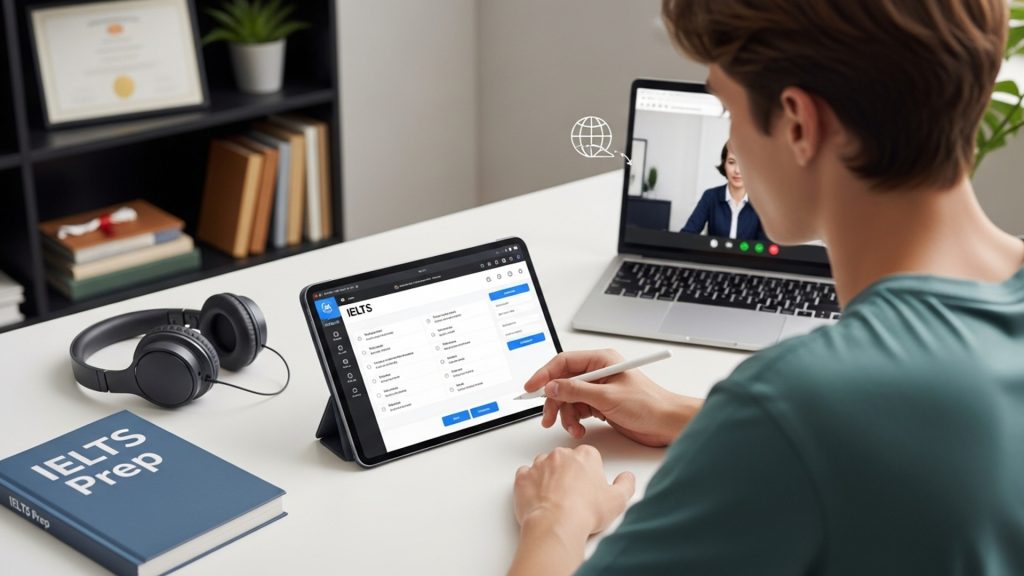
The global shift towards digital assessment has fundamentally reshaped the IELTS landscape, making the IELTS online test a prevalent and convenient option for millions worldwide. No longer confined to traditional test centres, candidates now face unique demands, from mastering digital navigation and keyboard proficiency to adapting to AI proctoring protocols and managing screen fatigue effectively. Successfully tackling this computer-delivered format requires more than just language competence; it demands a strategic understanding of the platform’s intricacies and an ability to leverage its features for optimal performance. Prepare to navigate this digital frontier with confidence, transforming potential technical hurdles into distinct advantages on your path to a top score.

Understanding the IELTS Online Test Landscape
The International English Language Testing System (IELTS) is your global passport to academic and professional opportunities where English is the primary language of communication. It’s a test trusted worldwide, designed to assess your English language proficiency across four key skills: Listening, Reading, Writing. Speaking. While the traditional paper-based format is still widely available, the advent of the computer-delivered IELTS, often referred to as the Ilets online test, has revolutionized the experience, offering a modern, efficient. often more convenient option for test-takers like you.
So, what exactly is the Ilets online test? It’s the same IELTS test in terms of content, question types, scoring. difficulty level. instead of marking answers on paper, you complete the Listening, Reading. Writing sections using a computer. The Speaking test remains a face-to-face conversation with a certified IELTS examiner, ensuring that crucial human element of real-world communication is maintained. This blend offers the best of both worlds: digital convenience for the receptive and productive skills. authentic interaction for spoken English.
Why choose the online format? For many young adults and teens, growing up in a digital age means you’re already highly proficient with keyboards and screens. This familiarity can be a huge advantage. Imagine the ease of editing your essays, copying and pasting text for certain question types. seeing a live word count during your Writing test. Plus, results for the computer-delivered test are often available much faster, typically within 3-5 days, compared to 13 days for the paper-based version. This speed can be a game-changer when you’re on a tight deadline for university applications or visa submissions.
Technically, the requirements for taking the Ilets online test are straightforward. You’ll be provided with a dedicated computer, a comfortable headset with a microphone for the Listening section. a quiet testing environment. The interface is user-friendly, designed to be intuitive even for those with basic computer literacy. You won’t need to install any software or bring your own device; everything is set up for you at an official test center. Your only task is to focus on demonstrating your English skills!
Deconstructing the Computer-Delivered IELTS Format
Let’s dive deeper into how each section of the Ilets online test is presented and what digital features you can leverage. Understanding the interface is half the battle won, as it allows you to concentrate purely on the test content, not on navigating the system.
- Listening Section: You’ll wear comfortable headphones, ensuring clear audio delivery. Questions and answer options appear on your screen. You type your answers directly into designated boxes. You can navigate between questions easily. there’s often a review screen at the end of each section. The timer is clearly visible, helping you manage your pace.
- Reading Section: The reading passages appear on one side of your screen, while the questions are displayed on the other. This split-screen layout eliminates the need to flip pages back and forth, making it incredibly efficient. You can highlight text, make notes digitally. easily copy-paste words or phrases into answer boxes.
- Writing Section: This is where the digital format truly shines for many. You’ll type your essays directly into a text editor. A live word counter constantly updates, so you always know if you’re meeting the minimum word count requirements. You can easily edit, cut, copy. paste text, which is a massive advantage for refining your arguments and structure.
- Speaking Section: As mentioned, this section is fundamentally the same as the paper-based test. You’ll have a one-on-one conversation with a human examiner, either in person or via video call. This ensures a natural, dynamic assessment of your fluency, coherence, lexical resource. grammatical range and accuracy.
Here’s a quick comparison to highlight the key differences between the computer-delivered and paper-based IELTS:
| Feature | Computer-Delivered IELTS | Paper-Based IELTS |
|---|---|---|
| Sections | Listening, Reading, Writing on computer; Speaking face-to-face. | All sections on paper; Speaking face-to-face. |
| Input Method | Typing for L, R, W. | Pencil/pen for L, R, W. |
| Editing/Review | Easy cut, copy, paste, highlight, digital notes, word count. | Eraser for changes, manual word count. |
| Results Speed | 3-5 days. | 13 days. |
| Test Dates | More frequent availability. | Limited availability. |
Strategic Approaches for IELTS Listening Online
The Listening section of the Ilets online test demands keen focus and adaptability. Here’s how to ace it:
- Headset Familiarization: Before the test begins, take a moment to adjust your headset. Ensure the volume is comfortable and that you can hear clearly. During practice, always use headphones to simulate the test environment. This helps you get used to isolating the audio and focusing on the task.
- Digital Note-Taking: While you can’t scribble on the question paper directly, you will often be provided with a pen and paper for rough notes. Practice jotting down key insights, names, dates. numbers quickly. Crucially, don’t try to write down everything; focus on keywords and specifics that directly relate to the questions. For example, if a question asks about a specific date, listen intently for numbers and months.
- Navigating Questions and Time: The digital interface allows you to see all questions for a section simultaneously. Use this to your advantage! Skim the upcoming questions during the allocated reading time. As you listen, anticipate the answers. If you miss an answer, don’t panic. Make an educated guess and move on. The timer helps you keep track. remember, the audio plays only once, so quick decision-making is key.
- Real-World Tip: Sarah, an 18-year-old student, shared her experience: “I used to get distracted by trying to type answers while listening. My tutor advised me to quickly jot down keywords on the provided scratch paper first. then transfer them to the answer boxes during the ten-minute transfer time. This significantly improved my accuracy.” Practice this technique! Use official IELTS online practice tests (available on the British Council or IDP websites) to simulate the experience and refine your strategy.
Mastering the IELTS Reading Section Digitally
The online Reading section offers distinct advantages. Here’s how to make the most of them:
- Split-Screen Advantage: The side-by-side display of the passage and questions is a game-changer. You don’t waste time flipping pages. Practice reading the questions first, then scanning the passage for keywords. When you find relevant insights, it’s right next to the question.
- Utilizing Digital Tools: The online platform often allows you to highlight text. Use this! Highlight potential answers, key phrases, or confusing sentences. Some platforms also allow you to make digital notes, though this feature varies. Most importantly, for question types like ‘Sentence Completion’ or ‘Summary Completion,’ you can often copy words directly from the passage and paste them into your answer box, ensuring perfect spelling. This is a huge time-saver and accuracy booster.
- Time Management: You have 60 minutes for three passages and 40 questions. This means roughly 20 minutes per passage. Since you don’t have separate transfer time, practice typing your answers directly as you find them. Regularly glance at the on-screen timer. If a question is proving too difficult, skip it and come back later if time permits. Prioritize questions you can answer quickly to build momentum.
- Actionable Takeaway: Practice scrolling! It might sound trivial. smoothly navigating long passages without losing your place is a skill. Use online articles and practice tests to build your comfort with digital reading. Try reading a passage entirely on screen, then answer questions based on it, mimicking the Ilets online test environment.
Excelling in IELTS Writing Online
For many, the Writing section of the Ilets online test is where the digital format provides the most significant boost.
- Typing Speed and Accuracy: This is paramount. If you’re a slow typist, now is the time to improve. Dedicate time daily to typing practice using online platforms (e. g. ,
typingclub. comor
keybr. com). Aim for at least 30-40 words per minute with high accuracy. The faster you type, the more time you’ll have to plan, brainstorm. refine your essays.
- Using the Word Count Feature: The live word counter is your best friend. For Task 1 (minimum 150 words) and Task 2 (minimum 250 words), you need to meet these counts. The counter helps you avoid under-writing, which can penalize your score. Use it to gauge if you need to elaborate further on your points or if you can move on to proofreading.
- Planning and Outlining in a Digital Space: Don’t just start typing! Use the first 5-10 minutes for Task 2 (and a few minutes for Task 1) to plan your essay. You can do this on the scratch paper provided or even type out a quick outline directly in the answer box and then delete it later. A well-structured plan is crucial for coherence and cohesion.
- Proofreading Strategies On-Screen: Proofreading on a screen can be different from proofreading on paper. After you finish typing, dedicate the last 5 minutes to carefully reviewing your work. Look for grammatical errors, spelling mistakes, punctuation issues. clarity. Read your sentences aloud (subtly, in your head) to catch awkward phrasing. The ease of editing means you can correct mistakes quickly and efficiently.
- Comparison: Typing vs. Handwriting: For students with neat handwriting and good speed, the paper test might seem fine. But, for those with less legible handwriting or who struggle with manual editing, typing offers immense advantages. You can easily move paragraphs, insert sentences. fix typos without messy strike-throughs or illegibility issues, which can impact examiner perception. Embrace the digital flexibility!
Conquering the IELTS Speaking Test (It’s Still Human!)
It’s essential to reiterate that the Speaking test, whether you take the paper-based or the Ilets online test, remains a human interaction. This is fantastic because it assesses your ability to communicate naturally and spontaneously.
- Natural Conversation is Key: The examiner isn’t looking for memorized answers. They want to hear you speak naturally, express your opinions. elaborate on your ideas. Think of it as a structured conversation rather than an interrogation. Maintain eye contact (if in-person), smile. show enthusiasm.
- Strategies for Clarity and Coherence:
- Extend Your Answers: Don’t just give one-word answers. If asked, “Do you like sports?” , don’t just say “Yes.” Elaborate: “Yes, I absolutely love sports, especially basketball. I’ve been playing since I was a child. I really enjoy the teamwork and the competitive spirit.”
- Use Connectors: Employ linking words and phrases to make your speech flow smoothly (e. g. , “But,” “therefore,” “in addition,” “on the other hand,” “firstly,” “finally”).
- Manage Pauses: It’s okay to pause briefly to think. avoid long silences or excessive filler words like “um” or “uh.” Practice thinking quickly and structuring your thoughts.
- Confidence is Attractive: Even if you make a small grammatical error, speak with confidence. Your fluency and willingness to communicate count for a lot. Practice speaking about a variety of topics relevant to the IELTS test (e. g. , hobbies, education, technology, environment, future plans) with friends, family, or a tutor.
- Practice Tips: Record yourself speaking and listen back. Are you clear? Are you repeating words too often? Are your ideas well-organized? Join online conversation groups or find a language exchange partner. Simulating the test environment, even by just speaking English for a set period each day, can dramatically boost your confidence and performance.
Pre-Test Preparation: Technical & Mental Readiness for the Ilets Online Test
Success on the Ilets online test isn’t just about English proficiency; it’s also about being technically and mentally prepared.
- Familiarization with Official Practice Tests: The absolute best way to prepare for the computer-delivered IELTS is to use the official practice tests provided by IELTS. Both the British Council and IDP Education offer free online practice materials that perfectly simulate the actual test interface. Spend hours navigating these tests, getting comfortable with the layout, the timers. the input methods. This will eliminate any surprises on test day.
- Ensuring Comfort with the Setup: If possible, practice on a desktop computer with a full-sized keyboard and an external mouse. While laptops are common, the test center setup typically mimics a desktop. Get used to typing for extended periods without discomfort. Ensure your posture is good. A comfortable headset is crucial for Listening; practice with various types if you can, to find what works best.
- Mental Preparation: Managing Test Anxiety: It’s natural to feel nervous. excessive anxiety can hinder performance.
- Visualize Success: Imagine yourself confidently navigating the test and answering questions.
- Deep Breathing Exercises: Practice simple deep breathing techniques to calm your nerves before and during the test.
- Adequate Sleep: Ensure you get a good night’s sleep before the test. A well-rested mind performs optimally.
- Nutrition: Eat a healthy meal before the test and bring a small, approved snack if allowed, to keep your energy levels up.
- Creating a Conducive Practice Environment: Mimic test conditions as much as possible at home. Find a quiet space, set a timer. avoid distractions. This helps build stamina and concentration.
- Importance of Mock Tests: Taking full-length mock tests under timed conditions is non-negotiable. This helps you identify your weaknesses, manage your time effectively. build endurance for the 2 hours and 45 minutes of the main test. You’ll thank yourself later for this rigorous preparation.
Leveraging Digital Resources for Practice and Improvement
The digital age offers an incredible array of tools to help you master the Ilets online test. Embrace them!
- Official IELTS Websites: The British Council (
britishcouncil. org) and IDP Education (
idp. com) are your primary, most reliable sources. They offer not only practice tests but also detailed insights about the test format, scoring criteria. helpful tips. They are the authoritative institutions for IELTS.
- Online Practice Platforms and Apps: Beyond the official sites, numerous reputable platforms and apps specialize in IELTS preparation. Look for those with good reviews and a track record of success. Many offer interactive exercises, vocabulary builders. even AI-powered feedback on your writing. Just ensure they align with the official IELTS format.
- Utilizing Online Communities for Peer Support: Joining online forums, Facebook groups, or Reddit communities dedicated to IELTS can be incredibly beneficial. You can ask questions, share strategies, find study partners. learn from the experiences of others. This sense of community can be a great motivator.
- Real-World Example: Take Maria, a 16-year-old aiming for a Band 7. 0. She struggled with the Reading section’s timing. She started by doing daily online practice tests, specifically focusing on the Reading module. She used the highlight feature extensively, a trick she learned from an online forum. For her Writing, she used an AI grammar checker to identify common errors before getting feedback from her tutor. “The online tools made practice so much more accessible and efficient,” she recounts. “I could practice anytime, anywhere. get immediate feedback, which was crucial for improving quickly.” Her proactive use of online resources ultimately helped her achieve her target score.
Conclusion
Mastering the online IELTS is less about simply knowing English and more about strategically navigating its digital landscape. It’s crucial to interpret that the online test, with its sophisticated AI proctoring and digital interfaces, presents unique challenges and opportunities. My personal tip is to treat every practice session as a full dress rehearsal: familiarize yourself not just with content. with the exact online writing pad, the drag-and-drop question types. maintaining consistent eye contact with the camera during the speaking module. This digital fluency is as vital as your vocabulary. Remember, success isn’t just about answering correctly; it’s about performing optimally within the online environment. Embrace the shift, practice relentlessly with online simulations. view the technology as an ally, not an obstacle. Your dedication to these specific online strategies will undoubtedly pave your way to a top score and unlock your academic aspirations. For more insights on global university applications, explore our guide on Seamless Applications: Your Essential Guide to Applying for French Universities in 2025.
More Articles
How to Pick the Perfect UK University Course for Your Future Career in 2025
Navigating Student Finance: Smart Strategies for Funding Your UK University Degree
Unlocking Your Future: Essential Steps for Pursuing Postgraduate Study in the UK
Selecting Your Ideal French Degree: Practical Steps for a Future-Proof Career

FAQs
What exactly does “Mastering the IELTS Online Test” cover?
This guide dives deep into all aspects of the IELTS online exam, providing you with smart strategies for each section – Listening, Reading, Writing. Speaking – specifically tailored for the digital format. It’s about helping you interpret the test’s nuances and how to perform your absolute best.
Who would benefit most from these essential strategies?
Anyone planning to take the IELTS Academic or General Training test online. Whether you’re aiming for university, immigration, or professional registration. especially if you’re new to the online version, these strategies are designed to boost your confidence and score.
Are the strategies different for the online test compared to the paper-based one?
Absolutely! While the core content is similar, the online test has unique elements like computer-based writing, digital note-taking. navigating the interface. This guide focuses on strategies that leverage the online format and help you overcome its specific challenges.
Will this resource help me improve my Writing and Speaking scores?
Definitely. For Writing, it offers tips on structuring essays efficiently on a computer, managing your time. using digital tools effectively. For Speaking, it covers strategies for clear communication, effective self-correction. managing nerves during the video call format.
How quickly can I expect to see results from using these strategies?
Improvement varies for everyone. by consistently applying the techniques and practicing regularly, you should start noticing a positive difference in your performance and confidence fairly quickly. It’s not a magic bullet. a structured path to better results.
Do I need to be tech-savvy to follow these strategies?
Not at all! The guide assumes you might be new to online testing environments. It breaks down technical aspects simply and focuses on practical strategies that anyone can implement, regardless of their tech comfort level.
What’s the biggest takeaway from this guide for someone aiming for a top score?
The biggest takeaway is that success in the online IELTS isn’t just about English proficiency; it’s also about mastering the test environment and applying specific, smart strategies. Understanding how to navigate, manage your time. use the digital tools effectively is crucial for maximizing your score.