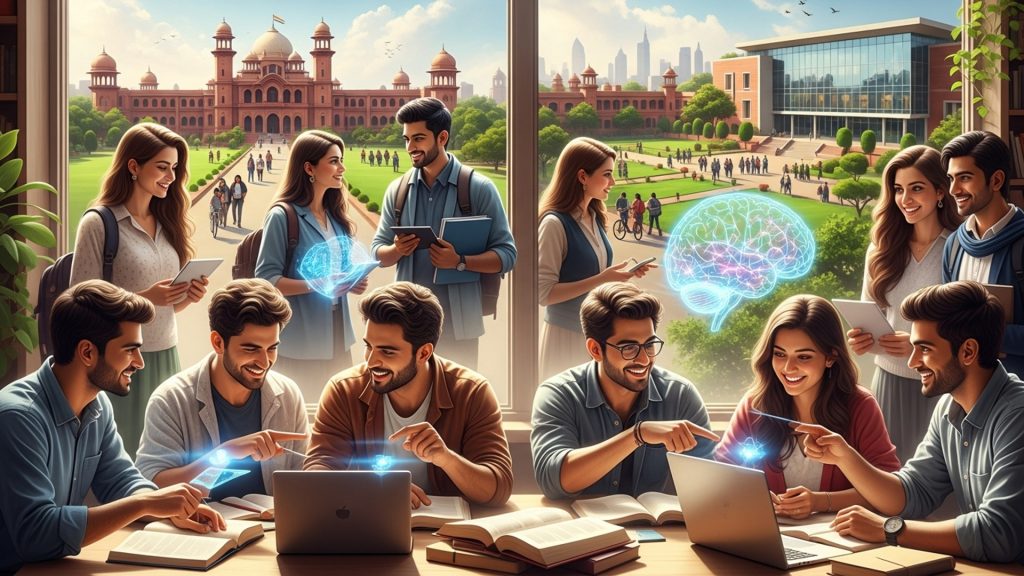
Navigating the fiercely competitive landscape of higher education in India demands strategic insight, especially when aspiring for a coveted spot in a top university in India. With institutions like the IITs, AIIMS. IIMs consistently pushing boundaries in research and innovation, securing admission requires more than just academic merit; it necessitates understanding evolving entrance paradigms, including the shift towards multidisciplinary aptitude as envisioned by the National Education Policy 2020. This journey involves decoding intricate admission criteria, mastering specific entrance examinations. showcasing a well-rounded profile that distinguishes candidates amidst a record number of applications, reflecting India’s booming youth demographic and global aspirations.
Understanding the Landscape: What Makes a Top University in India?
Embarking on your higher education journey is an exhilarating time. choosing the right institution is perhaps one of the most pivotal decisions you’ll make. When we talk about a top university in India, we’re not just referring to a fancy name; we’re talking about an institution that offers an unparalleled educational experience, sets you on a path to success. shapes you into a leader of tomorrow! But what exactly defines a “top” university?
Several critical factors contribute to a university’s esteemed status, making it a dream destination for aspiring students:
- National and International Rankings
- Faculty Expertise and Research
- Infrastructure and Resources
- Placement and Alumni Network
- Accreditation and Reputation
Organizations like the National Institutional Ranking Framework (NIRF) in India, along with global rankings such as QS World University Rankings and Times Higher Education (THE) World University Rankings, meticulously assess institutions based on various parameters. These include teaching, research, graduation outcomes, outreach. inclusivity. A consistently high ranking is a clear indicator of academic excellence.
The backbone of any great university is its faculty. Top institutions boast highly qualified professors, many with international experience and groundbreaking research contributions, who bring real-world insights and cutting-edge knowledge into the classroom. Their active involvement in research means students often get opportunities to participate in projects that can shape future industries.
State-of-the-art laboratories, expansive libraries, modern classrooms, advanced computing facilities. vibrant campus life (sports, cultural centers) are hallmarks of a premier university. These resources provide an enriching environment conducive to both academic and personal growth.
A strong track record of successful placements with leading companies and organizations is a significant draw. Moreover, an extensive and influential alumni network provides invaluable connections, mentorship opportunities. career pathways for current students.
Accreditation by bodies like the National Assessment and Accreditation Council (NAAC) ensures quality standards. Beyond formal accreditation, the overall reputation built over decades, often synonymous with academic rigor and innovation, plays a huge role.
Why Aim for India’s Educational Elite? The Unmatched Advantages
Choosing to pursue your education at a top university in India is more than just securing a degree; it’s an investment in a future brimming with potential and opportunities. The advantages are truly transformative:
- World-Class Education
- Unparalleled Career Opportunities
- Networking and Peer Learning
- Holistic Development
- Research and Innovation Hubs
These institutions are hubs of academic brilliance, offering cutting-edge curricula, innovative teaching methodologies. exposure to diverse perspectives. You’ll be challenged to think critically, solve complex problems. push the boundaries of knowledge.
Graduates from top universities are highly sought after by employers globally. The strong academic foundation, practical skills. esteemed university brand open doors to coveted job roles, internships. entrepreneurial ventures. Many multinational corporations and leading Indian companies actively recruit from these campuses.
You’ll be surrounded by some of the brightest minds in the country – both peers and faculty. This creates an incredibly stimulating environment for collaborative learning, intellectual discussions. forging lifelong connections that can be instrumental in your personal and professional journey.
Beyond academics, top universities emphasize holistic growth. They offer a plethora of extracurricular activities, clubs, societies. leadership opportunities that help you discover new talents, develop soft skills. build a well-rounded personality.
Many of these universities are at the forefront of research and innovation, contributing significantly to advancements in science, technology, humanities. arts. Students often get the chance to be part of these exciting developments, fostering a spirit of inquiry and discovery.
Consider the story of “Rohan,” an engineering graduate from an IIT. His university’s strong industry connections led him to an internship at a pioneering tech startup, which eventually offered him a full-time position. The rigorous academic training combined with the practical exposure gained through his college’s robust ecosystem propelled his career trajectory far beyond what he initially imagined. This is the tangible impact of studying at a top university in India.
Decoding India’s Premier Institutions: A Categorical Overview
India’s higher education landscape is rich and diverse, offering a range of institutions specializing in different fields. Understanding these categories is the first step in identifying which path aligns best with your aspirations.
Here’s a comparison of some of India’s leading institutional categories:
| Category | Description | Key Features & Strengths | Examples |
|---|---|---|---|
| Indian Institutes of Technology (IITs) | Autonomous public technical universities established by the Government of India. | Pioneers in engineering and technology education; renowned for rigorous academics, research. excellent placements. Highly competitive admission. | IIT Bombay, IIT Delhi, IIT Madras, IIT Kanpur |
| Indian Institutes of Management (IIMs) | Autonomous public business schools focused on management education and research. | Leaders in management studies; offer world-class MBA and doctoral programs. Known for strong industry interface and leadership development. | IIM Ahmedabad, IIM Bangalore, IIM Calcutta |
| All India Institutes of Medical Sciences (AIIMS) | Autonomous public medical colleges of higher education. | Premier institutions for medical education, research. patient care. Known for cutting-edge medical facilities and highly sought-after medical degrees. | AIIMS Delhi, AIIMS Jodhpur, AIIMS Bhubaneswar |
| National Institutes of Technology (NITs) | Autonomous public engineering and technology institutes. | Excellent engineering education across various branches; strong regional presence; offer B. Tech, M. Tech. PhD programs. | NIT Trichy, NIT Warangal, NIT Surathkal |
| Central Universities | Universities established or incorporated by an Act of Parliament, funded by the Central Government. | Offer a wide range of disciplines (arts, science, commerce, law, etc.) ; diverse student body; often have strong research focus. | University of Delhi, Jawaharlal Nehru University (JNU), Banaras Hindu University (BHU) |
| Prestigious Private Universities | Privately funded institutions that have gained significant recognition for quality education and infrastructure. | Often offer modern curricula, interdisciplinary programs, global collaborations. excellent campus facilities. May have diverse admission criteria. | Ashoka University, Manipal Academy of Higher Education (MAHE), Vellore Institute of Technology (VIT) |
Each of these categories represents a pathway to becoming a part of a top university in India, offering unique strengths and specializations. Your choice will largely depend on your desired field of study and career aspirations.
The Gateway: Navigating the Admission Process to a Top University
Gaining admission to a top university in India is undoubtedly competitive. with the right strategy and preparation, it is absolutely achievable! The process typically revolves around rigorous entrance examinations, strong academic records. sometimes, interviews.
Key Entrance Examinations:
Most premier institutions utilize national-level entrance exams to filter candidates. Understanding which exams are relevant to your chosen field is paramount:
- For Engineering (B. Tech)
JEE Main: Qualifies students for admission to NITs, IIITs, GFTIs. serves as a prerequisite for JEE Advanced.
JEE Advanced: The sole gateway to the prestigious Indian Institutes of Technology (IITs).
- For Medical (MBBS/BDS)
NEET-UG (National Eligibility cum Entrance Test - Undergraduate): The single entrance exam for admission to all medical and dental colleges (including AIIMS) in India.
- For Management (MBA/PGDM)
CAT (Common Admission Test): The primary entrance exam for IIMs and many other top business schools.
- Other exams like
XAT,
SNAP,
NMAT,
GMATare also accepted by various institutions.
- For Law (BA LLB/BBA LLB)
CLAT (Common Law Admission Test): For admission to National Law Universities (NLUs) and other affiliated law colleges.
- For Humanities, Sciences. Commerce (UG Programs in Central Universities)
CUET-UG (Common University Entrance Test - Undergraduate): Introduced recently for admission to undergraduate programs in all Central Universities and many participating state/deemed/private universities.
- For Private Universities
Many prestigious private universities conduct their own entrance exams (e. g. ,
VITEEE for VIT,
SRMJEE for SRM University) or accept scores from national-level exams. sometimes even international standardized tests like
SAT /
ACT .
The Application Process:
Once you’ve identified the relevant exams, the application process generally follows these steps:
- Research & Shortlist
- Exam Registration
- University Application
- Admit Card & Exam Day
- Results & Counseling/Interview
- Document Verification & Admission
Identify the specific programs and universities you are interested in. Check their eligibility criteria, application deadlines. required documents.
Register for the appropriate entrance exams well in advance. Pay close attention to deadlines and ensure all details are accurate.
After taking the entrance exam, you’ll typically need to apply separately to your chosen universities. This often involves filling out an online application form, uploading documents (mark sheets, certificates, photographs). paying an application fee.
Download your admit card and prepare for the exam day, ensuring you adhere to all guidelines.
Upon declaration of results, if you meet the cut-off, you’ll be invited for counseling (for engineering/medical) or personal interviews and group discussions (for management/other fields). This stage is crucial for final selection.
Successful candidates undergo document verification and then proceed with fee payment to secure their admission.
Crafting Your Success Story: Strategies to Get Into a Top University
Securing a spot in a top university in India demands dedication, strategic planning. consistent effort. Here’s an actionable roadmap to help you achieve your dream:
1. Academic Excellence is Non-Negotiable:
- Strong Foundation
- Consistent Performance
- Beyond Textbooks
Focus on understanding core concepts in your high school subjects. A solid grasp of fundamentals is critical for entrance exams.
Maintain excellent grades throughout your schooling. While entrance exams are primary, a strong academic record reflects discipline and intellectual capability.
Cultivate a genuine curiosity for your chosen field. Read widely, explore online courses. delve deeper into topics that intrigue you.
2. Master the Entrance Exams:
- Early Start
- comprehend the Syllabus and Pattern
- Strategic Study Plan
- Practice, Practice, Practice
- Seek Guidance
Begin your preparation well in advance. For exams like JEE or NEET, many students start preparing in classes 9th or 10th.
Thoroughly review the exam syllabus and grasp the question paper pattern.
Create a realistic and disciplined study schedule. Allocate time for all subjects, focusing more on areas where you need improvement.
Solve a vast number of practice questions, previous year’s papers. mock tests. This helps in time management, identifying weak areas. familiarizing yourself with the exam environment.
Consider joining coaching institutes or finding mentors who can provide expert guidance, study materials. mock test analysis.
3. Cultivate a Well-Rounded Profile:
While academic prowess is key, top universities also look for well-rounded individuals. This is particularly true for private universities and those with interview rounds.
- Extracurricular Activities
- Leadership Roles
- Skill Development
- Internships/Projects (if applicable)
Engage in sports, arts, debates, coding clubs, community service, or any activity that showcases your passions, leadership skills. ability to work in a team.
Take initiative and lead projects, clubs, or teams. This demonstrates responsibility and management skills.
Learn new skills relevant to your field, such as coding languages, data analysis tools, or public speaking.
For older students or specific programs, relevant internships or personal projects can significantly boost your application.
4. Excel in Interviews & Group Discussions (if applicable):
- Research the University & Program
- Be Articulate & Confident
- Showcase Your Personality
- Prepare for Common Questions
Be knowledgeable about the institution, its values, faculty. the specific program you’re applying for.
Practice clear communication, express your ideas logically. maintain a positive demeanor.
Let your unique strengths, passions. aspirations shine through. Be authentic.
Anticipate questions about your motivations, strengths, weaknesses, career goals. why you want to join that particular university.
Remember, the journey to a top university in India is a marathon, not a sprint. It requires resilience, self-belief. a proactive approach. Every step you take, from mastering a concept to participating in an extracurricular activity, builds towards your ultimate goal. Embrace the challenge, stay focused. believe in your potential!
Conclusion
As we conclude our exploration of India’s premier universities and the pathways to them, remember that unlocking your future isn’t merely about securing a seat; it’s about strategic preparation and unwavering self-belief. The landscape is dynamic, with recent developments like the National Education Policy pushing for multidisciplinary learning and entrance exams evolving, such as the CUET becoming pivotal for many central universities. My personal tip? Don’t just chase rankings; truly comprehend the ethos and specialization of institutions like an IIT for engineering or a top DU college for arts. align them with your aspirations. Success isn’t solely defined by a perfect score. by the resilience to adapt and the depth of your preparation, whether mastering JEE Advanced physics or acing CLAT’s legal reasoning. Start early, seek mentorship. practice relentlessly. Your journey to an Indian top university is a testament to your hard work. with every calculated step, you are not just applying for admission. investing in a future where your potential is truly unleashed. Believe in your capability to conquer these challenges and sculpt your own academic destiny.
More Articles
Unlock Your Potential: Essential Strategies to Conquer JEE Advanced 2025 Exam
Mastering JEE Advanced 2025: Essential Strategies to Conquer Tough Physics Problems
Your Roadmap to CLAT 2025: Mastering Legal Reasoning for Top Law Schools
Cracking AILET 2025: A Comprehensive Guide to Acing Legal Aptitude and Reasoning Sections
Discover the Top Delhi Universities: Your Guide to Academic Excellence and Future Success

FAQs
So, what exactly is ‘Unlock Your Future: Discovering India’s Top Universities and How to Get In’ all about?
This guide is your go-to resource for navigating the exciting world of higher education in India. We break down everything from identifying the best universities across various fields to understanding their admission criteria, application processes. what it takes to secure your spot.
Why should I even consider pursuing my higher education in India? What’s the big deal?
India boasts a rapidly growing economy, diverse culture. a burgeoning higher education sector with globally recognized institutions. You’ll find high-quality education, often at a more affordable cost compared to many Western countries, plus incredible opportunities for personal and professional growth.
There are so many universities! How do I figure out which one is the best fit for me?
Choosing the right university involves more than just rankings. Consider your academic interests, career goals, preferred campus environment, location. even the faculty’s expertise in your chosen field. Our guide helps you look beyond the headlines to find your perfect match.
Okay, once I pick a university, what’s the actual process to apply? Is it complicated?
While each university has specific requirements, the general process usually involves filling out an online application, submitting academic transcripts, recommendation letters. a statement of purpose. Many top institutions also require you to appear for entrance examinations. We detail the typical steps to make it less daunting.
Do I need to take special entrance exams to get into these top Indian universities?
Absolutely! Most premier Indian universities and courses require you to clear specific entrance exams. For engineering, you’ll often face JEE Main and Advanced. For medical, it’s NEET. Other fields like law, management. humanities also have their own national or university-specific tests. Our guide covers the major ones.
Getting into a top university sounds great. what about the cost? Are there scholarships or financial aid options available?
Yes, many universities offer merit-based scholarships, need-based financial aid. specific grants. There are also government schemes and private scholarships available for eligible students. It’s definitely worth exploring these options to help fund your education.
Let’s be real, is it super competitive to get into India’s top-tier universities?
Yes, admission to India’s top universities, especially in highly sought-after fields like engineering, medicine. management, can be very competitive. These institutions attract thousands of bright students. But, with thorough preparation, a strong academic record. a clear understanding of the admission process, you significantly boost your chances.