
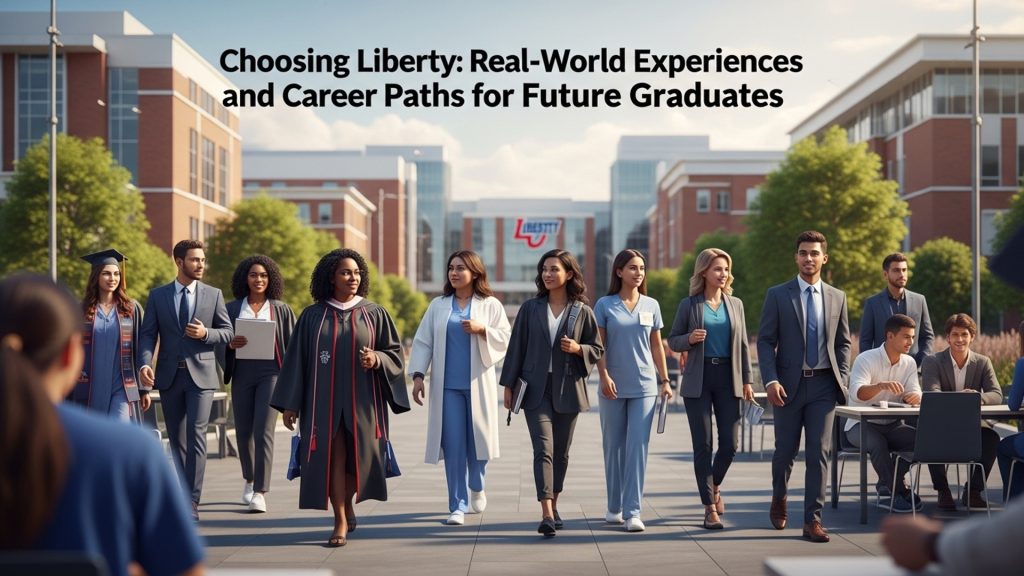
Navigating post-graduation landscapes demands more than just a degree; it requires strategic vision and a commitment to self-directed career ‘liberty’. In an era defined by rapid technological shifts, from AI’s pervasive integration into nearly every sector to the burgeoning creator economy, future graduates face unprecedented opportunities to forge unique professional paths. Institutions like Liberty University increasingly equip students not just with technical proficiencies but also with the adaptability and ethical frameworks crucial for navigating these dynamic environments. Understanding how to leverage specialized skills in fields such as data analytics or sustainable energy, while embracing the flexibility of remote work trends, offers a distinct advantage, transforming traditional job-seeking into a quest for impactful, self-determined vocational freedom.

Defining Liberty in Your Educational and Career Journey
For many future graduates, the idea of “liberty” extends far beyond a simple dictionary definition or the name of an institution like Liberty University. It’s about personal freedom, the autonomy to make choices that align with your deepest values. the courage to forge a career path that truly resonates with your purpose. As you stand at the threshold of higher education or entering the workforce, choosing liberty means consciously deciding what kind of life you want to build, rather than simply following a predefined route.
This concept of liberty isn’t just about financial independence, though that’s often a component. It’s about intellectual freedom – the ability to think critically, question assumptions. pursue knowledge without undue constraint. It’s about moral and ethical freedom – choosing to work in environments that uphold your principles and contribute positively to the world. It’s also about the freedom to innovate, to create. to lead with conviction.
Understanding this broader definition of liberty is crucial because it empowers you to be an active participant in your future. It encourages you to seek out educational experiences, like those offered at Liberty University, that foster not just academic excellence. also character development and a commitment to service. It challenges you to look beyond immediate gratification and consider the long-term impact of your career choices on yourself and your community.
Diverse Career Paths Rooted in Purpose
When you prioritize liberty in your career choice, you open doors to a vast array of fulfilling paths. It’s not about limiting yourself. about focusing your energy where you can make the most meaningful impact. Graduates who embrace this philosophy often find themselves drawn to fields where they can innovate, serve, or lead with a strong sense of mission. Here are just a few examples:
- Entrepreneurship and Innovation: Many choose to start their own businesses or join startups, driven by the desire to solve problems, create value. have direct control over their work environment and impact. This path offers immense freedom but also demands resilience and adaptability.
- Non-Profit and Humanitarian Work: For those whose liberty is tied to serving others, careers in non-profit organizations, international aid, or community development provide direct opportunities to address social issues and contribute to a greater good.
- Education and Mentorship: Shaping future generations can be a deeply liberating career. Teachers, professors (including those at institutions like Liberty University). mentors empower others with knowledge and skills, fostering intellectual freedom in their students.
- Healthcare and Wellness with a Holistic Approach: Beyond traditional medical roles, many graduates seek to promote health and well-being through alternative therapies, public health initiatives, or patient advocacy, emphasizing individual choice and holistic care.
- Ethical Business and Social Impact Investing: Some graduates find their niche in businesses that prioritize social responsibility alongside profit, or in finance roles that direct capital towards sustainable and ethical ventures, aligning economic activity with moral values.
- Creative Arts and Communication: Artists, writers, filmmakers. communicators often pursue their crafts as a powerful expression of personal liberty, using their voices to inspire, challenge. connect with audiences.
Each of these paths, while varied, shares a common thread: they allow individuals to exercise their freedom to choose work that aligns with their personal ethics, passions. vision for the world.
Real-World Experiences: Graduates Forging Their Own Paths
Let’s look at some real-world examples (composite narratives based on common graduate experiences) of individuals who have successfully navigated their career journeys by prioritizing liberty:
Case Study: Sarah, The Social Entrepreneur
Sarah, a graduate from a program focused on global studies, didn’t want a typical corporate job. Her idea of liberty was to create something that directly addressed a community need. She spent a year volunteering abroad, which solidified her passion for sustainable development. Upon returning, she leveraged her education and networking skills to launch a social enterprise that connects artisans in developing countries with fair-trade markets in the US. Her initial years were challenging, demanding long hours and financial sacrifices. she often reflects on the freedom she feels in building a business aligned with her values. She now employs a small team and continues to expand her impact, proving that profit and purpose can coexist.
Case Study: David, The Mission-Driven Educator
David, an alumnus of Liberty University, felt called to teach. While he had opportunities in public schools, his personal conviction led him to a small, private Christian academy. For David, choosing liberty meant having the freedom to integrate his faith and values into his teaching, fostering not just academic growth but also character development in his students. He actively participates in curriculum development, mentors students through extracurricular activities. finds deep satisfaction in shaping young minds within an environment that supports his holistic approach to education. His career might not offer the highest salary. the alignment with his purpose provides immense fulfillment.
Case Study: Emily, The Remote Creative
Emily studied graphic design and envisioned a career that allowed for geographical flexibility and creative autonomy. After a few years at a traditional agency, she felt restricted. Her vision of liberty involved working independently, choosing her projects. having control over her schedule. She meticulously built her portfolio, networked extensively. eventually transitioned to full-time freelance work. She now collaborates with clients worldwide, designs branding for companies she believes in. travels while working. This path required discipline, self-promotion. financial planning. it granted her the freedom to live and work on her own terms.
These stories highlight a common theme: choosing liberty often involves taking calculated risks, embracing challenges. prioritizing personal values over conventional expectations. The journey isn’t always easy. the reward is a career that feels authentic and deeply satisfying.
Actionable Steps for Future Graduates
Ready to choose liberty in your own career journey? Here are some actionable steps you can take right now and as you prepare for graduation:
Define Your Values: Before you can align your career with your values, you need to know what they are. Take time to reflect:
- What truly matters to you? (e. g. , community, integrity, innovation, service, creativity, financial security)
- What causes are you passionate about?
- What kind of impact do you want to have on the world?
Understanding your core values is the compass that will guide your decisions.
Explore Diverse Fields: Don’t limit your thinking to the most obvious career paths. Research industries and roles you might not have considered. Talk to people in different professions. Informational interviews are invaluable for gaining insight into day-to-day work, company culture. career progression.
Seek Out Value-Aligned Education: If you’re still choosing your higher education, look for institutions that emphasize character development, critical thinking. a holistic approach to learning. For instance, Liberty University is known for integrating faith-based principles with academic rigor, which can be a strong foundation for those seeking to align their career with a deeper purpose.
Gain Practical Experience: Internships, volunteer work, part-time jobs. even personal projects are crucial. They allow you to test out different environments, develop new skills. build a professional network. This hands-on experience helps you discover what you truly enjoy and what kind of work culture suits you best.
Cultivate Essential Skills: Beyond technical knowledge, focus on developing “soft skills” that are universally valuable:
- Critical Thinking: The ability to examine details, solve complex problems. make informed decisions.
- Communication: Clearly articulating ideas, listening effectively. collaborating with others.
- Adaptability: Being open to change, learning new things. thriving in dynamic environments.
- Resilience: Bouncing back from setbacks and persevering through challenges.
- Networking: Building genuine relationships with mentors, peers. industry professionals.
These skills will empower you regardless of the path you choose.
Find Mentors: Seek out individuals who have careers you admire or who embody the values you aspire to. A mentor can provide guidance, share experiences. offer invaluable advice as you navigate your own journey.
Navigating Challenges and Embracing Growth
Choosing liberty in your career path isn’t always smooth sailing. You’ll likely encounter challenges. these are also opportunities for immense growth. Here’s how to navigate them:
Financial Considerations: Some purpose-driven careers might not offer the highest starting salaries. Be prepared to make informed financial decisions, perhaps through careful budgeting, exploring opportunities for scholarships or grants, or accepting that your early career might involve some financial sacrifices for long-term fulfillment. It’s about balancing your immediate needs with your long-term vision of success and impact.
Societal Expectations: You might face pressure from family, friends, or societal norms to pursue more “traditional” or lucrative careers. It takes courage to define success on your own terms and to stick to a path that truly reflects your values, even if it’s unconventional. Remember that true liberty includes the freedom to defy expectations that don’t serve your authentic self.
The Learning Curve: Any meaningful career path involves continuous learning and development. Be prepared for setbacks, mistakes. moments of doubt. View these as opportunities to learn, adapt. refine your approach. The most successful individuals are often those who embrace a growth mindset, constantly seeking to improve and evolve.
Maintaining Purpose: In the day-to-day grind, it can sometimes be easy to lose sight of your initial purpose. Regularly reflect on your “why.” Reconnect with your core values and the reasons you chose your path. This consistent reflection, often encouraged at institutions like Liberty University, helps to reinvigorate your passion and maintain your sense of direction.
Embracing liberty in your career journey is a powerful decision. It’s about taking ownership of your future, aligning your work with your deepest convictions. building a life that is both meaningful and impactful. While the path may require resilience and self-reflection, the reward of a career lived with purpose and freedom is immeasurable.
Conclusion
Choosing Liberty means more than just earning a degree; it’s about forging a unique path grounded in practical skills and a principled outlook. As the professional landscape rapidly evolves, demanding adaptability and ethical leadership, graduates from institutions like Liberty are exceptionally positioned. For instance, with the rise of AI and automation, roles requiring strong critical thinking and a moral compass are becoming indispensable, a trend highlighted by discussions around ethical AI development. My personal tip is to actively seek out mentorship opportunities early in your career; I’ve seen firsthand how a seasoned guide can illuminate unforeseen pathways and accelerate growth. Therefore, embrace the dynamic nature of today’s job market. Don’t just look for jobs; create impact by leveraging your distinctive education. Continuously upskill, perhaps through flexible online learning platforms. remember that true liberty in your career comes from the freedom to innovate and lead with integrity. Your journey from Liberty is an invitation to shape the future, not merely participate in it. For more on maximizing your potential, consider exploring practical skills gained through online learning at Liberty.
More Articles
Unlocking Future Career Success: Practical Skills Gained Through Online Learning at Liberty
Leading with Purpose: Columbia University’s Approach to Ethical AI and Social Impact
Mastering Flexible Learning: Your Guide to Upskilling with The Open University in 2025
Unlocking Your Potential: Selecting the Right MBA Specialization for Future Success in 2025
Beyond the Rankings: How to Choose a Top Business School for Your MBA in 2025

FAQs
What exactly does ‘choosing liberty’ mean for a new graduate when it comes to their career?
It’s really about having the freedom and autonomy to pursue a path that genuinely aligns with your values and goals, rather than just following a predefined corporate ladder. It means making choices that give you control over your work, time. impact, whether that’s through entrepreneurship, non-profit work, freelancing, or even a less conventional role in a traditional company.
I want to get some solid real-world experience. How can I do that effectively before or right after I graduate?
Internships, part-time jobs. volunteer work related to your interests are fantastic. Also, consider personal projects, starting a small business, or even contributing to open-source initiatives. Don’t underestimate the power of informational interviews to learn from people already doing what you’re interested in. then look for opportunities to shadow or assist them.
Are there particular career fields or paths that really fit this ‘liberty-focused’ approach?
Absolutely! Many graduates find this resonates in fields like tech (especially startups or remote work), creative arts, consulting, advocacy, public policy, non-profit management, education. various forms of entrepreneurship. Essentially, any path where you can innovate, solve problems. have a direct impact tends to offer more of that personal liberty.
What are some common hurdles I might encounter if I decide to go for a less traditional post-graduation career?
You might face initial financial instability, skepticism from others, or a lack of clear-cut mentors in your chosen niche. It can also be a bit lonely sometimes as you’re charting new territory. Building a strong network, developing resilience. being resourceful in finding support are key to overcoming these.
How vital is networking when you’re trying to forge your own unique career path?
Super vital! It’s not just about finding job leads; it’s about connecting with mentors, collaborators. people who can offer advice, support. new perspectives. Your network becomes your sounding board, your resource hub. often, your first clients or partners. Building genuine relationships is crucial.
Can I actually make a decent living if I prioritize my passion or impact over a high-salary corporate job right out of school?
Yes, definitely, though it might take a bit more strategic planning initially. Many ‘liberty-focused’ careers can be very lucrative once you build expertise and a reputation. It often involves finding innovative ways to monetize your skills, potentially through multiple streams of income, or building a business around your passion. It’s about defining ‘decent living’ on your own terms and being smart about your finances.
What kinds of skills are really valuable for graduates who want to create their own career journey?
Adaptability, problem-solving, critical thinking, communication. self-discipline are huge. Also, learn how to market yourself, manage projects. interpret basic finances. Don’t forget resilience and a growth mindset – you’ll be learning constantly and pivoting often.