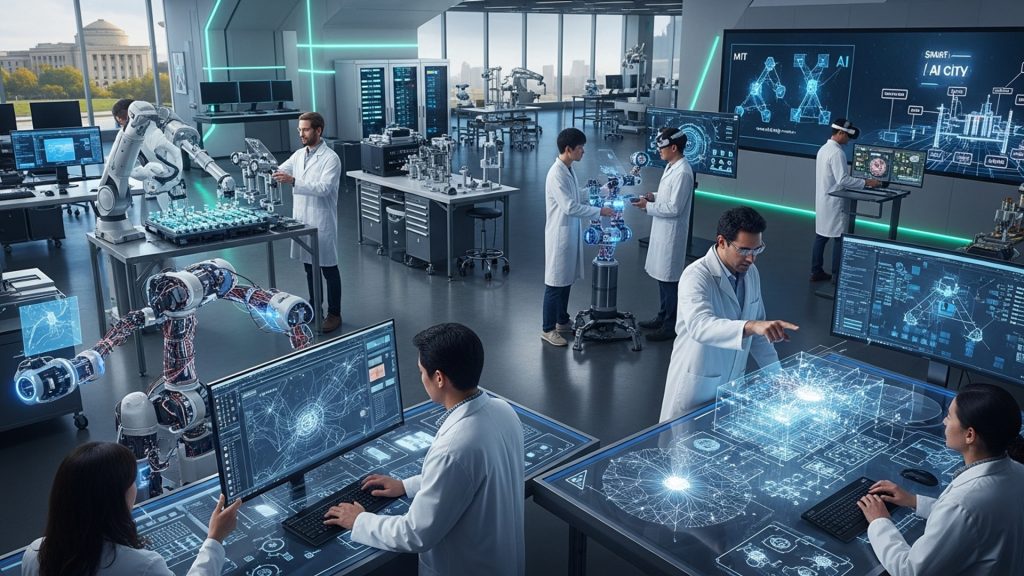
The Massachusetts Institute of Technology stands as a global epicenter for groundbreaking advancements in artificial intelligence, actively shaping the trajectory of future technologies. From pioneering neuro-symbolic AI at CSAIL to developing foundational models that power generative AI, MIT researchers consistently push the boundaries of what machines can achieve. Their interdisciplinary approach tackles critical challenges like explainable AI and human-robot collaboration, ensuring ethical development while accelerating progress towards intelligent systems that profoundly impact industries and daily life. This transformative research is not merely theoretical; it directly influences the next wave of technological innovation.
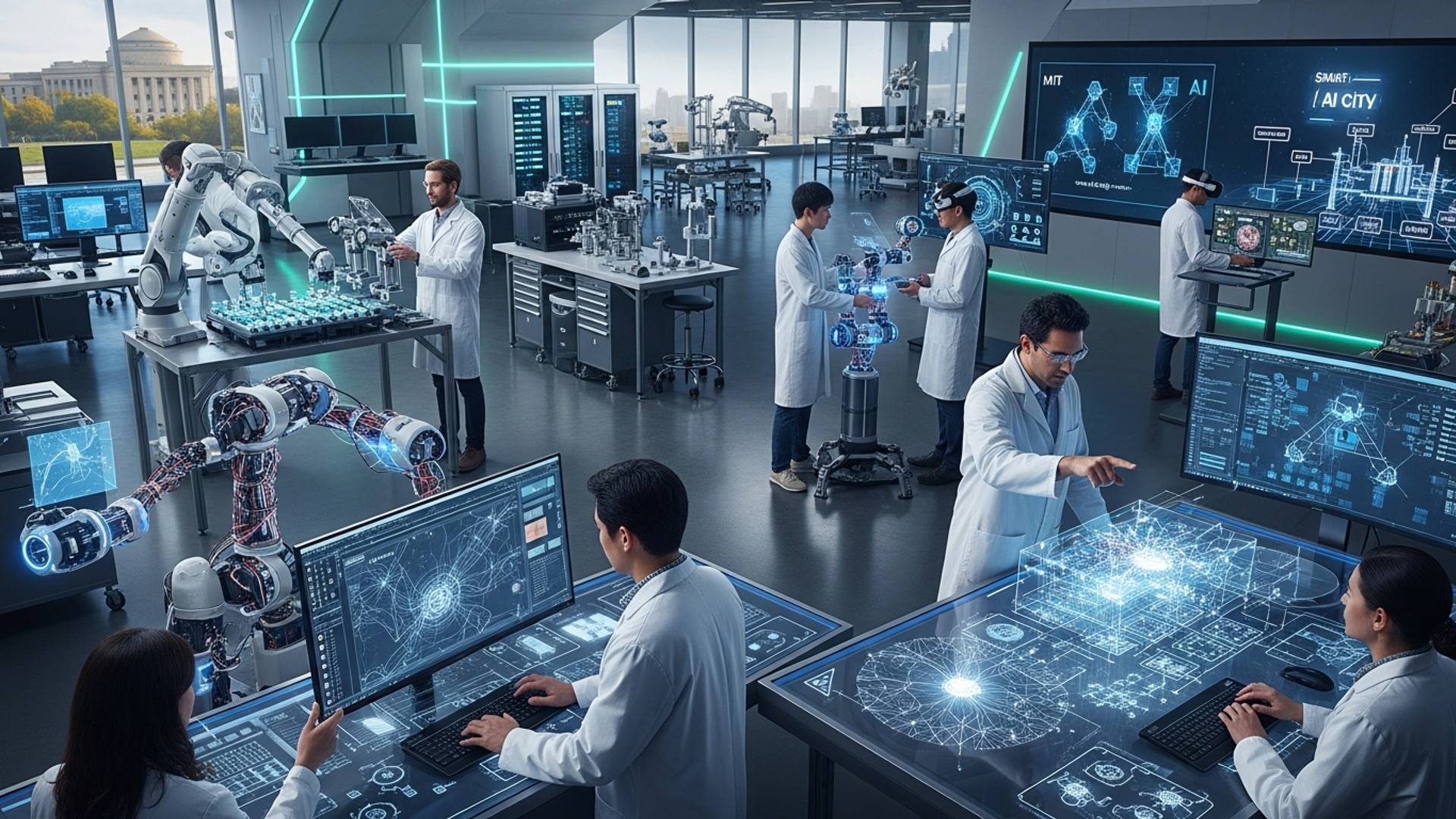
Understanding Artificial Intelligence (AI) at the Massachusetts Institute of Technology
Artificial Intelligence (AI) might sound like something out of a sci-fi movie. it’s very real and rapidly shaping our world. At its core, AI refers to the ability of machines to perform tasks that typically require human intelligence, like learning, problem-solving, decision-making. understanding language. Think of it as teaching computers to “think” in ways similar to how we do.
The Massachusetts Institute of Technology (MIT) has been at the forefront of this revolution since AI’s earliest days. Often referred to simply as “MIT,” this institution isn’t just a place where brilliant minds gather; it’s a crucible of innovation where the very foundations of AI have been laid and continue to be built upon. From the pioneering work in the 1950s to today’s cutting-edge research, MIT has consistently pushed the boundaries of what machines can do, making it a pivotal player in the global AI landscape.
Much of MIT’s groundbreaking AI research is housed within its Computer Science and Artificial Intelligence Laboratory (CSAIL). This massive hub of innovation brings together hundreds of researchers, professors. students working on everything from robotics to machine learning. Another significant initiative is the MIT Quest for Intelligence, which aims to interpret the very nature of intelligence—both natural and artificial—and create new AI technologies that benefit humanity. These centers are where theory meets practice, leading to breakthroughs that ripple across industries and impact our daily lives.
The Building Blocks of Modern AI: Key Technologies at MIT
To truly appreciate MIT’s contributions, it’s helpful to interpret some of the core technologies that power modern AI. These are the tools and techniques that researchers at the Massachusetts Institute of Technology are constantly refining and expanding:
Machine Learning (ML)
Machine Learning is a subset of AI that allows computers to learn from data without being explicitly programmed. Instead of giving a computer step-by-step instructions for every possible scenario, you feed it vast amounts of data. it learns to identify patterns and make predictions or decisions on its own. Imagine teaching a computer to recognize cats in pictures by showing it thousands of cat and non-cat images until it learns what a cat looks like.
- Supervised Learning: This is like learning with a teacher. You give the computer input data along with the correct output (labels). it learns to map inputs to outputs. For example, training a spam filter by showing it emails labeled “spam” or “not spam.”
- Unsupervised Learning: Here, the computer learns without a teacher, finding hidden patterns or structures in unlabeled data. It’s like grouping similar objects together without being told what those groups should be. A common use is customer segmentation in marketing.
- Reinforcement Learning: This involves an agent learning by trial and error in an environment, receiving rewards for good actions and penalties for bad ones. Think of teaching a dog tricks with treats—the dog learns which actions lead to rewards. MIT researchers are deeply involved in applying reinforcement learning to complex problems, from robotics control to financial trading.
Deep Learning
Deep Learning is a specialized form of machine learning that uses artificial neural networks with many layers (hence “deep”) to learn complex patterns from data. These networks are inspired by the structure and function of the human brain. Each layer processes data and passes it to the next, allowing the system to learn increasingly abstract representations of the data. For instance, in image recognition, one layer might detect edges, another shapes. a final layer might identify objects like faces or cars.
At MIT, deep learning has been instrumental in advancements across various fields. For example, deep learning models are used to examine medical images for disease detection, power natural language processing systems. even control advanced robotic movements. The sheer scale and complexity of problems that deep learning can tackle make it a cornerstone of modern AI research at the Massachusetts Institute of Technology.
Natural Language Processing (NLP)
Natural Language Processing (NLP) is the branch of AI that enables computers to comprehend, interpret. generate human language. If you’ve ever used a voice assistant like Siri or Google Assistant, translated text online, or had your email filtered for spam, you’ve experienced NLP in action. MIT has a rich history in NLP, developing fundamental algorithms and models that allow machines to communicate more effectively with humans.
Current research at MIT in NLP focuses on:
- Improving conversational AI for more natural and helpful interactions.
- Developing AI systems that can summarize complex documents or extract specific data.
- Creating AI that can interpret and respond to human emotions in text or speech.
- Building robust translation systems that capture nuance and context.
Robotics
Robotics is the field of engineering and computer science that deals with the design, construction, operation. application of robots. When AI is integrated into robotics, it transforms simple machines into intelligent agents capable of perceiving their environment, making decisions. performing complex tasks autonomously. MIT’s robotics labs are world-renowned for pushing the boundaries of what robots can do, from walking robots that can navigate challenging terrain to soft robots that can interact safely with humans.
A fascinating area of research at the Massachusetts Institute of Technology is human-robot interaction (HRI), where scientists are designing robots that can collaborate seamlessly with people in various settings, from manufacturing floors to elder care. This involves developing AI that allows robots to grasp human intentions, adapt to human behavior. communicate effectively, moving beyond simple automation to true partnership.
Pioneering Research Areas at the Massachusetts Institute of Technology
The innovation at MIT extends into numerous critical sectors, leveraging AI to solve some of the world’s most pressing challenges.
AI for Healthcare
One of the most impactful areas of AI research at the Massachusetts Institute of Technology is in healthcare. AI has the potential to revolutionize how we diagnose diseases, discover new drugs. deliver personalized medical care. Researchers at MIT are developing AI tools that can:
- Early Disease Detection: Using AI to examine medical images (like X-rays, MRIs. pathology slides) to detect subtle signs of diseases such as cancer or Alzheimer’s much earlier than human eyes might. For example, one MIT project focused on using deep learning to predict breast cancer risk from mammograms.
- Drug Discovery and Development: AI can sift through vast databases of chemical compounds and biological details to identify potential new drugs and accelerate the drug development process, which traditionally takes years and billions of dollars.
- Personalized Medicine: By analyzing a patient’s genetic data, medical history. lifestyle, AI can help doctors tailor treatment plans to individual needs, leading to more effective therapies and fewer side effects.
I recently heard about an MIT spin-off company that is using AI to review patient data from wearables to predict flare-ups of chronic conditions, allowing for proactive intervention. This is a real-world example of how MIT’s research is moving from the lab to practical applications that save lives and improve quality of life.
Ethical AI and Trustworthy AI
As AI becomes more powerful and integrated into our lives, it’s crucial to ensure these technologies are developed and used responsibly. MIT is a leader in researching Ethical AI and Trustworthy AI, focusing on fairness, transparency. accountability. This means asking tough questions:
- How do we prevent AI from perpetuating or amplifying human biases found in training data?
- How can we make AI decisions transparent, so we comprehend why an AI made a particular recommendation?
- How do we ensure AI systems are robust and secure against malicious attacks?
The Massachusetts Institute of Technology has established initiatives like the MIT Stephen A. Schwarzman College of Computing, which deeply embeds ethics into its curriculum and research. They’re not just building powerful AI; they’re building AI that society can trust. For instance, researchers are developing methods to explain the output of complex deep learning models, making them less of a “black box” and more understandable for human users.
| Focus Area | Primary Goal | MIT’s Approach |
|---|---|---|
| Performance-Driven AI | Achieve highest accuracy/efficiency | Innovating new algorithms, optimizing computational models |
| Ethical/Trustworthy AI | Ensure fairness, transparency, safety. accountability | Developing bias detection/mitigation tools, explainable AI (XAI), robust AI systems |
AI for Climate Change and Sustainability
The climate crisis is one of humanity’s greatest challenges. AI offers powerful tools to combat it. Researchers at the Massachusetts Institute of Technology are using AI to:
- Optimize Energy Grids: AI can predict energy demand more accurately, integrate renewable energy sources efficiently. manage smart grids to reduce waste and improve reliability.
- Climate Modeling and Prediction: AI can process vast amounts of climate data to create more accurate models for predicting weather patterns, sea-level rise. the impact of climate change.
- Materials Science for Sustainability: AI accelerates the discovery of new materials for batteries, solar cells. carbon capture technologies by simulating molecular interactions and predicting material properties.
One notable project at MIT involves using AI to design more efficient wind turbines by simulating different designs and environmental conditions, leading to better energy capture and reduced costs. This kind of work is directly contributing to a more sustainable future.
Human-Computer Interaction (HCI) and AI
HCI is about designing technology that is intuitive, effective. enjoyable for humans to use. When AI is integrated into HCI, it allows systems to adapt to individual users, comprehend context. anticipate needs. At MIT, this research is leading to:
- Personalized Learning Systems: AI tutors that adapt to a student’s learning style and pace, offering customized educational experiences.
- Assistive Technologies: AI-powered devices that help people with disabilities navigate the world more independently, such as AI-driven prosthetics or navigation aids for the visually impaired.
- Augmented Reality (AR) and Virtual Reality (VR) Experiences: AI makes AR/VR more immersive and responsive by understanding user gestures, gaze. environment.
Real-World Impact and Future Technologies from MIT
The research at the Massachusetts Institute of Technology doesn’t stay confined to academic papers; it consistently translates into real-world applications that shape our present and future.
Case Studies and Examples
- AI in Robotics for Logistics: While not a direct MIT spin-off, companies like Amazon Robotics (formerly Kiva Systems) trace their roots to early MIT robotics work and have revolutionized warehouse automation using AI-powered mobile robots. MIT continues to push boundaries in autonomous navigation and manipulation, which directly informs industrial applications.
- Medical Imaging AI: Several startups emerging from MIT research are now developing and deploying AI systems for medical image analysis in hospitals worldwide, helping radiologists detect anomalies more quickly and accurately.
- Driving Innovation in Self-Driving Cars: MIT’s contributions to computer vision, sensor fusion. reinforcement learning are fundamental to the advancements in autonomous vehicles. Many engineers and researchers in leading self-driving car companies have trained at MIT.
Actionable Takeaways for Young Innovators
If you’re a teen or young adult excited by the possibilities of AI, here’s how you can start exploring and contributing, inspired by the spirit of the Massachusetts Institute of Technology:
- Learn to Code: Python is the most popular language for AI and machine learning. Start with online tutorials, platforms like Codecademy, or even Scratch for younger learners to grasp programming logic. Understanding how to write code is your superpower in the digital age.
- Explore STEM Fields: A strong foundation in mathematics, statistics, computer science. engineering is crucial for AI. These subjects teach you how to think critically and solve complex problems.
- Get Curious and Experiment: Don’t be afraid to tinker! Download open-source AI libraries (like TensorFlow or PyTorch) and experiment with simple projects. There are tons of free datasets available online (e. g. , Kaggle) where you can try building your first AI models.
- Read and Stay Informed: Follow AI news, read articles from reputable sources (like MIT News, scientific journals, or tech blogs). watch educational videos. The field is evolving rapidly, so continuous learning is key.
- Think Interdisciplinarily: AI isn’t just for computer scientists. It’s transforming biology, art, economics. humanities. Consider how AI could be applied to subjects you’re passionate about.
# Simple Python example for a basic AI concept (e. g. , a "hello world" for ML)
# This snippet shows how to install a library and import it. # You'll need Python installed on your computer first. # To install a machine learning library like scikit-learn:
# Open your terminal or command prompt and type:
# pip install scikit-learn pandas numpy # Then, in a Python file (e. g. , my_ai_project. py):
import pandas as pd
from sklearn. model_selection import train_test_split
from sklearn. linear_model import LogisticRegression
from sklearn. metrics import accuracy_score # This is just a conceptual example. In reality, you'd load a real dataset. # Imagine a small dataset of "exam scores" and "pass/fail" results. data = { 'exam_score': [50, 60, 70, 80, 45, 65, 75, 85], 'passed': [0, 0, 1, 1, 0, 1, 1, 1] # 0 for fail, 1 for pass
}
df = pd. DataFrame(data) X = df[['exam_score']] # Features
y = df['passed'] # Target # Split data into training and testing sets
X_train, X_test, y_train, y_test = train_test_split(X, y, test_size=0. 2, random_state=42) # Create a simple AI model (Logistic Regression is a good starting point)
model = LogisticRegression() # Train the model
model. fit(X_train, y_train) # Make predictions
predictions = model. predict(X_test) # Evaluate the model
accuracy = accuracy_score(y_test, predictions)
print(f"Model accuracy: {accuracy100:. 2f}%") # You can then use the model to predict new data, e. g. , if someone with score 55 passes
# new_score = pd. DataFrame({'exam_score': [55]})
# prediction_for_55 = model. predict(new_score)
# print(f"Prediction for score 55: {'Pass' if prediction_for_55[0] == 1 else 'Fail'}")
The Future Vision from MIT
The Massachusetts Institute of Technology continues to envision a future where AI is not just a tool but a partner in solving humanity’s grand challenges. Researchers are working towards more general AI systems that can learn and adapt across a wider range of tasks, moving beyond narrow, specialized AI. They foresee AI that is more deeply integrated into our daily lives, making technology more intuitive, personalized. proactive.
Critically, MIT’s vision emphasizes responsible innovation. The future of AI, as seen from the halls of this pioneering institution, is one where powerful intelligent systems are developed with a strong ethical compass, ensuring they augment human capabilities, foster creativity. contribute to a more just and sustainable world for everyone.
Conclusion
Exploring MIT’s pioneering research truly highlights that the future of AI isn’t a distant concept. a dynamic, ethically-charged frontier being shaped right now. Their groundbreaking work, from developing more robust and interpretable AI systems at CSAIL to leveraging machine learning for climate solutions, underscores the critical need for interdisciplinary thinking. A unique insight I’ve gained is that true innovation often stems from challenging existing paradigms, much like MIT’s continuous push for human-centered AI, ensuring technology serves humanity. To engage with this evolving landscape, my personal tip is to not just passively observe; actively seek to interpret the ethical implications alongside the technical marvels. Consider experimenting with open-source AI frameworks or even diving into their publicly available research papers to grasp the nuances. The actionable step for anyone is to foster a growth mindset, recognizing that mastering AI’s complexities, like understanding how models achieve ‘common sense’ reasoning, is an ongoing journey. The future of technology, intrinsically linked with AI, offers unparalleled opportunities for those willing to learn and contribute.
More Articles
Unlocking Innovation: How Stanford Research Shapes Tomorrow’s World and Your Future
Mastering the Future: Essential Digital Leadership Skills for 2025 Business Impact
Transform Your Career: The Open University’s Flexible Path to Lifelong Learning
Achieving Excellence: Harvard’s Practical Strategies for Personal and Professional Growth

FAQs
What kind of cutting-edge AI research is MIT known for?
MIT is deeply involved in a wide array of AI research, from foundational machine learning algorithms and deep neural networks to more specialized areas like natural language processing, computer vision, robotics. explainable AI. They’re pushing boundaries in areas like AI for scientific discovery, healthcare. creative arts.
Is it only about AI, or does MIT also explore other future technologies?
While AI is a major focus, MIT’s pioneering spirit extends far beyond. They’re heavily invested in quantum computing, advanced materials science, synthetic biology, sustainable energy solutions. the interface between humans and machines. Many of these areas often intersect with AI, creating powerful synergies.
How does MIT’s AI research actually impact the real world?
MIT’s AI research has a significant real-world impact. It contributes to breakthroughs in medical diagnostics, develops more efficient autonomous systems, creates smarter tools for education. helps design sustainable infrastructure. Their work often moves from theoretical concepts to practical applications that improve daily life and address global challenges.
What makes MIT’s approach to AI research particularly unique?
MIT’s approach is often characterized by its interdisciplinary nature, combining computer science with fields like neuroscience, cognitive science. engineering. They emphasize not just building powerful AI systems. also understanding their underlying principles, ensuring reliability, addressing ethical implications. focusing on human-compatible AI that augments human capabilities.
Can you give some examples of specific labs or projects at MIT that are at the forefront of AI innovation?
Absolutely! Key players include the Computer Science and Artificial Intelligence Laboratory (CSAIL), which houses numerous AI groups. the Quest for Intelligence, an institute-wide initiative. Projects range from developing AI that can predict protein structures to creating AI for self-driving cars. even building robots that learn from human interaction.
What are the ethical considerations MIT researchers are grappling with as AI advances?
Ethics is a huge focus. MIT researchers are actively working on making AI fair, transparent. accountable. They investigate issues like algorithmic bias, data privacy, the societal impact of automation. how to ensure AI systems align with human values. The goal is to develop AI responsibly and mitigate potential harms.
How does MIT envision AI evolving over the next decade?
MIT anticipates AI becoming even more ubiquitous and integrated into our lives, moving beyond narrow tasks to more generalized intelligence. They foresee advancements in common-sense reasoning, robust learning from limited data. AI systems that can explain their decisions. There’s also a strong belief that future AI will be collaborative, working alongside humans to solve complex problems.