
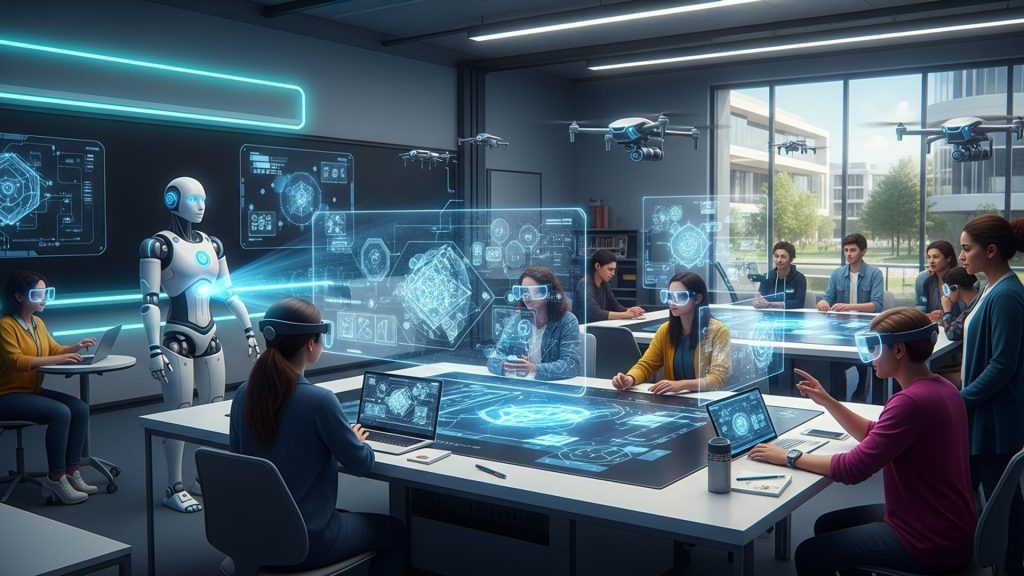
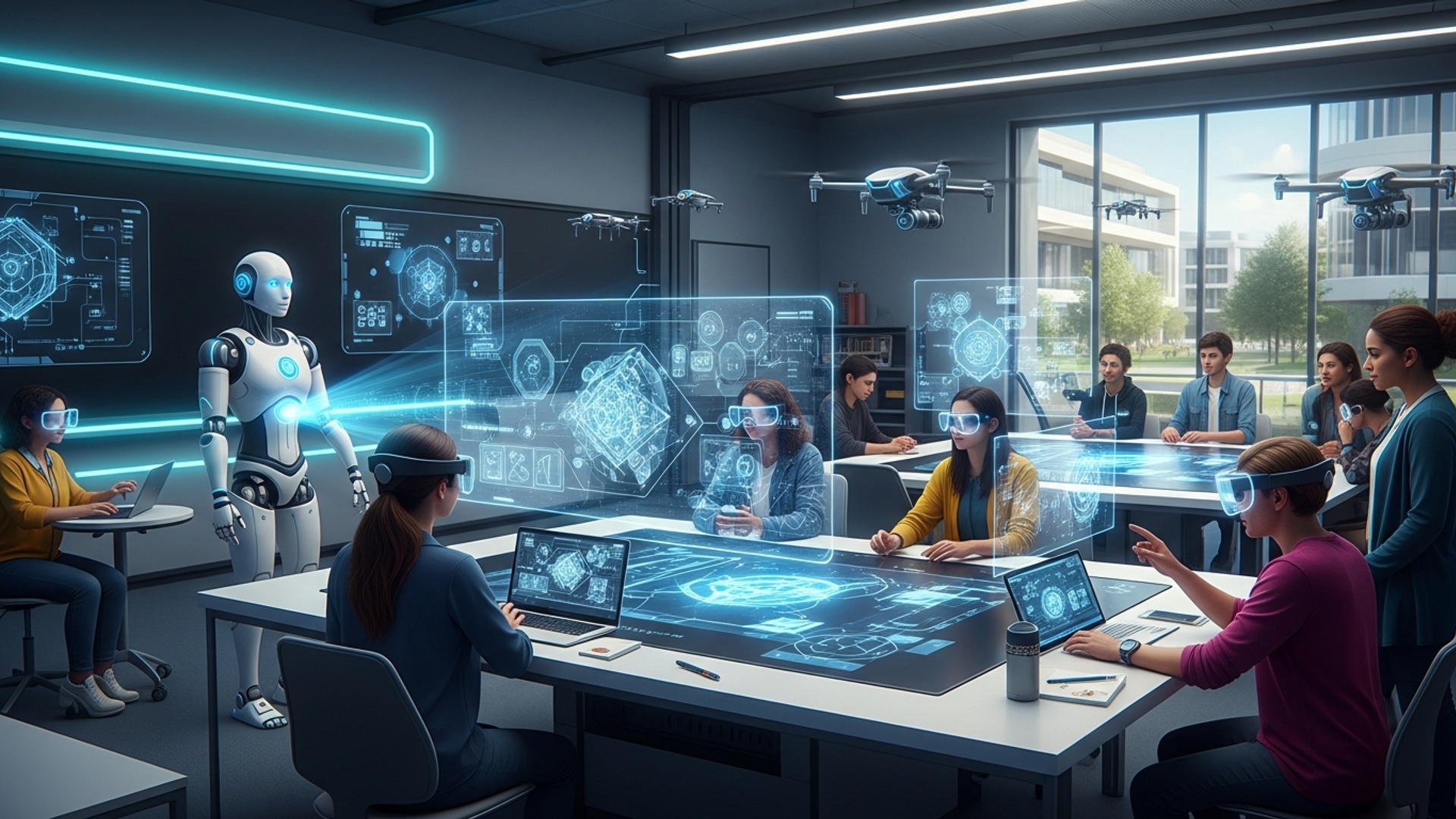
Pioneers at the Massachusetts Institute of Technology actively engineer the future of industry, moving beyond mere evolution to create revolutionary advancements in AI and robotics. From developing groundbreaking algorithms powering sophisticated generative AI models to designing agile robotic systems for precision manufacturing and critical healthcare applications, MIT’s innovations redefine industrial capabilities. Their researchers advance fields like explainable AI, ensuring transparency in complex autonomous decisions. craft human-robot collaboration paradigms that enhance productivity while maintaining safety. These ongoing breakthroughs from the Massachusetts Institute of Technology are not just academic achievements; they are tangible solutions poised to reshape global economies, streamline operations. fundamentally improve human experiences across every sector.
Understanding the Brains and Brawn: AI and Robotics Explained
Before we dive into the incredible work happening at the Massachusetts Institute of Technology, let’s get a clear picture of what AI and Robotics actually are. Imagine computers that can “think” and “learn” like humans. machines that can “do” physical tasks – that’s the core of it!
- Artificial Intelligence (AI)
- Machine Learning (ML)
- Deep Learning (DL)
- Robotics
- Sensors
- Actuators
This is a broad field of computer science focused on creating machines that can perform tasks that typically require human intelligence. Think about solving problems, recognizing patterns, understanding language, or even making decisions.
A subset of AI where systems learn from data without being explicitly programmed. Instead of telling the computer every single rule, you give it lots of examples. it figures out the rules itself. For instance, showing it thousands of pictures of cats and dogs until it can tell the difference.
A more advanced type of machine learning inspired by the structure of the human brain, using artificial neural networks. These networks have many layers, allowing them to learn incredibly complex patterns, which is why they’re so good at things like facial recognition or understanding spoken language.
This is the engineering discipline that deals with the design, construction, operation. application of robots. Robots are machines that can carry out complex series of actions automatically, often programmed by a computer. They combine mechanical parts with sensors and AI to interact with the physical world.
These are like the robot’s eyes, ears. touch. They gather insights about the robot’s environment (e. g. , cameras for vision, microphones for sound, force sensors for touch).
These are the robot’s muscles. They allow the robot to move, grab, or manipulate objects (e. g. , motors, hydraulics).
The Massachusetts Institute of Technology: A Hotbed for Innovation
The Massachusetts Institute of Technology, often simply called MIT, has a long and legendary history of pushing the boundaries of science and technology. For decades, it has been at the forefront of developing groundbreaking AI and robotics technologies that are not just theoretical but are actively shaping our world. From the earliest concepts of artificial intelligence to the most advanced autonomous systems, researchers at MIT have consistently delivered breakthroughs.
MIT’s Pioneering AI Research: From Vision to Language
At the heart of MIT’s AI work is its Computer Science and Artificial Intelligence Laboratory (CSAIL), one of the largest and most essential AI research centers globally. Here, brilliant minds are constantly innovating across various AI domains.
- Computer Vision
- Natural Language Processing (NLP)
- Reinforcement Learning
MIT researchers have made huge strides in teaching computers to “see” and interpret images and videos. This means not just identifying objects. understanding scenes, predicting human actions. even generating realistic images. For example, systems developed at MIT can identify specific objects in a crowded room or track the movement of multiple people simultaneously.
Ever wonder how your phone understands your voice commands or how search engines can answer complex questions? That’s NLP at work. MIT has contributed significantly to developing AI that can interpret, interpret. generate human language. This includes everything from improving machine translation to creating AI that can write articles or summarize complex texts.
This type of machine learning is all about trial and error. An AI agent learns to perform a task by interacting with an environment and receiving rewards or penalties for its actions. Think of it like training a pet: good behavior gets a treat, bad behavior doesn’t. MIT has applied reinforcement learning to teach robots complex manipulation tasks and even to develop new materials.
Here’s a simplified conceptual example of how a very basic reinforcement learning agent might “learn” to find a path:
// Simplified Reinforcement Learning Concept
function learnPath(environment, agent) { let state = environment. initialState; while (! environment. isGoal(state)) { let action = agent. chooseAction(state); // Based on current "knowledge" let nextState = environment. takeAction(state, action); let reward = environment. getReward(nextState); // Positive for good, negative for bad agent. updateKnowledge(state, action, nextState, reward); // Learn from experience state = nextState; } return agent. learnedPolicy; // The "best" way to act
}
Robotics Revolution: Machines That Move, Adapt. Collaborate
MIT’s contributions to robotics are equally transformative. Their work ranges from designing agile robots that can navigate complex terrain to developing collaborative robots that work safely alongside humans.
- Soft Robotics
- Human-Robot Interaction (HRI)
- Swarm Robotics
Unlike traditional robots made of rigid metal, soft robots are built from flexible, compliant materials. This makes them safer for human interaction, more adaptable to irregular environments. capable of delicate tasks. Imagine a gripper made of soft silicone that can gently pick up a ripe fruit without bruising it. MIT’s research in this area is leading to robots that can operate in unpredictable real-world settings.
For robots to become truly integrated into our lives, they need to interact with us naturally and intuitively. Researchers at the Massachusetts Institute of Technology are designing robots that can comprehend human gestures, facial expressions. even emotions, allowing for seamless collaboration in workplaces and homes. This includes robots that can anticipate a human’s next move in a shared task.
This fascinating field involves coordinating large numbers of simple robots to achieve complex tasks collectively, much like ants or bees. Each robot might have limited capabilities. together they can accomplish amazing things, such as mapping unknown territories or searching for survivors in disaster zones. MIT’s work on decentralized control systems allows these robot swarms to operate without a central command.
Real-World Impact: Transforming Industries
The breakthroughs from the Massachusetts Institute of Technology are not just academic exercises; they are actively reshaping industries and improving lives across the globe.
- Manufacturing and Logistics
- Healthcare
- Autonomous Systems (Vehicles and Drones)
- Environmental Monitoring and Disaster Response
Robots are already common in factories. MIT’s advancements are making them smarter and more versatile. Collaborative robots (cobots) can work side-by-side with human workers, handling repetitive or dangerous tasks, improving efficiency and safety. AI-powered systems optimize supply chains, predict equipment failures. personalize production.
AI is revolutionizing medical diagnosis, drug discovery. personalized treatment plans. Robots assist in surgeries, deliver supplies in hospitals. help with rehabilitation. Imagine AI analyzing medical images with incredible accuracy, or robotic exoskeletons helping patients regain mobility.
MIT has been a pioneer in developing the AI and control systems that power self-driving cars and autonomous drones. These technologies promise safer transportation, more efficient delivery services. new ways to explore inaccessible environments, from underwater exploration to aerial surveillance for environmental monitoring.
Swarms of small, autonomous robots can be deployed to monitor pollution, assess damage after natural disasters, or explore hazardous areas, providing critical data without risking human lives.
Comparing AI Learning Approaches
To give you a clearer picture of how AI learns, let’s look at the three main types of machine learning, all of which are extensively researched at the Massachusetts Institute of Technology:
| Learning Type | Description | Example Application | Key Characteristic |
|---|---|---|---|
| Supervised Learning | The AI learns from labeled data, where both the input and the correct output are provided. It’s like learning with a teacher. | Image classification (e. g. , identifying cats vs. dogs from labeled photos), spam detection. | Requires large datasets with correct answers provided. |
| Unsupervised Learning | The AI finds patterns and structures in unlabeled data on its own, without any explicit guidance or correct outputs. | Customer segmentation (grouping similar customers), anomaly detection (finding unusual patterns in data). | Discovers hidden relationships and groupings in data. |
| Reinforcement Learning | The AI learns through trial and error by interacting with an environment and receiving rewards or penalties for its actions. | Game playing (e. g. , AI mastering chess or Go), teaching robots to navigate complex environments. | Learns optimal behavior through experience and feedback. |
Looking Ahead: Your Role in Tomorrow’s Innovations
The future of AI and robotics, heavily influenced by the groundbreaking work at the Massachusetts Institute of Technology, is incredibly exciting. These technologies are not just tools; they are collaborators, problem-solvers. innovators. As these fields continue to evolve, they will create countless new opportunities and challenges.
So, what does this mean for you? If you’re fascinated by how machines can learn, move. interact with the world, now is an amazing time to get involved. Consider exploring online courses, joining robotics clubs, or even starting small programming projects. Many resources from MIT and other institutions are freely available to help you start your journey into these transformative fields. The next generation of breakthroughs could very well come from someone just like you!
Conclusion
MIT’s pioneering work in AI and robotics isn’t merely academic; it’s a catalyst for tangible industrial transformation. We’ve seen how breakthroughs, from developing sophisticated collaborative robots that enhance manufacturing efficiency to AI algorithms accelerating drug discovery, are actively redefining how businesses operate. My personal tip for navigating this dynamic landscape is to cultivate an adaptive mindset; don’t just observe these changes, actively seek to comprehend and integrate them into your own professional growth. As we’ve explored, for a deeper dive into how these innovations are translating into real-world applications, consider exploring Practical AI Innovations MIT is Bringing to Everyday Life by 2025. The future of industry demands continuous learning and a willingness to engage with these powerful tools. Embrace this era of rapid innovation, for it is in our proactive engagement that we collectively engineer tomorrow’s success stories.
More Articles
Beyond the Lab: Practical AI Innovations MIT is Bringing to Everyday Life by 2025
Fuel Your Innovation: Entrepreneurial Mindset Lessons from Stanford’s Tech Ecosystem
Leading the Way: Key Management Skills for Tomorrow’s Dynamic Business Landscape
Pioneering Minds: Oxford University’s Groundbreaking Research Shaping Humanity’s Next Decade
Unlocking Your Future: Innovative Career Paths Columbia University Graduates Are Forging Today

FAQs
So, what’s ‘Engineering Tomorrow’ all about, anyway?
‘Engineering Tomorrow’ highlights how MIT is pushing the boundaries in AI and robotics. It’s really about showcasing their latest innovations that are fundamentally changing how various industries operate, making things smarter, faster. more efficient across the board.
What makes MIT so central to these advancements in AI and robotics?
MIT has a long-standing reputation for groundbreaking research. their interdisciplinary approach means experts from different fields collaborate on complex problems. They’re not just creating new tech; they’re also deeply involved in the theoretical underpinnings and practical applications, often leading the charge in new areas.
Which industries are seeing the biggest changes because of these breakthroughs?
You’d be surprised! We’re talking about manufacturing, healthcare, logistics, transportation, finance. even creative fields. From autonomous robots on factory floors to AI assisting doctors in diagnoses, the impact is incredibly broad across almost every sector imaginable.
Could you give an example of a cool MIT breakthrough mentioned?
Absolutely! One exciting area is their work in soft robotics, where robots are designed to be more flexible and adaptable, making them safer for human interaction and capable of navigating complex environments. Think robots that can handle delicate tasks without causing damage, or even assist in surgery with greater precision.
What does the future look like with all these new technologies coming out of MIT?
The future looks incredibly dynamic. We can expect even more seamless integration of AI into our daily lives and work, with robots becoming more autonomous and intelligent. This will lead to new industries, job roles. solutions for global challenges, from climate change to personalized medicine. It’s a continuous evolution.
Are there any challenges or ethical questions that come with these advanced AI and robotics systems?
Definitely. As these technologies become more powerful, discussions around job displacement, data privacy, algorithmic bias. the ethical use of autonomous systems become crucial. MIT researchers are not only developing the tech but also actively engaged in shaping responsible AI policies and frameworks to address these complex issues.
How do these MIT innovations actually help businesses in a practical sense?
For businesses, these innovations mean a lot: increased productivity through automation, better decision-making with AI-driven insights, reduced operational costs, enhanced safety in hazardous environments. the ability to innovate new products and services faster. It’s about gaining a competitive edge and solving problems more effectively.