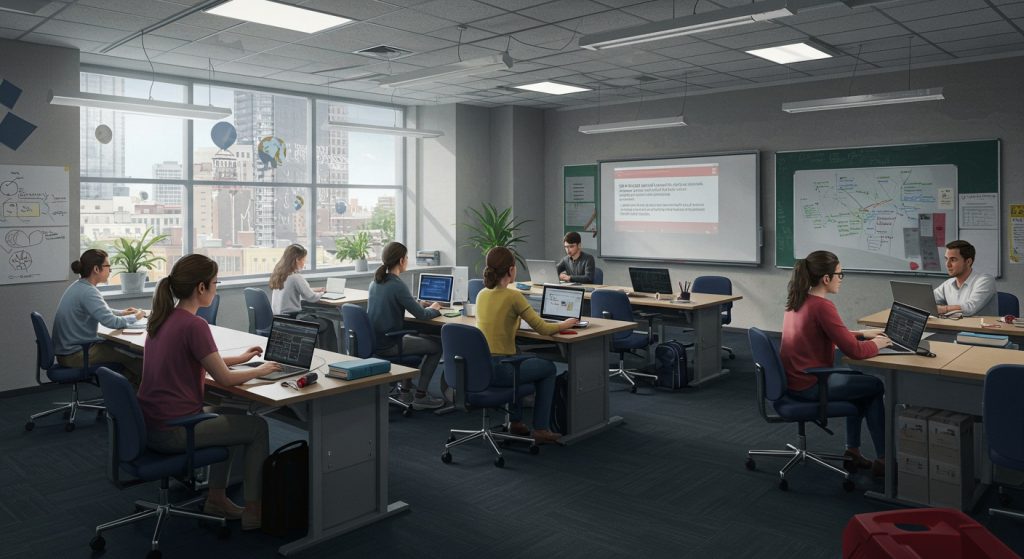

The modern professional landscape, fundamentally reshaped by AI integration and rapid digital transformation, mandates continuous skill acquisition to maintain relevance. Traditional career trajectories are being redefined, with a significant shift towards adaptable, interdisciplinary expertise. This dynamic environment necessitates a proactive approach to professional development, moving beyond conventional learning models. The Open University empowers individuals to navigate this complexity, offering a flexible and accredited pathway to acquire critical competencies in fields like cybersecurity, data science, or sustainable business practices, ensuring career longevity and upward mobility without disrupting existing commitments. This strategic investment in lifelong learning directly addresses emerging skill gaps, fostering resilience in a volatile job market.

The Evolving World of Work and Why Lifelong Learning Matters
Ever thought about what your dream job looks like? Maybe it’s a tech wizard, a creative designer, or an environmental scientist. Whatever it is, the world of work is changing faster than ever before. Gone are the days when a single degree guaranteed a career for life. Today, industries are transforming, new technologies are emerging. skills that are essential today might be outdated tomorrow. This isn’t meant to scare you. to empower you! It means that to thrive, you need to be adaptable, curious. committed to learning continuously. This concept is called ‘lifelong learning,’ and it’s your superpower for a successful future.
For young adults and even teens starting to think about their future paths, understanding this shift is crucial. Employers increasingly value individuals who can reskill and upskill, demonstrating a proactive approach to their professional development. This is where flexible education models, like those offered by the Open University, become incredibly powerful tools for navigating your career journey.
What is the Open University and How Does It Work?
Imagine being able to earn a university degree or gain valuable qualifications without having to move away from home, give up your job, or sacrifice your personal commitments. That’s essentially what the Open University (often referred to as simply the OU) offers. Founded over 50 years ago, it’s a world leader in distance learning, meaning you study from wherever you are, whenever it suits you.
The core idea behind the Open University is flexibility and accessibility. Unlike traditional universities where you attend lectures on campus at set times, the OU delivers its education through a unique blend of learning materials:
- Online Learning Platforms: You’ll access course materials, forums. interact with tutors and fellow students through a dedicated virtual learning environment.
- Tutor Support: You’re not alone! Each student is assigned a personal tutor who provides academic guidance, feedback on assignments. support throughout your studies.
- Study Materials: Depending on your course, you might receive textbooks, study guides. sometimes even practical kits directly to your home.
- Online Tutorials and Webinars: While not mandatory campus attendance, the OU often provides optional online sessions for deeper dives into topics or group discussions.
This model is particularly revolutionary because it breaks down barriers to higher education, making it possible for people of all ages and backgrounds to pursue their academic and career goals. Whether you’re a high school graduate looking for a flexible start, someone working full-time, or a parent balancing family life, the Open University adapts to you, not the other way around.
The Power of Flexibility: Tailoring Education to Your Life
The beauty of the Open University lies in its unparalleled flexibility, which is perfect for anyone trying to balance education with life’s other demands. This isn’t just about studying online; it’s about a learning structure designed to fit around your existing commitments.
- Study at Your Own Pace: Most OU courses are part-time, allowing you to choose how many modules you study each year. This means you can complete a degree over a longer period, perhaps 6-8 years for a Bachelor’s, or accelerate if your circumstances allow. This prevents burnout and ensures you can truly absorb the material.
- Anytime, Anywhere Access: With all materials available online, your classroom is wherever you have an internet connection. Study on your commute, during your lunch break, late at night, or early in the morning – whatever works for your schedule. This is a huge advantage for young adults who might be working part-time jobs, volunteering, or involved in sports and clubs.
- No Fixed Timetables: While there are assignment deadlines, you largely control when and how you engage with the course content. This self-directed learning approach helps build crucial skills like time management, discipline. independent study – all highly valued in the professional world.
- Cost-Effective Options: Studying with the Open University can also be more financially manageable. You pay for your modules as you study them, rather than a large upfront sum for an entire year. This modular payment structure makes higher education more accessible without accumulating massive debt, especially appealing for those considering university but worried about costs.
This flexible approach means that pursuing a degree or qualification doesn’t have to mean putting your life on hold. It means you can simultaneously build your career, gain work experience. earn a respected qualification from a top-tier institution like the Open University.
Degrees and Courses: Your Path to New Skills and Horizons
The Open University isn’t just for a few niche subjects; it offers a vast and diverse range of qualifications, from undergraduate degrees (Bachelors) to postgraduate degrees (Masters and PhDs), diplomas, certificates. even free short courses. This extensive portfolio means you can find a path that aligns with almost any career ambition.
Here’s a glimpse into the breadth of what you can study:
- Business and Management: From an MBA to specific qualifications in leadership, marketing, or finance, preparing you for roles in various industries.
- Computing and IT: Degrees in computer science, cybersecurity, data science. software development, equipping you with skills for the digital age.
- Health and Social Care: Courses in nursing, social work, psychology. public health, vital for those passionate about helping others.
- Science, Technology, Engineering. Mathematics (STEM): Degrees in biology, physics, engineering, mathematics. environmental science, often including practical home experiment kits.
- Arts and Humanities: Explore history, literature, philosophy, creative writing. languages, fostering critical thinking and communication skills.
- Education and Childhood Studies: For those aspiring to work in teaching or early years education.
Many of these programs are designed with direct input from industry experts, ensuring that the skills you acquire are relevant and in demand. For instance, a degree in cybersecurity from the Open University will equip you with practical knowledge directly applicable to protecting digital assets, a skill increasingly crucial across all sectors. The focus is not just on theoretical knowledge but on developing practical, transferable skills that you can immediately apply in a professional setting, making you highly marketable to employers.
Beyond the Degree: Lifelong Learning and Career Advancement
In today’s dynamic job market, a single degree, even from a prestigious institution like the Open University, is often just the beginning. Lifelong learning isn’t just a buzzword; it’s a necessity. The OU excels in supporting this continuous journey, offering various pathways for ongoing professional development.
- Upskilling and Reskilling: If your career path changes or new technologies emerge, the Open University provides shorter courses, micro-credentials. postgraduate programs that allow you to quickly acquire new skills or transition into a different field without committing to another full degree. For example, a marketing professional might take a short course in data analytics to enhance their digital marketing capabilities.
- Professional Development: Many courses are specifically designed to meet the requirements of professional bodies, helping you gain certifications or maintain professional accreditations.
- Free Learning Resources: Beyond paid courses, the OU offers a wealth of free learning materials through platforms like OpenLearn. This allows anyone to explore subjects, test their interests. gain foundational knowledge without any financial commitment. It’s an excellent way for teens to sample university-level study or for young adults to explore potential career changes.
Consider the story of Sarah, a hypothetical young adult who started her career in retail. Realizing her passion for technology, she began by taking a free introductory course on coding through OpenLearn. This sparked her interest, leading her to enroll in a part-time Computing and IT degree with the Open University. While studying, she continued working, applying her newly learned problem-solving skills to her current role. Upon graduation, she secured a junior software developer position, demonstrating how the flexible learning path allowed her to pivot her career effectively and build upon her existing experiences. This kind of flexibility and continuous learning support is what truly sets the open universaty apart in fostering career longevity and success.
Is the Open University Right for You? Actionable Takeaways
Deciding on your educational path is a big step. the Open University offers a compelling alternative to traditional routes. Here’s how you can figure out if it’s the right fit for your career aspirations and lifestyle:
Consider the OU if you are:
- Seeking Flexibility: You need to balance studies with work, family commitments, or other responsibilities.
- A Self-Starter: You’re motivated and disciplined enough to manage your own study schedule and work independently.
- Looking for Affordability: You prefer a modular payment structure and want to avoid the high costs of living away from home.
- Eager for a Career Change or Advancement: You want to upskill, reskill, or gain a qualification to progress in your current field or move into a new one.
- Geographically Restricted: You live in a remote area or have reasons that prevent you from attending a traditional campus.
- Someone who values practical, applicable knowledge: The OU’s curriculum is often designed with real-world application in mind.
Next Steps to Explore the OU:
- Browse Courses: Visit the Open University’s official website (a simple search for “Open University” will get you there) and explore the vast range of courses and qualifications available.
- Try OpenLearn: Dip your toes in with their free courses on OpenLearn. It’s a fantastic way to experience OU-style learning and test out subjects that interest you without commitment.
- Attend an Online Open Day: The OU regularly hosts virtual open days where you can chat with tutors, learn about courses. ask questions.
- Contact an Advisor: If you have specific questions about your career goals or eligibility, reach out to their student support team for personalized advice.
Embracing lifelong learning through a flexible institution like the Open University can truly transform your career trajectory, equipping you with the knowledge, skills. adaptability needed to thrive in any future you choose to build.
Conclusion
The Open University truly stands as a beacon for career transformation, demonstrating that lifelong learning isn’t a distant ideal but an accessible, flexible reality. In today’s rapidly evolving job market, where adaptability and continuous skill acquisition are paramount – think of the surge in demand for green skills or AI literacy – the OU’s model empowers you to navigate these shifts. I’ve personally observed how individuals, even those juggling demanding roles, leverage the OU’s modular approach to pivot into exciting new fields, much like a friend who successfully transitioned from marketing to a thriving UX design career through part-time study. My personal tip is to not just browse. to actively explore their innovative micro-credentials; these focused courses can quickly equip you with in-demand skills, offering a tangible return on investment. Take that decisive step now, invest in your future by exploring how the OU can align with your career aspirations. remember, your journey of professional growth is a continuous, empowering adventure.
More Articles
How to Decipher UK University Rankings for Your Future Career Path
Mastering the Future: Essential Digital Leadership Skills for 2025 Business Impact
Navigate Your Future: Top Business Analytics Careers and Essential Skills for 2025 Success
Your Essential Step-by-Step Guide to Applying for UK Universities Smoothly

FAQs
So, what’s this ‘Transform Your Career’ thing with The Open University all about?
It’s all about empowering you to take control of your professional future. The Open University offers a unique, flexible approach to education that helps you gain new skills, qualifications, or even a whole new career path, no matter where you are in life right now.
How exactly can The Open University help me change my career?
The OU provides a wide range of courses and qualifications, from short courses to full degrees, designed to equip you with in-demand skills. Its distance learning model means you can study alongside your current job or family commitments, making a career transition much more manageable and less disruptive.
What makes The Open University’s path ‘flexible’?
Flexibility is at the heart of the OU experience. You study at your own pace, from anywhere. fit your learning around your existing life. There are no fixed timetables or attendance requirements, giving you the freedom to learn when and where it suits you best.
Is the Open University just for people starting out, or can I really keep learning my whole life?
Absolutely! The Open University is built for lifelong learning. Whether you’re looking to upskill, reskill, or simply explore new interests at any age or stage of your career, the OU provides the resources and support to help you continue your educational journey indefinitely.
What kinds of courses can I study at The Open University?
You’ll find a vast array of subjects, covering everything from arts and humanities to science, technology, business. health. Whether you want a certificate, diploma, undergraduate, or postgraduate degree, there are options to suit almost every professional ambition and personal interest.
Do I need any special qualifications to get started with the OU?
One of the great things about The Open University is its open entry policy for most undergraduate courses. This means you typically don’t need formal prior qualifications to begin studying, making it accessible to a much broader range of learners who are ready to commit and learn.
How long does it usually take to complete a qualification?
The time it takes varies quite a bit depending on the course and how much time you can dedicate to your studies. You can pace your learning to fit your life, so while some might finish a degree faster studying full-time, others prefer to take longer by studying part-time over several years. It’s truly up to you.