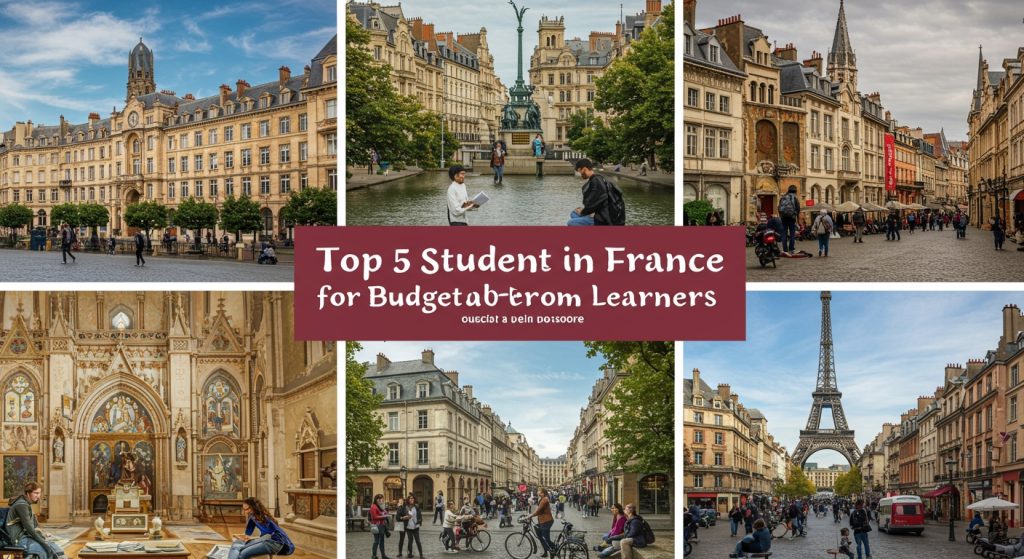

Embarking on a Study France journey for 2025 promises an enriching academic and cultural immersion, yet navigating the application landscape demands precision. Aspiring students often grapple with the intricacies of Campus France procedures, evolving visa regulations for non-EU applicants. the competitive admissions cycles at institutions like Sciences Po or Parisian universities. The 2025 application year introduces nuanced requirements, particularly regarding financial proofs and interview protocols, necessitating a strategic, step-by-step approach. Securing your place requires more than just good grades; it involves mastering document submission deadlines, understanding specific program prerequisites. preparing for the mandatory visa interviews. Confidently transforming ambition into a successful admission hinges on meticulously addressing every critical step from initial research to final enrollment, empowering 2025 applicants to thrive.

Understanding the French Higher Education Landscape
Embarking on your academic journey in France requires a solid understanding of its unique higher education system. France boasts a rich tradition of academic excellence, offering a diverse range of institutions and programs. This initial step is crucial for any aspiring student looking for a comprehensive Study France guide.
- Universities (Universités): These are public institutions, largely funded by the state, offering academic degrees across all fields (sciences, humanities, law, economics, etc.) from Bachelor’s (Licence) to Master’s and PhD (Doctorat). Tuition fees are generally very affordable, especially for EU/EEA citizens. For non-EU students, while fees are higher, they remain competitive globally.
- Grandes Écoles: These prestigious institutions specialize in specific fields like engineering, business, political science. arts. Admission is highly competitive, often requiring rigorous entrance exams (concours) after two years of preparatory classes (Classes Préparatoires aux Grandes Écoles – CPGE). They are known for their strong industry links and excellent career prospects.
- Specialized Schools: These include schools for architecture, art, fashion, hospitality. more. They offer practical, industry-focused training leading to specific professional qualifications.
When selecting your program, consider the language of instruction. While many Master’s and some Bachelor’s programs are now offered entirely in English, proficiency in French (demonstrated by DELF/DALF scores) is often required, especially for humanities and social sciences. greatly enhances your daily life experience.
Navigating Eligibility and Academic Requirements
Before you can even dream of croissants and classes, you need to ensure you meet the fundamental eligibility criteria for studying in France. This part of your Study France guide is about matching your academic profile with what French institutions are looking for.
- Academic Qualifications:
- For a Bachelor’s (Licence) degree, you’ll generally need a high school diploma equivalent to the French Baccalauréat. This typically means having completed 12 years of schooling.
- For a Master’s degree, you’ll need a Bachelor’s degree (Licence) or equivalent, usually requiring three to four years of higher education.
- For a PhD (Doctorat), a Master’s degree is a prerequisite.
- Language Proficiency:
- French-Taught Programs: You’ll need to prove your French language skills, usually through official tests like the DELF (Diplôme d’Études en Langue Française) or DALF (Diplôme Approfondi de Langue Française). A B2 level is commonly required for Bachelor’s and Master’s programs, while some may accept B1 or demand C1.
- English-Taught Programs: If your chosen program is in English, you’ll need scores from tests like IELTS or TOEFL. Specific score requirements vary by institution and program.
- Specific Program Requirements: Beyond general qualifications, many programs have additional prerequisites, such as specific subject backgrounds, portfolios (for arts/design), entrance exams, or interviews. Always check the individual program’s requirements on the university website.
The Application Process: Campus France and Beyond
The application journey for studying in France can seem complex. understanding the central role of Campus France simplifies much of it. This is a critical section in any comprehensive Study France guide for 2025 applicants.
What is Campus France?
Campus France is the official French agency responsible for promoting French higher education worldwide and managing the application process for international students in many countries. It acts as a one-stop shop, guiding you through program selection, application submission. even visa procedures. Not all students need to go through Campus France. for many non-EU/EEA citizens, it’s mandatory.
Application Routes:
| Application Route | Description | Who It’s For | Key Dates (Approximate for 2025) |
|---|---|---|---|
| DAP (Demande d’Admission Préalable) | “Preliminary Admission Request” for first-year Bachelor’s (Licence 1) or architecture programs at public universities. Handled through the Campus France online platform. | Non-EU/EEA applicants residing in a country with a Campus France procedure, applying for L1 or Architecture. | October – December (previous year) |
| Hors-DAP (Outside DAP) | For all other levels (L2, L3, Master’s, PhD) or for specific institutions (Grandes Écoles, private schools), even if you are in a Campus France country. You apply directly to the institutions. | Non-EU/EEA applicants (L2, L3, Master’s, PhD, or specific schools) AND All EU/EEA applicants. | Varies by institution, typically November – March |
| Parcoursup | The national platform for French and EU/EEA students applying for first-year higher education programs (L1, BTS, BUT, CPGE, etc.) in France. | French and EU/EEA applicants for L1. | January – March |
Required Documents (Commonly):
- Academic transcripts and diplomas (translated into French by a sworn translator if not originally in French or English).
- Proof of French or English language proficiency (DELF/DALF, IELTS, TOEFL).
- Curriculum Vitae (CV) – often in the Europass format.
- Motivation Letter (Lettre de Motivation) – explaining your academic and career goals. why you want to study in France and at that specific institution/program.
- Passport copy.
- Letters of Recommendation (often 1-2, from professors or employers).
- Portfolio (for arts, architecture).
- Application fees (Campus France fee + institutional application fees).
Actionable Takeaway: Start gathering your documents early! Translations can take time. securing recommendation letters requires advance notice. Create a checklist for each application you make.
Financing Your French Education: Costs and Opportunities
Understanding the financial aspects is a cornerstone of any effective Study France guide. While France is known for its relatively affordable tuition, especially in public universities, you need to budget for living expenses.
- Tuition Fees:
- Public Universities (EU/EEA Students): Expect around €170 for a Licence, €243 for a Master’s. €380 for a Doctorate per year. These are nominal fees.
- Public Universities (Non-EU/EEA Students): The French government introduced differentiated tuition fees in 2019. For 2025, these are approximately €2,770 for a Licence and €3,770 for a Master’s or Doctorate per year. But, many universities offer fee waivers or exemptions, bringing the cost closer to that for EU students. Always check with your chosen institution.
- Grandes Écoles and Private Institutions: Fees vary significantly, ranging from €5,000 to €20,000+ per year, depending on the school and program.
- Cost of Living: This varies greatly depending on the city. Paris is significantly more expensive than smaller cities like Lyon, Bordeaux, or Toulouse.
- Accommodation: €200-€800+ per month (student residences are cheaper).
- Food: €200-€300 per month.
- Transport: €20-€70 per month (student passes available).
- Health Insurance: Mandatory. If you are under 28 and an EU/EEA citizen, your EHIC card might cover you initially. Non-EU students must register with the French social security system (Ameli) upon arrival (it’s free!). Private complementary insurance (mutuelle) is recommended for better coverage.
- Miscellaneous (personal care, leisure, books): €100-€200 per month.
Estimated Monthly Budget: Expect to need €600-€800 in smaller cities and €800-€1200+ in Paris.
- Scholarships and Financial Aid:
- French Government Scholarships: The Ministry for Europe and Foreign Affairs offers various scholarship programs, often managed by Campus France.
- Institutional Scholarships: Many universities and Grandes Écoles offer their own scholarships based on merit or need.
- Erasmus+ Program: For students from EU countries, this program provides grants for studying abroad.
- Other Scholarships: Research scholarships from your home country, foundations, or international organizations.
- Part-Time Work: As an international student with a student visa, you are generally allowed to work part-time (964 hours per year, or 20 hours per week on average). This can help supplement your finances but should not be relied upon as your sole source of income for visa purposes.
Expert Tip: When applying for your visa, you’ll need to prove you have sufficient funds (currently around €615 per month) for your stay, in addition to tuition fees. Scholarship letters or bank statements are usually required.
The Visa Application Process: Your Gateway to France
Securing your student visa is a non-negotiable step for non-EU/EEA citizens. This section of the Study France guide details the crucial aspects of the Long-Stay Student Visa (VLS-TS).
- Long-Stay Student Visa (VLS-TS): This is the most common visa type for students planning to stay in France for more than three months. It acts as both a visa and a residence permit for your first year.
- Application Timeline: Start your visa application well in advance – typically 2-3 months before your departure date. Visa processing times can vary.
- Key Documents for VLS-TS (Commonly Required):
- Valid passport (valid for at least three months beyond your intended stay).
- Official acceptance letter from a French educational institution.
- Proof of financial resources: Bank statements, scholarship letters, or a guarantor’s letter proving you have sufficient funds (at least €615 per month, though this figure can be updated).
- Proof of accommodation: Rental agreement, certificate from a host family, or a booked hotel for your initial stay.
- Proof of health insurance: For the first few months, or a commitment to register for French social security upon arrival.
- Travel itinerary (flight booking).
- Visa application form and passport-sized photos.
- Proof of payment for visa fees.
- The OFII Procedure: Once you arrive in France, your VLS-TS visa needs to be validated online with the OFII (Office Français de l’Immigration et de l’Intégration) within three months of your arrival. This validates your visa as a residence permit. It’s a critical step that many students forget, leading to complications. You’ll need to pay a tax stamp (vignette OFII) and potentially attend a medical visit or an integration session.
Actionable Takeaway: Do not book your flights until your visa is approved. The visa application process can be stressful, so meticulous preparation and adherence to official guidelines are key.
Accommodation and Pre-Departure Essentials
Securing accommodation and preparing for your move are practical steps that ensure a smooth transition into your new life in France. This part of your Study France guide helps you get organized.
- Accommodation Options:
- CROUS Residences: Managed by regional student welfare organizations, these are often the most affordable and popular option. Apply early via the Dossier Social Étudiant (DSE) portal. Eligibility for non-EU students might be limited. some places are reserved.
- Private Student Residences: Companies like Studéa, Nexity Studéa. Kley offer furnished apartments with services, usually more expensive than CROUS but often easier to secure.
- Private Rentals (Apartments/Rooms): Websites like Leboncoin, SeLoger. Appartager are popular for finding private accommodation. Be wary of scams and always try to visit (or have someone visit on your behalf) before committing.
- Homestays: Living with a French family can be a great way to improve your French and immerse yourself in the culture.
- The Guarantor (Garant): Many landlords in France require a guarantor, someone who agrees to pay your rent if you default. If you don’t have a French guarantor, options like Visale (a free state-backed guarantee for students and young workers) or private guarantor services (e. g. , Garantme, Studapart) can be lifesavers.
- Insurance:
- Health Insurance: As mentioned, register for French social security upon arrival (free for students). Consider a complementary private health insurance (mutuelle) for better coverage.
- Housing Insurance (Assurance Habitation): Mandatory for all tenants in France. You’ll need to secure this before moving into your accommodation.
- Opening a French Bank Account: This is essential for receiving financial aid, paying rent. managing daily expenses. Major banks like Société Générale, BNP Paribas, LCL. Crédit Agricole have specific offers for students. You’ll typically need your passport, proof of address. acceptance letter.
Pre-Departure Checklist:
- Pack appropriately for the climate (France has four distinct seasons).
- Arrange your travel to France, including airport transfers.
- Inform your university of your arrival date.
- Make copies of all essential documents (passport, visa, acceptance letter, birth certificate, etc.) and store them digitally and physically separately.
- Learn some basic French phrases – it goes a long way!
Settling In: First Steps Upon Arrival
Your arrival in France is just the beginning of your adventure! These initial steps are crucial for a smooth integration and make this Study France guide truly comprehensive.
- Validate Your Visa (OFII): As mentioned, complete the online OFII validation within three months of arrival. This is critical to legalize your stay.
- Register with French Social Security (Ameli): This free service gives you access to the French healthcare system. You’ll need your passport, visa, acceptance letter. a French bank account (RIB – Relevé d’Identité Bancaire).
- Open a Bank Account: If you haven’t already, do this promptly. You’ll need it for rent, social security reimbursement. potentially receiving scholarships.
- Housing Assistance (CAF): If you’re renting, you might be eligible for housing benefits (APL – Aide Personnalisée au Logement) from the Caisse d’Allocations Familiales (CAF). The application is online and requires various documents, including your validated visa and rental contract.
- Get a Mobile Phone Plan: Major providers include Orange, SFR, Bouygues Telecom. Free Mobile, offering various student-friendly plans.
- Explore Your City and University: Attend orientation events, join student associations. explore your surroundings. This helps with cultural integration and making new friends.
Cultural Integration Tip: Don’t be afraid to speak French, even if you make mistakes. French people generally appreciate the effort. Embrace local customs, try new foods. explore the rich culture around you. Living in France is not just about academics; it’s a profound cultural experience.
Conclusion
As you embark on your 2025 application journey to study in France, remember that meticulous preparation is your greatest asset. Don’t underestimate the power of starting your Campus France dossier early, even before receiving final university acceptances; it streamlines the entire visa process, a critical step often overlooked. From my own experience, actively engaging with local French cultural centers or Alliance Française branches not only refines your language skills but also provides invaluable networking opportunities and demonstrates genuine cultural immersion, a trait highly valued by French institutions. This isn’t merely about ticking boxes; it’s about showcasing your projet d’études with clarity and passion. The upcoming 2025 cycle, reflecting global shifts, will likely emphasize adaptability and a clear vision for post-study contributions. So, personalize your essays, highlight your unique experiences. view every requirement as an opportunity to reinforce your commitment. Your dream of Parisian boulevards or Riviera sunshine is within reach; stay organized, stay authentic. embrace the adventure.
More Articles
Your Essential Guide: Navigating French Student Visa Requirements for a Smooth Journey
Unlock Your Potential: How to Choose the Right MBA Specialization for Your Future Career
Beyond the Numbers: How to Effectively Use UK University Rankings for 2025 Admissions
Unlock Your Future: How Stanford’s Innovation Ecosystem Powers Tomorrow’s Tech Leaders

FAQs
What’s the very first step I should take if I want to study in France for 2025?
The absolute first step is thorough research! Start by exploring different universities, academic programs (whether it’s a Bachelor’s, Master’s, PhD, or a specific diploma). potential cities in France. Think about your academic goals, what career path you’re aiming for. if you prefer a program taught in English or entirely in French. This initial groundwork will be crucial for guiding your entire application journey.
When should I really kick off my application preparations for the 2025 academic year?
Ideally, you should aim to start your preparations about 12 to 18 months before you plan to enroll. For the 2025 intake, that means beginning your research, gathering documents. potentially taking language tests in early to mid-2024. Application deadlines for French universities and the Campus France procedure can be quite early, often closing by December or January for a September intake. Giving yourself plenty of time helps reduce stress and ensures you don’t miss any crucial deadlines.
Do I absolutely need to be fluent in French to study there?
Not necessarily! While knowing French is incredibly beneficial for daily life and truly immersing yourself in the culture, many programs, especially at the Master’s and PhD levels, are offered entirely in English. If you’re applying to an English-taught program, you’ll typically need to demonstrate your English proficiency with scores like IELTS or TOEFL. But, if your chosen program is in French, then yes, you’ll need to show a strong command of the language, usually through a DELF/DALF or TCF score.
What kind of documents will I need to gather for my application?
Generally, you’ll need a collection of key documents including your academic transcripts and diplomas (often requiring certified translations into French if not originally in English or French), a detailed CV, a compelling motivation letter specific to each program, letters of recommendation, a copy of your passport. proof of language proficiency (English or French, depending on your program). Some specialized programs might also ask for a portfolio or specific entrance exam scores. Always double-check the exact requirements for each university and program you apply to.
How does the student visa process work for international students?
Once you’ve secured an acceptance letter from a French institution, you’ll apply for a long-stay student visa (Visa long séjour valant titre de séjour – VLS-TS). This typically involves the Campus France procedure, where you create an online file, upload all your necessary documents, pay the required fees. potentially attend an interview. After Campus France validates your application, you’ll then proceed to apply for the actual visa through the French consulate or embassy in your home country. It’s a multi-step process, so starting early and being meticulous with your paperwork is key.
Is studying in France super expensive, or can I manage on a budget?
France can be quite affordable for international students, especially when it comes to tuition fees at public universities, which are significantly lower than in many other Western countries. But, the cost of living, particularly in major cities like Paris, can be high. You’ll need to budget carefully for rent, food, transportation, health insurance. personal expenses. Many students manage effectively by cooking at home, utilizing public transport. taking advantage of student discounts. There are also various scholarships and part-time work opportunities available to help support your studies.
Any quick tips for making my application stand out from the crowd?
Absolutely! First, customize your motivation letter for each specific program; clearly articulate why you’re a perfect fit and how the program aligns with your unique goals, rather than sending a generic letter. Second, ensure your CV is professional, well-organized. highlights all your relevant academic and extracurricular experiences. Third, choose recommenders who know you well and can genuinely speak to your strengths and potential. Finally, pay extreme attention to detail in all your submissions and strictly adhere to all deadlines – a polished, timely application speaks volumes about your professionalism.