
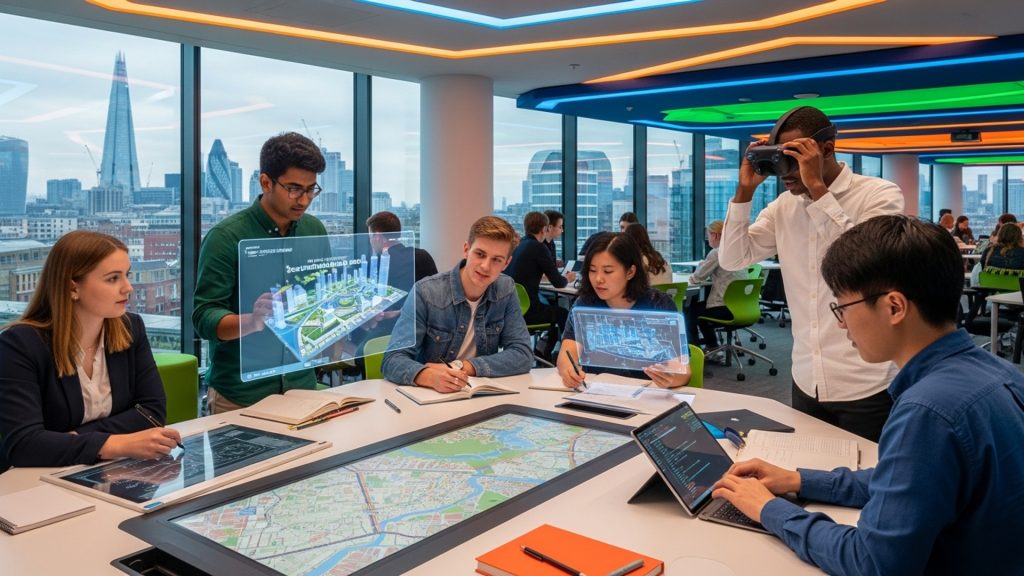
The 21st century confronts humanity with a complex web of interconnected challenges, from climate change and global health crises to the ethical frontiers of artificial intelligence, none of which yield to singular disciplinary solutions. Recognizing this imperative, University College London (UCL) champions a profoundly interdisciplinary approach, forging new pathways for research and innovation. For instance, its work on sustainable urban development integrates engineering, social sciences. public policy, while its AI Centre brings together computer scientists, philosophers. legal scholars to shape responsible AI governance. This convergent research model empowers UCL to transcend traditional academic silos, actively developing holistic and actionable solutions for our most pressing contemporary issues.
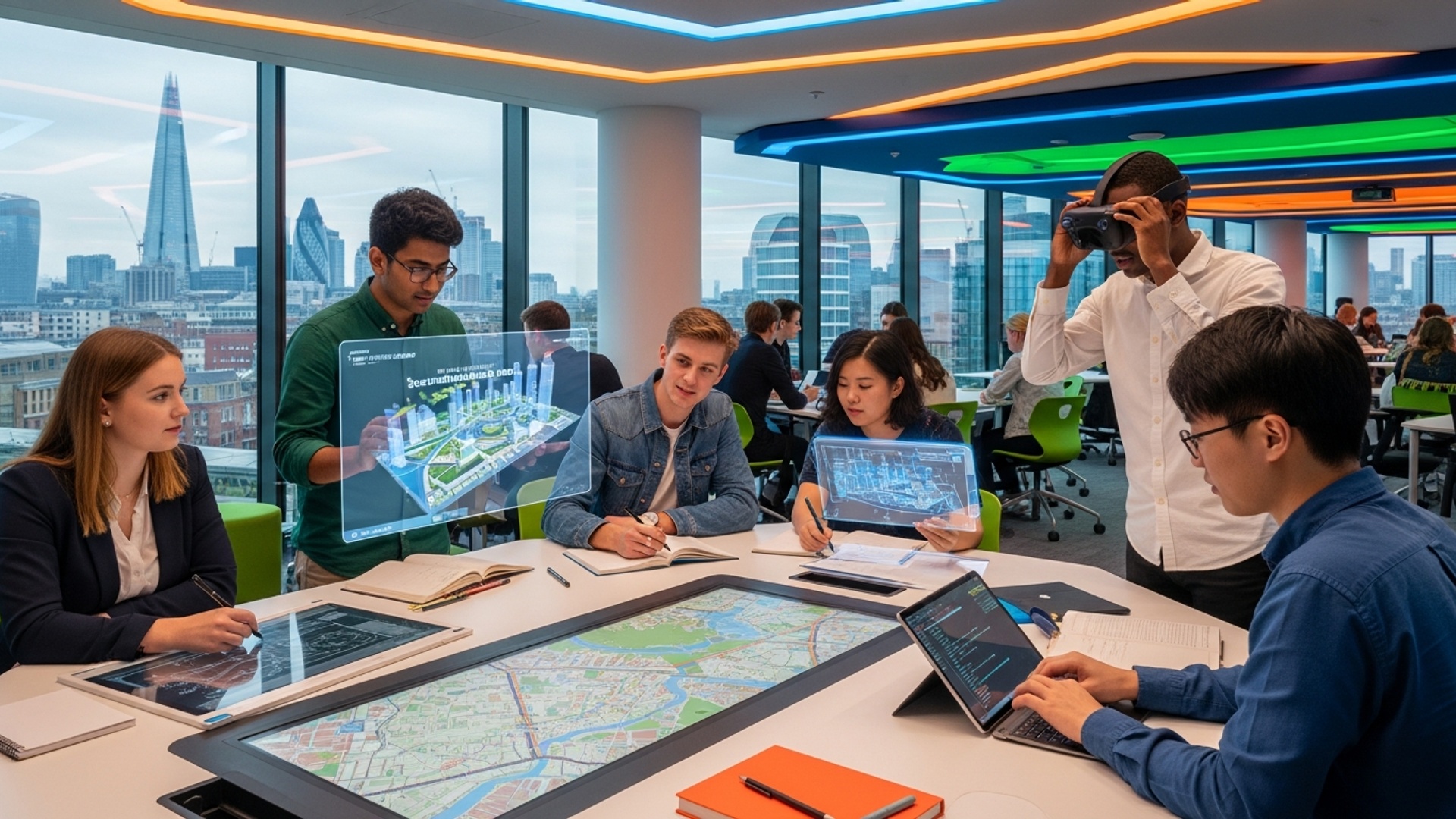
Understanding the 21st-Century Landscape: Why We Need New Thinking
Hey everyone! Let’s talk about the big stuff happening in our world today. We’re living in a really exciting time. it’s also packed with some serious challenges. Think about things like climate change, which isn’t just about melting ice caps but also affects economies, human migration. even our health. Or consider global health crises, like pandemics, which aren’t just a medical problem but also involve logistics, communication, social behavior. economic recovery.
Then there’s the rapid advancement of technology, especially Artificial Intelligence (AI). While AI promises incredible breakthroughs, it also brings up complex questions about ethics, privacy, jobs. fairness. And let’s not forget social inequality, which isn’t just a matter of wealth but also access to education, healthcare. opportunities, often intertwined with historical and political factors.
These aren’t simple problems with simple solutions. You can’t just throw a scientist at climate change and expect them to fix everything. You can’t just have doctors solve a pandemic without understanding human behavior or supply chains. These are what we call ‘wicked problems’ – complex, interconnected issues where solving one part might create problems elsewhere. Traditionally, universities and research have often been organized into separate departments: Chemistry, History, Computer Science, Law, etc. While this specialization is great for deep expertise, it can sometimes make it harder to see the bigger picture and connect the dots across different areas. That’s where a fresh approach comes in.
What Exactly is Interdisciplinary Learning?
So, if traditional, single-discipline approaches aren’t enough, what’s the alternative? Enter ‘interdisciplinary learning.’ This might sound like a fancy academic term. it’s actually a super practical and powerful way of thinking. At its core, interdisciplinary learning means bringing together knowledge, methods. perspectives from different academic disciplines to tackle a common problem or grasp a complex topic.
Imagine a team trying to design a sustainable city. A traditional approach might have an architect design the buildings, an engineer plan the infrastructure. an urban planner map out the city. But an interdisciplinary approach would bring all those people together from day one, alongside environmental scientists, sociologists (to grasp how people live and interact), economists (to make it financially viable), policymakers (to ensure it meets regulations). even artists (to think about aesthetics and community engagement). They wouldn’t just work side-by-side; they’d actively integrate their ideas and methods to create a more holistic and effective solution.
To break it down further, here’s how it compares to some related concepts:
  <table border="1"> <tr> <th>Approach</th> <th>Description</th> <th>Key Characteristic</th> </tr> <tr> <td><strong>Mono-disciplinary</strong></td> <td>Focuses on a single academic discipline. </td> <td>Deep specialization within one field. </td> </tr> <tr> <td><strong>Multi-disciplinary</strong></td> <td>Multiple disciplines work on a problem, often in parallel, contributing their own perspectives without much integration. </td> <td>Side-by-side contributions; knowledge shared but not necessarily blended. </td> </tr> <tr> <td><strong>Interdisciplinary</strong></td> <td>Integrates methods and insights from different disciplines to create a more comprehensive understanding or solution. </td> <td>Synthesis and blending of knowledge; new frameworks emerge. </td> </tr> <tr> <td><strong>Trans-disciplinary</strong></td> <td>Transcends individual disciplines, forming a holistic framework that goes beyond disciplinary boundaries, often involving stakeholders outside academia. </td> <td>Beyond disciplinary silos, often co-creating knowledge with non-academic partners. </td> </tr> </table>
</code>
The benefits of an interdisciplinary approach are huge:
- Holistic Understanding
- Innovative Solutions
- Broader Perspective
- Real-World Relevance
You get the full picture, not just pieces of it.
New ideas often spark at the intersection of different fields.
You learn to appreciate different ways of thinking and problem-solving.
Most real-world problems don't fit neatly into one academic box.
University College London's Pioneering Approach to Interdisciplinarity
Now, let's talk about an institution that truly champions this way of thinking: University College London (UCL). University College London has a long-standing reputation for being progressive and forward-thinking. this extends to how it approaches education and research. UCL was actually the first university in England to be founded on entirely secular principles and to admit students regardless of their religion, race, or political belief. women on equal terms with men – a testament to its innovative spirit from the very beginning.
Today, University College London isn't just talking about interdisciplinarity; it's embedding it into its very structure and culture. They grasp that to tackle the grand challenges of our time, you need to break down the walls between departments and encourage collaboration across faculties.
How does University College London do this?
- Cross-Faculty Institutes and Centres
- Interdisciplinary Degree Programmes
- Collaborative Research Projects
- Campus Culture
UCL has established numerous institutes and research centers that are specifically designed to bring together experts from different fields. For example, the UCL Institute for Global Health pools expertise from medicine, public policy, economics. social sciences to address worldwide health issues. Similarly, the UCL Grand Challenges program actively encourages researchers from diverse backgrounds to collaborate on specific themes like Human Wellbeing, Global Justice, Sustainable Cities. Transformative Technology.
University College London offers a range of degree programs that are inherently interdisciplinary. One fantastic example is the Bachelor of Arts and Sciences (BASc) programme, where students can combine subjects from the arts, humanities, social sciences. sciences, designing a bespoke degree that crosses traditional boundaries. This allows students to develop a broad knowledge base while also specializing in areas of interest.
Many research projects at University College London are designed to be interdisciplinary from the ground up. This means professors and students from different departments work together on complex problems, sharing insights and methodologies. For instance, a project on renewable energy might involve engineers, material scientists, economists. even legal experts to consider policy implications.
UCL actively fosters a culture of collaboration. Its campus environment and various student societies often promote interaction between students and academics from different disciplines, encouraging informal learning and idea exchange.
Real-World Impact: University College London in Action
It's one thing to talk about interdisciplinary approaches; it's another to see them in action, making a real difference. University College London has a wealth of examples where this collaborative mindset is leading to groundbreaking solutions. Let's dive into a couple of real-world use cases:
Case Study 1: Tackling Climate Change and Sustainable Futures
Climate change is arguably the most complex challenge of our century. It's not just a scientific problem; it's economic, social, political. ethical. At University College London, researchers are not just measuring CO2 levels; they're looking at the whole picture. For instance, the UCL Energy Institute brings together engineers, economists, architects. social scientists to research energy systems and their impact. They don't just design more efficient buildings; they also study human behavior to comprehend how people use energy, develop policies to encourage sustainable practices. assess the economic feasibility of new technologies. This means understanding:
- Engineering
- Economics
- Social Science
- Policy & Law
How to design energy-efficient buildings and renewable energy systems.
The costs and benefits of different energy policies and technologies.
How human habits and cultural factors influence energy consumption.
Developing regulations and international agreements to drive change.
One project might involve developing a new material for carbon capture (material science), then assessing its economic viability (economics), understanding public perception and acceptance (sociology). finally, drafting policy recommendations for its widespread adoption (public policy). This integrated approach, rooted at University College London, ensures solutions are not just technically sound but also implementable and socially equitable.
Case Study 2: Advancing Global Health and Well-being
During the recent global health crises, the need for interdisciplinary collaboration became clearer than ever. University College London played a pivotal role in research and response. The UCL Institute for Global Health is a prime example of breaking down silos. It unites researchers from diverse fields such as epidemiology (the study of disease patterns), public health, statistics, economics, anthropology (the study of human societies and cultures). even engineering.
Imagine a project aimed at improving vaccine distribution in remote areas. This isn't just a medical challenge:
- Medical Science
- Logistics & Engineering
- Anthropology/Sociology
- Economics
- Data Science
Understanding vaccine efficacy and storage requirements.
Designing robust cold chain solutions and transportation networks.
Understanding local community beliefs, cultural practices. trust in healthcare systems, which are crucial for vaccine uptake.
Assessing the cost-effectiveness of different distribution strategies and securing funding.
Using data to track outbreaks, predict spread. optimize resource allocation.
By bringing these experts together, University College London can develop comprehensive strategies that consider not only the scientific efficacy of an intervention but also its cultural acceptance, economic sustainability. logistical feasibility. This holistic view is essential for tackling complex health disparities and preventing future pandemics.
The Advantage for Students: Preparing for a Dynamic Future
So, what does all this mean for you, as a student considering your future education and career path? Choosing a university like University College London, with its strong interdisciplinary focus, offers significant advantages:
The 21st-century job market isn't looking for people who can only do one thing. Employers, whether in tech, government, non-profits, or industry, want individuals who can think critically, adapt to new situations. tackle complex problems from multiple angles. An interdisciplinary education hones these exact skills.
When you're exposed to different ways of thinking and different toolkits, your own ability to innovate skyrockets. You learn to connect seemingly unrelated ideas, leading to truly novel solutions. This creative edge is invaluable in any field.
Working on interdisciplinary teams means you'll regularly communicate with people who have different academic backgrounds and even different "languages" (e. g. , a scientist explaining data to a lawyer). This experience builds crucial teamwork and communication skills, preparing you for collaborative workplaces.
The world is changing faster than ever. An interdisciplinary education makes you more adaptable, equipping you with a flexible mindset and the ability to learn new concepts quickly, no matter how different they are from your core area of study. This resilience is key to navigating an unpredictable future.
If you're interested in an interdisciplinary approach, here's what you can look for and do:
- Explore Joint Degrees or Minors
- Look for Cross-Faculty Modules
- Engage in Interdisciplinary Student Societies
- Seek Out Research Opportunities
Many universities, like University College London, offer programs where you can combine two distinct subjects, or pursue a major in one field and a minor in a completely different one.
Even if your degree is in a specific subject, check if you can take optional modules or electives from other departments. This is a great way to dip your toes into different fields.
Join clubs or societies that bring together students from various disciplines to work on projects, discuss global issues, or even just socialize.
Ask professors if there are opportunities to get involved in research projects that involve collaboration across departments.
By embracing this mindset, you're not just getting an education; you're developing a superpower for the challenges and opportunities of the 21st century.
Conclusion
UCL's commitment to interdisciplinary learning isn't merely academic rhetoric; it's a vital blueprint for tackling the intricate problems of our age, from climate resilience to ethical AI development. I've personally witnessed how bringing together disparate fields, like a data scientist collaborating with a sociologist on urban planning challenges, generates truly innovative solutions that 'beyond the books' thinking demands. To thrive in this dynamic landscape, my personal tip is to deliberately step outside your comfort zone. Attend seminars on topics seemingly unrelated to your core discipline, or seek out projects that require diverse skill sets, much like UCL's Grand Challenges initiatives. This approach isn't just about accumulating knowledge; it's about cultivating a mindset that sees connections where others see divides. Embrace this interconnected perspective. you'll not only future-proof your career but also empower yourself to make a truly impactful difference in the world.
More Articles
Impact Your World: American University’s Path to Global Policy Influence
Innovate Your Career: How Stanford University Fuels Tech Leadership for 2025
Future-Proof Your Career: Selecting the Best MBA Specialization for 2025 Trends
Finding Your Perfect Fit: A Step-by-Step Guide to Choosing Your UK University Course

FAQs
What does 'Beyond the Books' really mean for UCL?
It's about moving past traditional single-subject learning to combine insights and methods from different academic fields. Instead of just studying history or just studying science in isolation, we bring them together to get a fuller picture and develop more innovative solutions to complex real-world problems.
Why is an interdisciplinary approach so crucial for today's challenges?
Modern problems like climate change, global health crises, or ethical AI development are rarely confined to one academic box. They require understanding from science, humanities, engineering, social sciences. more. An interdisciplinary approach helps us tackle these multifaceted issues comprehensively, leading to more robust and effective solutions.
Can you give an example of how UCL applies this?
Absolutely! Think about developing sustainable smart cities. That's not just an engineering problem; it involves urban planning, social policy, environmental science, economics. even psychology to interpret human behavior. UCL brings experts from all these areas together to design truly livable and sustainable urban futures.
How does this benefit students at UCL?
Students gain a much broader perspective and develop critical thinking skills that are highly valued in the professional world. They learn to connect disparate ideas, collaborate with people from different backgrounds. adapt to rapidly changing environments – skills crucial for any career in the 21st century.
Is this interdisciplinary focus only for specific subjects or research areas?
While some areas naturally lend themselves to it, UCL actively promotes interdisciplinary thinking across all faculties. From arts and humanities exploring digital ethics to engineering working with health sciences on medical devices, the approach is woven into the fabric of teaching and research university-wide.
What kind of impact is UCL hoping to make with this strategy?
We aim to be at the forefront of tackling the world's most pressing challenges. By fostering collaboration and innovative thinking across disciplines, UCL seeks to generate groundbreaking research, educate future leaders who can navigate complexity. ultimately contribute tangible, positive change to society globally.
How is this different from how universities traditionally operate?
Traditionally, universities often have very siloed departments, focusing deeply within specific disciplines. UCL's 'Beyond the Books' philosophy actively breaks down those silos, encouraging cross-departmental collaboration, joint degrees. shared research initiatives to foster a more holistic and integrated problem-solving environment.