
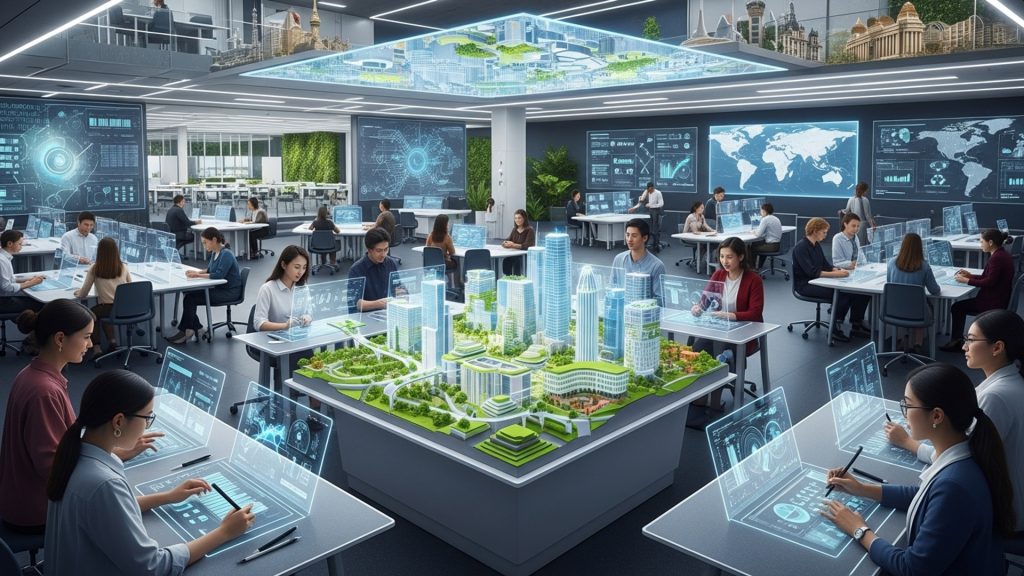
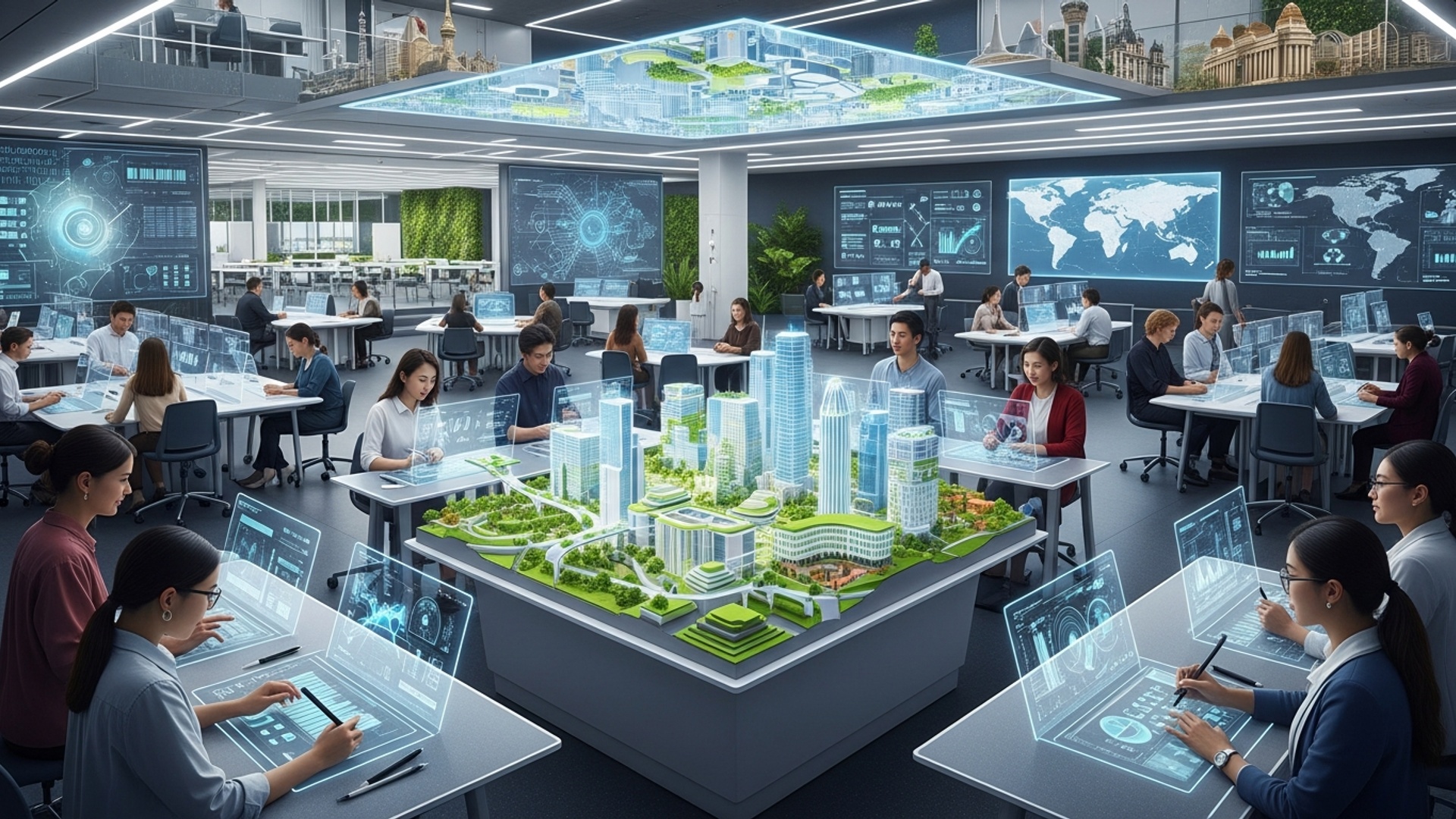
The accelerating pace of global urbanisation presents complex challenges, from climate resilience and smart infrastructure integration to equitable public services. University College London (UCL) actively addresses these pressing issues, leveraging its unparalleled interdisciplinary research to forge innovative solutions for future cities. Through pioneering initiatives like the development of AI-driven urban digital twins for predictive flood modelling in London or socio-economic studies on health equity in rapidly expanding megacities, UCL faculty integrate expertise from engineering, social sciences. environmental studies. This synergistic approach not only redefines urban planning methodologies but also directly informs policy, shaping more sustainable, inclusive. technologically advanced urban futures worldwide.
Understanding Urban Futures: Why It Matters to You
Ever stopped to think about the cities we live in? From towering skyscrapers to bustling streets, cities are incredible hubs of human activity, culture. innovation. But they’re also facing some massive challenges. When we talk about ‘urban futures,’ we’re essentially looking at how our cities will evolve over the next few decades and how we can make them better places to live, work. thrive.
For young people like you, understanding urban futures isn’t just academic; it’s about your own future. Imagine a world where:
- Climate Change Impacts
- Population Growth
- Inequality
- Technological Revolution
Cities are often on the frontline of climate change, dealing with rising sea levels, extreme weather. heatwaves. How do we design cities to be resilient and sustainable?
More and more people are moving to cities. How do we accommodate everyone, ensuring fair access to housing, transport. green spaces?
Many cities struggle with stark differences between rich and poor, leading to issues like homelessness, limited opportunities. social division. How can we build more inclusive cities for everyone?
Smart technologies, AI. autonomous vehicles are changing how cities function. How do we harness these tools responsibly to improve urban life without creating new problems?
These aren’t simple questions. finding answers requires looking at cities from every possible angle. That’s where something called interdisciplinary research comes in. institutions like University College London are leading the charge.
What is Interdisciplinary Research? A Team Effort
Think of solving a complex puzzle. If you only had one type of puzzle piece, you’d never finish it. The same goes for understanding and shaping cities. ‘Interdisciplinary research’ simply means bringing together experts from many different fields to tackle a single, complex problem. Instead of working in isolated silos, they collaborate, share insights. combine their unique perspectives.
Let’s break down why this approach is so powerful for urban challenges:
- Traditional Approach (Single Discipline)
- Interdisciplinary Approach
An architect might design a beautiful building. An engineer might ensure it’s structurally sound. A sociologist might study how people interact within it. These are all valuable. they often work separately.
Imagine an architect, an engineer, a sociologist, an environmental scientist. a data analyst all working together from the very beginning. The architect considers the building’s impact on community well-being (sociology) and energy consumption (environmental science), while the engineer uses data to predict its performance (data analysis). This holistic view leads to much more comprehensive and effective solutions.
University College London embraces this approach because they comprehend that a city isn’t just about its buildings (architecture) or its economy (economics). It’s a living, breathing ecosystem influenced by human behavior, technology, natural environments. political decisions. Solving urban problems requires understanding these connections.
University College London (UCL) at the Forefront: A Hub for Innovation
University College London has a long-standing reputation for being a global leader in research and education, particularly known for its forward-thinking and often radical approach. It’s a place where diverse minds come together to push the boundaries of knowledge. this is especially true in its work on urban futures.
UCL’s commitment to interdisciplinary research means it houses world-renowned faculties and research centres dedicated to understanding and improving cities. For example, The Bartlett Faculty of the Built Environment at University College London is globally recognised for its innovative work across architecture, planning, construction. urban studies. It’s not just about designing buildings; it’s about designing entire urban systems that are sustainable, equitable. resilient.
Another key player is the Centre for Advanced Spatial Analysis (CASA) at University College London, which uses cutting-edge computational methods, data science. geographic data systems (GIS) to model and comprehend cities in unprecedented detail. They bring together computer scientists, geographers. urban planners to unlock insights from vast amounts of urban data, helping to inform better decision-making.
This collaborative environment fosters a unique space where the next generation of urban leaders, thinkers. innovators are trained and where groundbreaking research is conducted to address some of the world’s most pressing urban challenges.
Real-World Impact: UCL’s Projects Shaping Cities
The interdisciplinary research happening at University College London isn’t just theoretical; it’s actively shaping how cities are planned, managed. experienced around the globe. Here are a few examples that highlight their real-world impact:
- Smart City Initiatives
- Sustainable Urban Development
- Inclusive Cities
- Disaster Resilience and Recovery
Researchers at UCL are at the forefront of ‘smart city’ concepts. This involves using sensors, data analytics. connected technologies to make cities more efficient. For instance, projects have explored how traffic flow can be optimized in real-time to reduce congestion and pollution, or how energy consumption in buildings can be monitored and adjusted to lower carbon footprints. Imagine traffic lights that learn patterns and adapt, or bins that signal when they’re full to optimize collection routes – these are the kinds of innovations UCL researchers are developing to make urban living smoother and greener.
Tackling climate change is a huge focus. UCL experts are working on designing ‘green infrastructure’ – like urban forests, green roofs. permeable pavements – that help manage rainwater, cool urban areas. support biodiversity. They also research how cities can transition to renewable energy sources and create circular economies where waste is minimized and resources are reused. One notable area is their work on understanding how urban planning can encourage more walking and cycling, reducing reliance on cars and improving public health.
UCL research also focuses on ensuring cities are fair and accessible to everyone, regardless of age, ability, or socioeconomic background. This includes projects on designing public spaces that are safe and welcoming for diverse communities, exploring solutions to homelessness. using spatial data to identify areas with limited access to essential services like healthcare or fresh food. By combining insights from architecture, sociology. public health, they aim to create cities where everyone has the opportunity to thrive. For example, some studies investigate how urban design impacts social interaction and community cohesion.
With increasing global risks like earthquakes, floods. pandemics, UCL researchers are investigating how cities can better prepare for, respond to. recover from disasters. This involves looking at everything from early warning systems and emergency logistics to resilient building materials and community-led recovery plans. Their work often combines engineering, risk management. social sciences to create comprehensive strategies for urban resilience.
These projects demonstrate how University College London’s interdisciplinary approach moves ‘beyond the books’ to create tangible solutions that make a difference in people’s daily lives and for the future of our planet.
Tools and Technologies: How UCL Researchers Work
To tackle such complex urban challenges, researchers at University College London employ a diverse toolkit of advanced technologies and methodologies. These tools allow them to collect, examine. visualize vast amounts of details, leading to deeper insights and more effective solutions.
- Geographic details Systems (GIS)
- What it is
- How UCL uses it
- Data Science & Artificial Intelligence (AI)
- What it is
- How UCL uses it
- Urban Simulation Models
- What it is
- How UCL uses it
- Participatory Design and Co-creation
- What it is
- How UCL uses it
GIS is a powerful system for creating, managing, analyzing. mapping all types of data. It connects data to a map, integrating location insights with all types of descriptive insights.
Imagine layering maps of a city with details like population density, public transport routes, green spaces, air pollution levels. crime rates. GIS allows UCL researchers to identify patterns, review relationships between different urban elements. visualize how changes in one area might affect another. For example, they might use GIS to identify the best locations for new parks to maximize community benefit or to map areas vulnerable to flooding.
Data science involves extracting knowledge and insights from structured and unstructured data. AI, particularly machine learning, allows computers to learn from data patterns without explicit programming, making predictions or identifying anomalies.
Cities generate enormous amounts of data every second – from traffic sensors and public transport usage to social media activity and utility consumption. UCL researchers use data science and AI to make sense of this ‘big data.’ They can predict future traffic congestion, identify areas needing better public services, interpret how people move through the city, or even forecast the spread of diseases. This helps urban planners make data-driven decisions rather than relying on guesswork.
These are computer models that create virtual representations of cities or specific urban systems. They allow researchers to test different scenarios and policies without having to implement them in the real world first.
Before building a new subway line or implementing a new housing policy, UCL researchers can create a simulation. They can model how a new transport link might change commuting patterns, how a new zoning law might affect housing affordability, or how a climate policy might impact energy use. This helps identify potential problems and optimize solutions before significant resources are committed.
This approach emphasizes involving the people who will be affected by a project or policy directly in its design process. It’s about working ‘with’ communities, not just ‘for’ them.
While technology is crucial, UCL also believes in the power of human input. Researchers actively engage with local residents, community groups. stakeholders through workshops, surveys. design charrettes. This ensures that urban solutions are not only technically sound but also meet the real needs and aspirations of the people they serve, fostering a sense of ownership and belonging.
By combining these advanced tools with deep disciplinary knowledge, University College London researchers are able to gain unparalleled insights into the complexities of urban life and develop innovative, evidence-based solutions for global urban futures.
Beyond the Campus: Actionable Takeaways for Your Future
So, what does all this cutting-edge research at University College London mean for you? It means that the future of cities is an incredibly exciting and impactful field to explore. Even if you’re not planning to become an urban planner right away, thinking about these issues can shape your understanding of the world and potential career paths.
Here are some actionable takeaways:
- Look at Your Own City Differently
- Explore Related Fields
- Get Involved Locally
- Consider Further Study
Start observing your local environment. What works well? What are the challenges? How could your school’s neighborhood be improved to be greener, safer, or more accessible? Thinking critically about your surroundings is the first step towards shaping better urban futures.
The interdisciplinary nature of urban studies means there’s a place for almost every interest. Do you love data and coding? Consider data science, GIS, or urban computing. Are you passionate about social justice? Look into urban sociology, public policy, or community development. Fascinated by design? Architecture, urban planning, or landscape architecture could be for you. Environmental science, engineering, economics. even psychology all play vital roles in shaping cities.
Many towns and cities have youth councils, environmental groups, or community initiatives. Participating can give you hands-on experience and a voice in local decision-making. Attend a public meeting about a new park design or a transport project in your area.
Institutions like University College London offer a vast array of undergraduate and postgraduate programs that delve into these very topics. Whether it’s a Bachelor of Science in Urban Planning, a Master’s in Smart Cities and Urban Analytics, or a degree in Architecture, there are many pathways to become part of the solution. Learning from experts at places like UCL can equip you with the skills to truly make a difference.
The future of our cities is in your hands. By understanding the challenges and embracing interdisciplinary thinking, you can contribute to creating urban environments that are not just functional. truly thriving for generations to come.
Conclusion
UCL’s pioneering work truly underscores that tackling global urban futures demands more than isolated expertise; it requires a symphony of disciplines. We’ve seen how their interdisciplinary approach, from developing climate-resilient infrastructure in London to integrating data science for sustainable transport solutions, addresses complex challenges like rapid urbanization and climate change head-on. My own journey has shown me that the most innovative breakthroughs emerge when architects collaborate with sociologists, or engineers with policymakers, creating solutions far richer than any single field could conceive. Therefore, my personal tip is to actively seek out diverse perspectives in your own work and studies. Don’t just stay in your lane; proactively engage with ideas from different disciplines, as it’s this cross-pollination that truly sparks actionable innovation. Consider how UCL’s commitment to urban solutions, detailed further at London’s Future: How UCL is Tackling Global Urban Challenges with Innovative Solutions, inspires such collaboration. Embrace this collaborative spirit, because by fostering an environment where varied insights converge, you become an indispensable part of shaping a more sustainable, equitable. vibrant urban future for us all.
More Articles
Pioneering Minds: Oxford University’s Groundbreaking Research Shaping Humanity’s Next Decade
Beyond the Lab: Practical AI Innovations MIT is Bringing to Everyday Life by 2025
Leading the Way: Key Management Skills for Tomorrow’s Dynamic Business Landscape
Fuel Your Innovation: Entrepreneurial Mindset Lessons from Stanford’s Tech Ecosystem
Choosing the Best UK Course: Expert Advice for Future University Students

FAQs
What’s the big idea behind ‘Beyond the Books: UCL’s Interdisciplinary Research Shaping Global Urban Futures’?
This initiative is all about how UCL researchers are teaming up across different fields to tackle the massive challenges facing cities worldwide. It’s not just theory; it’s about practical solutions and innovative ideas that help make urban areas better places to live now and in the future.
What exactly does ‘interdisciplinary’ mean when you’re talking about urban research?
It means bringing together experts from loads of different areas – like architects, engineers, social scientists, computer scientists, public health specialists. more – to work on complex urban problems. Instead of sticking to one discipline, they combine their knowledge to find more complete and effective solutions.
Can you give some examples of the urban challenges UCL is looking at?
Absolutely! They’re diving into everything from making cities more sustainable and resilient to climate change, improving public health and well-being in dense populations, designing smarter transport systems, addressing social inequalities, creating affordable housing. using data to make urban planning more effective.
How does this research actually help shape the future of cities globally?
The research aims to produce actionable insights, innovative technologies. new policy recommendations that can be implemented in real cities. This could involve developing sustainable building materials, designing inclusive public spaces, advising governments on urban policy, or creating digital tools for community engagement. It’s about translating academic findings into tangible improvements.
Is this just about London, or are other cities involved?
While UCL is based in London, the focus is definitely global. Researchers are collaborating with partners and studying urban environments all over the world, from rapidly growing megacities in Asia and Africa to established urban centres in Europe and the Americas. The goal is to share knowledge and solutions that have universal applicability.
Who gets involved in these interdisciplinary projects?
It’s a mix! You’ll find academics and students from various UCL departments, external partners like city councils, NGOs, industry leaders. even local communities themselves. The idea is that the best solutions come from a wide range of perspectives and expertise.
What makes this approach ‘beyond the books’?
‘Beyond the books’ emphasizes moving past purely theoretical academic work. It’s about applied research, direct engagement with urban stakeholders. creating real-world impact. The focus is on implementing solutions, influencing policy. actively contributing to the physical and social transformation of cities, rather than just publishing papers.