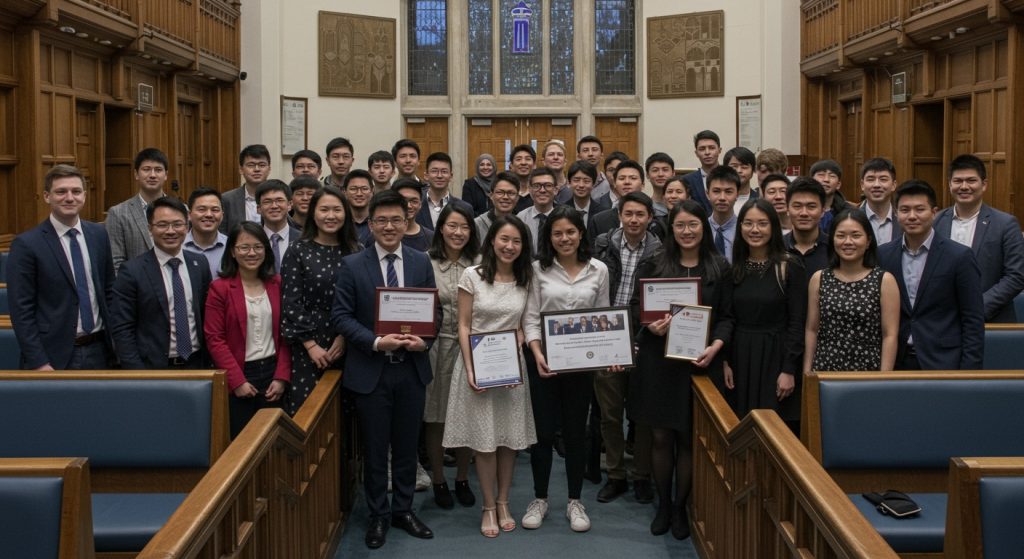
Embarking on postgraduate study UK represents a pivotal career accelerator, demanding a strategic approach given the dynamic global job market. For 2025, prospective students face an increasingly competitive landscape within the UK university system, where traditional disciplines are rapidly evolving alongside emerging fields in AI, data science. sustainable technologies. Selecting the optimal programme requires rigorous evaluation beyond league tables, focusing instead on curriculum relevance, industry links. demonstrable future employability. Understanding these nuances – from assessing real-world project opportunities to scrutinizing faculty research alignment with current market demands – empowers an informed decision that truly maximizes return on investment in a world valuing specialized expertise.
Why Consider Postgraduate Study in the UK for 2025?
Stepping into postgraduate study in the UK can be a transformative experience, offering a unique blend of academic rigour, career advancement. cultural immersion. For many young adults, the decision to pursue a Master’s, PhD, or another advanced qualification after their undergraduate degree isn’t just about gaining more knowledge; it’s about specialising, enhancing employability. opening doors to new opportunities. In 2025, the UK continues to stand as a global leader in higher education, attracting students from all corners of the world. Engaging in postgraduate study UK means joining a vibrant academic community, often at institutions with centuries of history and cutting-edge research facilities.
From a career perspective, a postgraduate qualification can significantly boost your earning potential and career trajectory. For instance, a report by the Higher Education Statistics Agency (HESA) often indicates that postgraduates have higher employment rates and command better salaries than those with only an undergraduate degree. Beyond the statistics, it’s about developing advanced critical thinking, research skills. a deeper understanding of your chosen field – qualities highly valued by employers. Take the example of “Aisha,” who, after her Bachelor’s in Computer Science, pursued an MSc in Artificial Intelligence at the University of Edinburgh. Her specialised Master’s degree not only deepened her technical expertise but also connected her with leading industry researchers, ultimately landing her a role at a top tech firm developing ethical AI solutions, a path not easily accessible with just an undergraduate degree.
Moreover, the UK’s diverse range of universities, from bustling city campuses to more tranquil collegiate towns, offers an environment tailored to almost any preference. You’ll gain an international perspective, network with a global cohort. immerse yourself in a rich academic tradition. This blend of academic excellence, career advantage. personal growth makes postgraduate study in the UK an incredibly compelling option for your future.
Understanding Your Options: Types of Postgraduate Courses in the UK
The UK offers a rich tapestry of postgraduate qualifications, each designed for different academic and career aspirations. Navigating these options is crucial to choosing the best path for you. Here’s a breakdown of the main types:
- Master’s Degrees (MA, MSc, MRes, LLM, MBA)
- Taught Master’s (MA – Master of Arts, MSc – Master of Science, LLM – Master of Laws, MBA – Master of Business Administration)
- Research Master’s (MRes – Master of Research)
- Doctoral Degrees (PhD/DPhil)
- Postgraduate Diplomas (PGDip) and Certificates (PGCert)
- PGDip
- PGCert
- Professional Doctorates (e. g. , DBA, EngD, EdD)
These are the most common form of postgraduate study.
Typically lasting one year full-time (or two years part-time), these degrees involve a structured curriculum of lectures, seminars. assessments, culminating in a dissertation or major project. They deepen your knowledge in a specific subject area or provide professional training. For instance, an MSc in Environmental Science at the University of Leeds would involve modules on climate change, conservation. policy, followed by a research project.
While still a Master’s, an MRes has a stronger emphasis on research methodology and independent study, often acting as a stepping stone to a PhD. It typically involves fewer taught modules and a more substantial research project or thesis.
The highest academic qualification, a PhD (Doctor of Philosophy) is a research-intensive degree usually lasting three to four years full-time. It requires you to conduct original research that makes a significant contribution to your field of study. You’ll work under the supervision of academic experts, leading to a substantial thesis and a viva voce (oral examination).
These are shorter, more focused qualifications.
Often covering the taught components of a Master’s degree without the dissertation, a PGDip can be a good option if you want to specialise quickly or gain professional accreditation without the full commitment of a Master’s.
Even shorter than a PGDip, a PGCert focuses on a very specific area of study or professional development. Many universities offer PGCerts in areas like teaching (PGCE – Postgraduate Certificate in Education) or specific professional skills.
These doctorates combine academic research with professional practice, often aimed at experienced professionals looking to advance within their careers. They typically involve a taught component alongside research, similar to a PhD but with a stronger practical application focus.
To help illustrate the differences, consider this comparison:
| Course Type | Duration (Full-time) | Focus | Typical Outcome |
|---|---|---|---|
| Taught Master’s (MA, MSc) | 1 year | In-depth subject knowledge, professional skills | Specialised career, foundation for PhD |
| Research Master’s (MRes) | 1 year | Research methodology, independent study | Preparation for PhD, research roles |
| Postgraduate Diploma (PGDip) | 9 months | Specialised knowledge, professional accreditation | Career advancement, alternative to Master’s |
| PhD/DPhil | 3-4 years | Original research, significant contribution to field | Academic career, advanced research roles |
Finding Your Perfect Fit: Researching UK Postgraduate Courses
Choosing the right postgraduate course and university is a deeply personal journey. It requires thorough research and honest self-assessment. Here’s a guide to help you navigate the vast landscape of UK higher education:
- Career Goals
- Academic Interest
- Personal Development
Are you looking to specialise in your current field, switch careers entirely, or gain a qualification required for a specific profession (e. g. , teaching, law)? “Ben” initially studied History. wanted to move into data analysis. He researched PGDips and Master’s courses in Data Science at universities like the University of Manchester and the London School of Economics, specifically looking for programmes that accepted graduates from non-STEM backgrounds.
Is there a niche area of your undergraduate subject you’re passionate about exploring further? A PhD demands intense dedication to a specific research question.
Do you want to develop specific skills (e. g. , leadership, research, critical thinking) or expand your professional network?
- Modules
- Assessment Methods
- Research Opportunities
- Accreditation
Dive deep into the specific modules offered. Do they align with your interests and career goals? Are there optional modules that allow for specialisation?
grasp how you’ll be assessed – exams, essays, presentations, practical projects, or a major dissertation. Choose a course whose assessment style suits your learning strengths.
For MRes or PhD programmes, investigate the research themes of the department and individual supervisors. Look for faculty members whose research aligns with your interests.
For professional courses (e. g. , engineering, law, psychology), check if the course is accredited by the relevant professional body in the UK. This is critical for future employment.
- Reputation
- Faculty Expertise
- Facilities and Resources
- Location and Campus Environment
- Alumni Network
While league tables can offer a starting point, look beyond overall rankings. Focus on the reputation of the specific department or research centre you’re interested in. For example, a university might be excellent overall. its particular department for your chosen subject might be less renowned.
Research the academic staff. Are there prominent researchers in your area of interest? Their expertise will directly influence your learning experience and potential supervision.
Consider libraries, labs, computing facilities, specialist equipment. even career services tailored to postgraduates.
Do you prefer a vibrant city like London or Manchester, or a smaller, historic university town like Oxford or Durham? Think about cost of living, transport. student life.
A strong alumni network can be invaluable for future career opportunities and mentorship.
Utilize resources like UCAS Postgraduate, individual university websites. Prospects. ac. uk. Attend virtual open days and postgraduate fairs. Don’t hesitate to email admissions teams or potential supervisors with specific questions about their programmes.
The Application Process for Postgraduate Study UK
Applying for postgraduate study in the UK requires careful attention to detail and often a more bespoke approach than undergraduate applications. While some institutions use portals like UCAS Postgraduate, many universities handle applications directly. Here’s a general overview of the key components:
- You’ll need to provide official transcripts from your previous degree(s), showing your modules and grades. Most UK universities typically require a 2:1 (upper second-class honours) or equivalent for Master’s programmes. often a Master’s degree for PhD entry.
- If your degree is from outside the UK, you might need to provide an official translation and potentially an equivalency statement (e. g. , from UK ENIC).
- This is your chance to tell the admissions committee who you are, why you want to pursue this specific course. what you hope to achieve.
- Key elements to include
- Your motivation for postgraduate study.
- Why this particular course and university? (Demonstrate you’ve done your research!)
- Relevant academic achievements and experiences (e. g. , projects, dissertations, internships).
- Skills you possess that make you a strong candidate (e. g. , research, analytical, communication).
- Your career aspirations and how this course will help you achieve them.
- For PhD applications, you’ll often need to articulate your research interests and how they align with potential supervisors.
- Actionable Tip
Tailor each personal statement to the specific course and university. Avoid generic statements. Show, don’t just tell.
- Most applications require two academic references, usually from professors or lecturers who know your academic work well. For professional doctorates or some vocational Master’s, professional references may also be accepted.
- Contact your referees well in advance, provide them with your CV, personal statement draft. details of the courses you’re applying for.
- This is a critical component for research-focused degrees. It outlines your proposed research topic, methodology, literature review. expected outcomes.
- It demonstrates your ability to conceive and plan an independent research project.
- Many universities will have specific guidelines for research proposal length and content.
- If English is not your first language, you will almost certainly need to provide evidence of English language proficiency, typically through tests like IELTS Academic or TOEFL iBT.
- Universities will specify minimum scores required for admission.
- Unlike undergraduate applications, postgraduate deadlines can vary significantly. Some popular courses, especially in competitive fields or those with scholarship opportunities, may have early deadlines (e. g. , October-January for September 2025 entry).
- It’s best practice to apply early, especially if you’re seeking funding or if you’re an international student requiring a visa.
“Liam,” an international student from Nigeria, wanted to pursue an MSc in Renewable Energy Engineering at the University of Strathclyde. He started preparing his application six months in advance. He spent significant time refining his personal statement, highlighting his undergraduate project on solar panel efficiency and his passion for sustainable development. He secured strong references from his final-year project supervisor and another lecturer. He also sat his IELTS exam early to ensure he met the university’s English language requirements, applying by the early January deadline to maximise his chances for a university scholarship.
Funding Your UK Postgraduate Journey
Financing postgraduate study is a significant consideration. Fortunately, various options are available to support students in the UK. Here’s a breakdown:
Student Finance England(and equivalent bodies in Scotland, Wales. Northern Ireland) offers postgraduate loans for Master’s and Doctoral degrees.
- For Master’s degrees, eligible students can apply for a non-means-tested loan to cover tuition fees and living costs. For 2024/25, this was up to £12,167 for Master’s. For doctoral degrees, the loan amount is higher.
- Eligibility usually depends on your nationality, residency status. the type of course. Always check the official government websites for the most up-to-date figures and criteria for 2025.
- Many universities offer their own scholarships, bursaries. fee waivers specifically for postgraduate students. These can be merit-based (academic excellence), need-based (financial hardship), or specific to certain subjects or nationalities.
- These are often highly competitive, so apply early and ensure your application stands out. Check individual university websites under their ‘fees and funding’ sections. For example, the University of Bristol might offer “Bristol Master’s Scholarships” or specific departmental awards.
- For PhD students, especially in STEM and social sciences, the UK Research and Innovation (UKRI) councils (e. g. , EPSRC, ESRC, BBSRC) provide significant funding opportunities. These often cover tuition fees and provide a stipend for living costs.
- These grants are usually awarded through specific Doctoral Training Partnerships (DTPs) or Centres for Doctoral Training (CDTs) at universities. You typically apply for a funded PhD project rather than applying for the funding separately.
- Numerous charitable organisations, trusts. professional bodies offer scholarships for postgraduate study in specific fields.
- Examples include the Chevening Scholarships (for international students with leadership potential), Commonwealth Scholarships. various professional associations.
- Resources like PostgraduateStudentships. co. uk and FindAPhD. com are excellent for searching these opportunities.
- Many postgraduate students work part-time to supplement their income. UK student visas typically allow international students to work up to 20 hours per week during term time.
- Universities often have their own job boards for on-campus roles (e. g. , library assistant, student ambassador) or part-time teaching/demonstrating opportunities, especially for PhD students.
- If you’re already in employment, your employer might be willing to sponsor your postgraduate study, especially if it aligns with your professional development and their organisational goals. This often comes with a commitment to return to work for a certain period.
Start researching funding opportunities as soon as you begin looking at courses, as application deadlines for scholarships are often much earlier than course application deadlines.
Making the Most of Your UK Postgraduate Experience
Once you’ve secured your place, the journey truly begins. Your postgraduate study in the UK is more than just lectures and exams; it’s an opportunity for profound personal and professional growth. Here’s how to maximise your experience:
- Go Beyond the Syllabus
- Participate in Discussions
- Build Relationships with Faculty
Read widely, explore complementary topics. challenge established ideas.
Seminars and group work are crucial for developing critical thinking and communication skills. Don’t be afraid to voice your opinions or ask questions.
Your lecturers and supervisors are experts in their fields. Attend their office hours, seek feedback. discuss your ideas. They can be invaluable mentors and networking contacts.
- Library and Research Support
- Academic Skills Centres
- Career Services
- Well-being and Support Services
UK university libraries are world-class. Learn how to use databases, reference management software. specialist archives. Many offer workshops on research skills.
Most universities have centres offering support with academic writing, presentation skills, time management. statistics – take advantage of these!
These departments often have dedicated postgraduate career advisors. They can help with CV writing, interview practice, job search strategies. connecting you with employers. They also run workshops on transferable skills highly valued by employers outside academia.
If you face challenges, don’t hesitate to reach out to student welfare, counselling, or disability support services.
- Connect with Peers
- Attend Conferences and Seminars
- Join Societies and Clubs
Your fellow postgraduate students are a vital support network. They comprehend the unique pressures of advanced study. Form study groups, attend social events. learn from each other.
Participate in departmental seminars, guest lectures. academic conferences. This is an excellent way to learn about cutting-edge research, meet experts. present your own work.
Universities offer a huge array of societies, from academic interest groups to sports and cultural clubs. This is not only great for social life but also for developing leadership, teamwork. organisational skills.
- Depending on your course, an internship can provide invaluable real-world experience, allowing you to apply your academic knowledge in a professional setting. Many universities have dedicated internship programmes or can help you find opportunities.
- Volunteering is another excellent way to gain experience, develop new skills. contribute to the community.
“Sarah” pursued an MA in International Relations at King’s College London. Beyond her demanding coursework, she regularly attended public lectures by visiting diplomats and scholars. She joined the university’s Model UN society, honing her negotiation skills. took advantage of the career service’s workshops on policy analysis. During her summer break, she secured an unpaid internship with a London-based think tank, which directly led to her first job offer after graduation. Her proactive engagement transformed her academic pursuit into a comprehensive professional development journey.
Conclusion
As you embark on your postgraduate journey in the UK for 2025, remember that a truly informed decision transcends mere university rankings. It’s about deeply understanding how a course aligns with your evolving career aspirations and the future job market. Consider how interdisciplinary programmes, for example, are increasingly valued, or how a specialisation in sustainable technologies could set you apart. My personal tip: don’t just chase the big names; research niche courses with strong industry connections or unique research opportunities, as I’ve seen countless students discover their true calling and unparalleled success through such tailored paths. Beyond the curriculum, actively seek out networking events and alumni associations early on. Your postgraduate experience is a holistic investment, not just in academic knowledge but in a robust professional ecosystem. With careful planning, understanding your finance options. a clear vision for your future, you are perfectly positioned to select a UK postgraduate course that not only enhances your skills but also propels you toward remarkable achievements. This is your moment to shape a truly impactful career. Navigating Student Finance UK: Your Guide to Loans, Grants. Bursaries 2025
More Articles
Level Up Your Career: A Practical Guide to Pursuing Postgraduate Study in the UK
Considering a Master’s? Essential Steps for Navigating Postgraduate Study in the UK Successfully
Choosing Your Future: Understanding UK University Rankings for 2025 Decisions
Mastering Your Personal Statement: Essential Tips for a Standout UCAS Application 2025

FAQs
When should I really start thinking about a UK postgraduate course for 2025?
It’s never too early! Ideally, you should start researching and planning at least 12-18 months before your intended start date in autumn 2025. This gives you ample time to explore options, prepare applications. thoroughly look into funding opportunities.
What are the absolute key things I need to consider when picking a course?
Beyond just the subject, think about the course structure (dissertation, practical projects, modules), the university’s reputation in that specific field, location, potential career outcomes. whether it genuinely aligns with your long-term goals. Don’t forget to check the teaching style and assessment methods too.
Are there any good funding options for postgraduate study in the UK, especially for 2025?
Absolutely! Many universities offer scholarships, bursaries. grants based on merit or need. You can also explore government postgraduate loans, professional development loans. employer sponsorship. Start looking early as application deadlines for these can be quite soon.
How essential is my personal statement. what makes a good one?
Your personal statement is super essential! It’s your chance to tell admissions tutors why you’re passionate about the course, what skills and experiences you bring. how the program fits into your future aspirations. Be specific, show genuine interest. proofread meticulously.
I’m an international student; what extra steps do I need to worry about for 2025?
International students will need to consider visa requirements, potential English language tests (like IELTS or TOEFL). often different application deadlines or processes. It’s also wise to research accommodation options and living costs in advance.
How can I tell if a postgraduate course is actually worth the investment?
Look beyond just the fees. Consider the course’s accreditation, the faculty’s expertise, alumni success stories. the practical skills you’ll gain. Does it open doors to your desired career? Does it provide valuable networking opportunities? A good course should offer a clear return on your time and money.
What’s the main difference between an MA and an MSc. which one is right for me?
Generally, an MA (Master of Arts) focuses more on humanities, social sciences. arts, often involving theoretical study and essay-based assessments. An MSc (Master of Science) is typically for STEM fields, health sciences. some social sciences, emphasizing research, practical skills. quantitative methods. The ‘right’ one depends entirely on your chosen subject area and career goals.