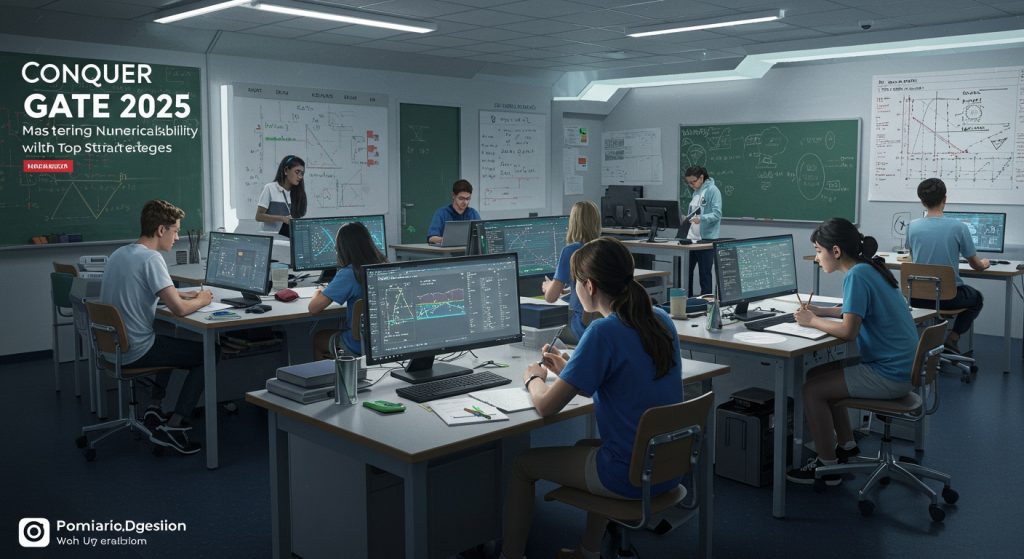
In a rapidly evolving academic landscape, the integration of cutting-edge technology and innovative methodologies is reshaping university education, with significant implications for competitive exams like the GATE Exam. By 2025, trends such as adaptive learning platforms powered by artificial intelligence, immersive virtual reality classrooms. blockchain-secured credentialing systems are poised to redefine how students prepare for such rigorous assessments. For instance, AI-driven tools now assess individual performance and curate personalized study paths, enabling GATE aspirants to focus on their weaknesses with unmatched precision. Also, virtual labs are offering hands-on experiences in engineering concepts, bridging the gap between theory and application. The rise of micro-credentialing programs further empowers students to enhance their profiles with verified skills directly relevant to GATE domains. These advancements, coupled with the growing emphasis on interdisciplinary learning, are not just transforming university education but are also setting a new standard for academic excellence and exam readiness.
Personalized Learning Through Artificial Intelligence (AI)
- Artificial Intelligence is transforming how educators deliver lectures and students learn by enabling personalized learning experiences. AI-driven tools can examine a student’s strengths and weaknesses, adapting coursework to meet individual needs.
- For instance, students preparing for competitive exams like the GATE Exam can use AI-powered platforms to identify knowledge gaps and receive customized study plans.
- Use cases include AI chatbots that answer student queries 24/7 and adaptive learning systems that modify lesson difficulty based on real-time performance evaluations.
Immersive Education with Virtual Reality (VR) and Augmented Reality (AR)
- Virtual and augmented reality technologies are making education more engaging by creating immersive learning environments. Universities are leveraging these tools to simulate real-world scenarios in a virtual space.
- For engineering aspirants preparing for the GATE Exam, AR and VR can simulate complex systems like power plants or chemical reactions, offering hands-on experience without physical risks.
- Examples include VR laboratory simulations for physics experiments and AR overlays for architectural design studies.
Micro-Credentials and Modular Learning
- Universities are increasingly adopting micro-credential programs that allow students to earn certifications for specific skills or knowledge areas.
- These modular learning approaches are particularly useful for GATE Exam aspirants who want to master certain subjects or domains without committing to a full degree program.
- Platforms like edX and Coursera offer stackable credentials that can be combined into a comprehensive qualification over time.
Blockchain for Academic Records
- The use of blockchain technology ensures secure and tamper-proof academic records. Universities are beginning to adopt blockchain to store degrees, certificates. transcripts.
- For students attempting the GATE Exam, blockchain can provide verified records of their qualifications, simplifying the application process for postgraduate programs or job opportunities.
- Leading institutions like MIT have already implemented blockchain-based credentialing systems to enhance transparency and trust.
Integration of Gamification in Learning
- Gamification is being used to make learning more engaging and interactive. By incorporating game elements like leaderboards, badges. challenges, students feel motivated to achieve their goals.
- Aspiring GATE Exam candidates can benefit from gamified prep platforms that offer quizzes, rewards. real-time competition with peers.
- Examples include educational apps such as Duolingo for language learning and Quizizz for subject-specific quizzes.
Focus on Soft Skills Development
- Modern university education is emphasizing soft skills like communication, teamwork. critical thinking, alongside technical knowledge.
- Students preparing for competitive exams like the GATE Exam are encouraged to develop these skills to excel in group discussions, interviews. workplace dynamics.
- Institutions are incorporating workshops, role-playing exercises. collaborative projects into their curricula to nurture these competencies.
Hybrid Learning Models
- Hybrid learning, which combines online and in-person instruction, is becoming the norm in university education.
- For GATE Exam aspirants, hybrid models offer the flexibility to attend live coaching sessions online while still accessing on-campus resources like libraries and labs.
- Examples include flipped classrooms where students review lecture material online before participating in practical, discussion-based class sessions.
Data Analytics for Educational Insights
- Big data analytics is being used to track and improve student performance. Universities are leveraging data to identify trends, predict outcomes. tailor interventions.
- GATE Exam candidates can benefit from analytics-driven platforms that provide insights into study patterns, helping them optimize their preparation strategies.
- For example, predictive analytics can identify students at risk of falling behind and recommend targeted support measures.
Cross-Disciplinary Programs
- Universities are introducing cross-disciplinary programs that merge multiple fields of study, such as engineering with data science or medicine with artificial intelligence.
- This approach allows GATE Exam aspirants to diversify their knowledge base, improving their prospects in an increasingly interdisciplinary job market.
- Examples include programs like bioinformatics (biology + computer science) and mechatronics (mechanical engineering + electronics).
Remote Assessment and Proctoring Technologies
- With the rise of online education, universities are adopting advanced remote assessment tools to ensure secure and fair evaluations.
- For the GATE Exam, remote proctoring technologies enable students to take mock tests from their homes under supervised conditions, mimicking the actual exam experience.
- Tools like AI-based proctoring systems detect suspicious activities during online examinations, maintaining the integrity of the assessment process.
Conclusion
The rapid evolution of educational trends is reshaping university experiences in ways that are both exciting and transformative. From integrating AI-driven adaptive learning systems to embracing the potential of virtual reality for immersive education, universities are moving closer to creating personalized and inclusive educational ecosystems. For instance, the rise of micro-credentials provides a pathway for students to acquire industry-relevant skills in a fraction of the time, while hybrid learning models cater to diverse learning preferences. These trends emphasize the importance of flexibility, adaptability. innovation in education. As we look ahead, students, educators. institutions must be proactive in embracing these changes. Stay informed about emerging technologies, such as leveraging AI tools for research or exploring the global exposure offered by virtual exchange programs. Personally, I’ve witnessed the power of lifelong learning in adapting to change—keeping an open mind toward new methodologies and tools can redefine not only how we learn but how we succeed. The future of university education is brimming with potential. those who engage with these trends today will be best positioned for tomorrow. Let this be your motivation to actively shape your educational journey. The tools are there, the opportunities are expanding—step forward and lead the revolution in learning.
More Articles
Timeless Learning: Unveiling Oxford’s Unique Tutorial System and Academic Excellence
Innovating Tomorrow: Discovering Cutting-Edge Research and Urban Life at UCL
Essential Steps for Studying in France: A Comprehensive Guide for 2025 Applicants
Beyond Textbooks: Experiencing Vibrant Campus Life at an American University
Unlock Your Potential: How to Choose the Right MBA Specialization for Your Future Career

FAQs
What are some key trends changing university education by 2025?
Some major trends include personalized learning, AI-driven teaching tools, virtual reality classrooms. increased focus on sustainability and mental health support.
How is AI impacting university education?
AI is helping automate administrative tasks, providing tailored learning experiences. improving student engagement through chatbots and intelligent tutoring systems.
Will online courses replace traditional universities?
Not entirely. Online courses will complement traditional universities, offering flexibility and access. in-person experiences and campus culture will still play a crucial role.
What’s the role of virtual reality in education now?
Virtual reality is being used for immersive learning experiences, like simulating labs, historical events, or medical procedures, making education more interactive and engaging.
Are universities focusing more on mental health by 2025?
Yes, mental health is becoming a priority, with universities offering better counseling services, peer support programs. stress management workshops.
How is the curriculum changing by 2025?
Curriculums are shifting towards interdisciplinary studies, equipping students with skills in technology, critical thinking. adaptability to prepare them for future challenges.
Is sustainability a big focus for universities now?
Definitely. Universities are implementing green initiatives, promoting eco-friendly campuses. incorporating sustainability education into various programs.
Are micro-credentials really becoming crucial?
Yes, micro-credentials are gaining popularity as they allow students to develop specific skills quickly and improve their employability in the fast-changing job market.